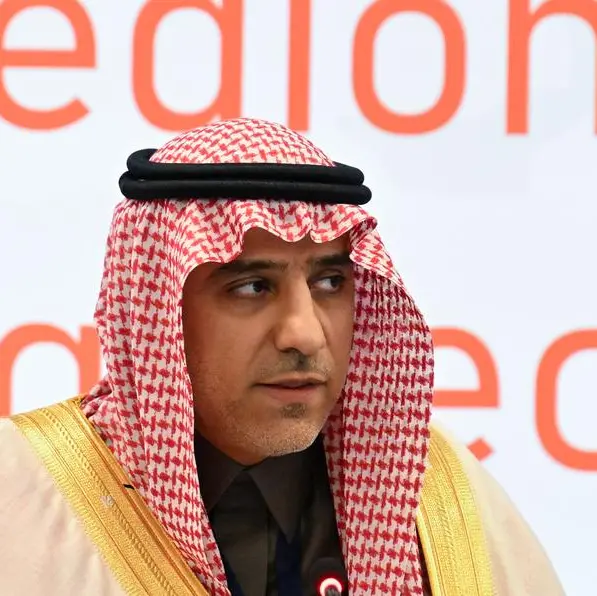
Having recently acquired iconic hotel properties in Europe and Asia, Qatar's new-look state-owned hospitality company is plotting the next stage of its global expansion plan
At the end of last month, Qatar National Hotels (QNH) Company unveiled a new corporate identity which its government owners hope will coincide with an accelerated expansion of the country's increasingly confident hospitality sector.
Katara Hospitality, as the Company is now known, has by any standards had an eventful last six months, and not just because of a rebranding exercise the Company's chairman His Excellency Shaikh Nawaf bin Jassim bin Jabor al Thani says "sets the platform for future growth".
In January this year, the wholly government-owned Company, Qatar's leading hotel owner and developer with a total of 12 properties in Qatar and overseas, announced it had assumed ownership of Singapore's Raffles Hotel and Le Royal Monceau in Paris, also from Raffles. The twin acquisitions followed news last year that QNH would spend $55 million on converting a former palace in Tangier, Morocco into a luxury five star hotel.
While QNH did not officially reveal the price tags of its acquisitions - reports in 2010 suggested that the Singapore property alone would be sold to a Qatari sovereign wealth fund for $275 million - they could not have been more iconic, and pave the way for a concerted global push for the new-look organisation, established in 1993.
"Our focus is on strategic investments and acquiring a collection of international properties that are true hospitality icons in the grandest sense," Shaikh Nawaf tells The Gulf. And by focusing its strategy on some of the world's most recognised hospitality landmarks, the Company hopes to become one of the Middle East leading hospitality companies.
Shaikh Nawaf says Katara's expansion plans are in step with Qatar's long-term economic objectives.
"One of the principle drivers is a close alignment with Qatar National Vision 2030," says the chairman, referring to the strategic economic blueprint which aims to grow the contribution of sectors such as tourism to national coffers.
"Katara Hospitality is seeking to change the face of the hospitality industry through pioneering investments and property developments which will leave an enduring legacy," he explains.
The Company certainly has an ambitious acquisition and development pipeline, though the bulk of investments will be channeled overseas. In Qatar, it will open the Merwebhotel City Centre Doha in 2013. Overseas, it will open a total of six high-end properties in France, Switzerland, Italy, the Comoros Islands and Morocco through 2013 and 2014. Once these are complete, Katara Hospitality will have 19 properties on its books.
As is the trend in Qatar these days, however, the quest for global domination will not stop in 2014.
"By 2030, Katara aims to own over 40 international properties," Shaikh Nawaf states. While he does not elaborate on the scale of investment this would entail - nor does he reveal at this stage where in the world the properties would be located - it is hard to imagine Katara not meeting its long-term goals. What is also certain is that the Company's future investments will be at the high end of the market, but Shaikh Nawaf insists there are otherwise no hard and fast rules on the asset class.
"There is no prototype, or general characteristic that we look for in an asset before investing in it," he explains. "Whether a property is domestic or international, four- or five-star rated, our diversification and expansion strategies involve investing in properties suited to our ethos and style and renovating their image, considering of course the return the hotel is likely to yield," he continues.
Part and parcel of an overseas expansion strategy which began in 2006 when QNH acquired a hotel in Sharm el Sheikh, Egypt, the rebranding project which gave the Katara name delves deeply into the country's ancient past.
The name 'Catara' is said to date to 150 AD, and was what the ancient Greeks apparently called the Qatar Peninsula. It stayed that way until European cartographers began using the spelling 'Katara' on maps dating from the first half of the 18th century. Shaikh Nawaf believes the Company's decision to revive the name Katara and reveal its ancient connections will resonate with future generations.
"We have created a new corporate identity which is relevant to the Company's ambitious international expansion plans and heralds a new era of opportunity, in line with Qatar's own tourism development strategy," he says.
The country's long-term tourism outlook looks bright. According to the World Travel & Tourism Council (WTTC), the direct contribution of travel and tourism to Qatar's gross domestic product (GDP) is estimated to reach $1.1 billion this year, up from $800 million in 2009. Market intelligence firm Euromonitor International forecasts inbound visitor numbers will reach 1.6 million by 2014, from just under one million in 2009. By 2022 - the year Qatar hosts the World Cup - this figure is expected to swell to 3.7 million. The Qatar Tourism Authority (QTA), meanwhile, expects some $20 billion to be poured into the country's tourism infrastructure in the run up to 2022, a sizeable proportion of which will be spent on new hotels.
While Katara's prominent position in this exciting period appears assured, it will not be alone in flying the Qatari flag at home and overseas.
Last month, during a visit to Rome by the Amir Shaikh Hamad bin Khalifa al Thani, stories emerged of possible Qatari investment in a new theme park in the Italian capital, which could cost up to $785 million. At about the same time, Qatar's sovereign wealth fund confirmed its purchase of a luxury resort on the Italian island of Sardinia.
Aware of the Company's responsibilities as a government entity, Shaikh Nawaf says Katara's future projects will benefit wider society in Qatar and its overseas markets.
"We support the sourcing of local products and services and building local supplier capacity, to bring sustainable economic worth and empowerment to the local community, whether in Qatar or abroad," he explains. He adds that among initiatives actively supported are the training and employment of Qatari nationals - Katara currently sponsors students at the Doha campus of the Netherlands-based Stenden University, which specialises in hospitality-related courses, with a view to encouraging more nationals to join the ride with a Company which appears to be going places.
© The Gulf 2012