The sukuk industry is heading toward its golden age with record issuance in 2011 by November. Adnan Halawi, Zawya's Fixed Income Analyst, identifies 11 clear trends that emerged during the year.
GLOBAL SUKUK REVIEW: November 2011
November 2011 witnessed a record number of sukuk issues totaling USD 8.86 billion globally, according to data compiled by Zawya Sukuk Monitor. Major issues include a global seven-year USD 1 billion sukuk sold by Indonesia in the international markets followed by a similar seven-year USD 750 billion international sukuk by the Central Bank of Bahrain. Bank Negara Malaysia successfully issued MYR 3 billion (USD 950 million) Government Investment Issue (GII) in the domestic market.
On the corporate level, Abu Dhabi Commercial Bank and Abu Dhabi Islamic Bank sold five-year USD 500 million international sukuk each. These five issues boosted sukuk issuance to a record in November. Other sukuk included BNM IDMs, CBB short-term sukuk, Gambia and various issuers from Malaysia.
Major announcements of new sukuk were made in November as well - some of which might hit the market as soon as December or during the first half of 2012. Al Baraka Turkey started marketing its anticipated sukuk deal. Dubai Islamic Bank said it started marketing a sukuk for its subsidiary Tamweel in the International markets. Dubai-based Emirates airline could visit the Islamic bond market, reports said. These follow previous announcements by Al Hilal Bank. Dubai-based bank Emirates NBD said it is planning to sell a five-year international sukuk. Saudi Arabia's Almarai received approval to sell sukuk.
On the sovereign level, Senegal could surprise the markets with a long-awaited sukuk. Indonesia said it will sell the fourth edition of its retail sukuk in March 2012. Iran said it will sell Islamic bonds to finance its developments for South Pars projects while the government of Nigeria was reported to be working with HSBC and CIMB on a Malaysian Islamic bond sale.
Media reports indicated that National Australia Bank and Citilink Finance Australia are ready to tap global sukuk markets as the country's parliament considers regulatory changes to avoid double taxation of Islamic bonds.
Qatar was absent from the Islamic market and chose instead to raise debt via USD 5 billion tri-tranche conventional Eurobonds. However, we believe that in the next few months sukuk will emerge out of many Qatari corporate entities, including Qatar Islamic Bank, Qatar International Islamic Bank and Masraf Al Rayan.
Two postponement announcements came from International Islamic Liquidity Management, which is planning to sell short-term bills, and Turkey's Bank Asya, which said it prefers to wait for better market conditions.
11 Sukuk Trends
Some of the trends that emerged over the first 11 months of 2011 are:
1 - 2011 is the best year on record in terms of sukuk issuance, with USD 79.5 billion issued in the first 11 months of the year.
2 - The global sukuk market has reached a record level of around USD 180 billion.
3 - Market continues to be dominated by sovereign issuers, followed by financial institutions. Diversification is expected as more sectors issue sukuk. Evidence: Saudi's Almarai, which operates in the food and beverages sector.
4 - The sukuk industry benefited - and will continue to do - from equity market volatility and the Eurozone debt crisis. (See Bonds loss is sukuk gain).
5 - More conventional issuers will join the club of sukuk issuers. Examples include ADCB, GE Capital and HSBC, which have already issued sukuk, with Goldman Sachs, Taqa and Majid Al Futtaim in the pipeline.
6 - More efforts have gone into standardizing the rules governing the structures and the market. (See regulatory developments below).
7 - The industry continues to suffer from the effects of double taxation in many jurisdictions, hindering growth. On the other hand, efforts have been made to spur sukuk by slashing taxes in other countries. (See Slash taxes, spur sukuk).
8 - Issuers were able to sell sukuk at lower prices during 2011 on average. A sample that includes all international fixed-rate USD-denominated five-year sukuk issued over the past three years shows the average rate dropped from 5.41% in 2009 to 3.89% in 2011.
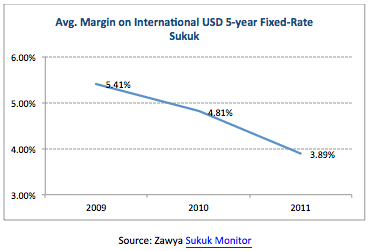
( see Zawya Sukuk Monitor )
9 - Many countries are opening up Islamic banking on their territories - a trend that is expected to intensify in the short to medium term. This will accelerate the appearance of sukuk in these states. Examples include Oman and Sri Lanka.
10 - Short-term sukuk issue is on the rise. Evidence: Indonesia Islamic treasury bills, IILM's planned short-term sukuk, Gambia, Bahrain and Malaysia's IDMs, Saudi Arabia's Bin Laden Group and Pakistan's HUBCO and KAPCO. (See Global sukuk: Shorter and wider).
11 - New structures, such as Wakala, were introduced to make sukuk acceptable by different schools of thoughts. Yet, some structures remain debatable or used strictly in certain areas only. Evidence: Goldman Sachs' sukuk and BBA's in Malaysia. (See The rise of Wakala).
Regulatory Developments
In an unprecedented development, Thomson Reuters launched the world's first Islamic finance benchmark rate designed to provide an objective and dedicated indicator for the average expected return on Shariah-compliant short-term interbank funding. The Islamic Interbank Benchmark Rate (IIBR) uses the contributed rates of 16 Islamic banks and the Islamic sections of conventional banks to provide a reliable and much-needed alternative for pricing Islamic instruments to the conventional interest-based benchmarks used for mainstream finance.
This step is seen as an important milestone in the maturing of Islamic money markets by providing an international reference rate for interbank transactions.
In a similar direction, the Gulf Bond and Sukuk Association (GBSA) released an inaugural set of investor relations standards for both bond and sukuk issuers from the region. This is the first set of agreed guidelines and standards ever issued in the Middle East region for issuers of debt.
- Ends -
To contact the writer:
Adnan Halawi
Team Leader - Fixed Income
ahalawi@zawya.com
Zawya 2011