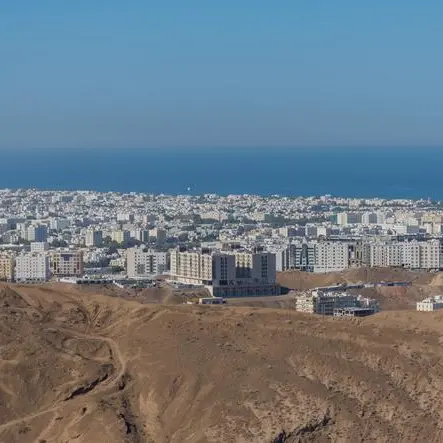
MUSCAT -- Oman's real GDP expanded steadily over the past few years, with an estimated growth rate of 5 per cent in 2012, which was lower than the government's target of 7 per cent and was almost close to the IMF forecast, the Kuwait-based Global Investment House said in its latest assessment of the Sultanate's economy.
Oil and gas continue to dominate the economy, contributing more than half of the nominal GDP and almost two-thirds of net fiscal revenue.
However, Oman has successfully executed its diversification strategy as non-oil GDP to grow 5.4 per cent in 2011 from 3.1 per cent in 2009, said Global. The non-oil sector's contribution to GDP rose considerably from 52.7 per cent in 2001 to 72.2 per cent in 2011. Factors such as high domestic demand, an expansionary fiscal policy and growth in the non-oil economy would bolster economic growth to average 5.1 per cent over 2013-17.
"Oil production is estimated to expand 1.5 per cent annually during 2013-17 compared to an annual average of 5.7 per cent in 2008-11 and a 4 per cent rise in 2012. As production has become more difficult and complex, diversification programmes are gaining prominence. Strong growth in non-oil production is likely to compensate for the weakness in oil production.
"Factors such as high domestic demand, an expansionary fiscal policy and gains in the non-oil economy would ensure robust economic growth." "However, the economy will likely remain vulnerable to any downturn in domestic oil production and fluctuations in oil and gas export prices," Global commented.
The investment house described Oman's trade balance as "structurally positive".
The Sultanate exports more than it imports. This resulted in a manifold increase in the trade surplus to $25.4 billion in 2011 from $5.1 billion in 2001. Crude oil and related products continue to be the key reason for the increase in trade surplus. In 2011, oil and gas constituted 70.8 per cent of total exports. Higher oil production and prices also supported growth in trade surplus, which otherwise would have been impacted by a surge in imports during the same period.
The government is stimulating gas and oil related industries such as petrochemicals, fertilisers and aluminium production that, in turn, are driving growth in the manufacturing sector. Paired with this is the carefully structured tourism strategy, aimed at high net worth individuals. One of the main goals of the Tourism Ministry is to represent Oman as a year-round destination.
Oman passed its 2013 budget plan on January 1, 2013. The government aims to stimulate growth in the non-oil sector and thereby pursue its diversification strategy. Revenues are budgeted at $28.9 billion, up 27 per cent from that in 2012. Oil revenues constitute 72 per cent of budgeted revenues, with a base price of $85 per barrel and an average production of 930,000 bpd.
Meanwhile, expenses are budgeted at $33.1 billion in 2013, a 29 per cent increase from the previous year.
Current expenditure and investment expenditure will continue to be the key contributors to expenses, resulting in a budget deficit of $4.4 billion for 2013. However, government finances will remain vulnerable to changes in hydrocarbons prices.
Inflation rate, which measures the price consumers pay for a standard basket of goods, eased in 2012, led largely by softening of food prices and rent costs, said Global. Average inflation in Oman slowed to 2.9 per cent, down from 4.1 per cent in 2011 and 3.2 per cent in 2010. The decline was primarily due to two commodity groups, namely 'food, beverage and tobacco' and 'rent, electricity, water and fuel'. Food prices regressed to 2.2 per cent in 2012 compared to 4.5 per cent in 2011, while rent costs retreated to 2.2 per cent in 2012 vis-à-vis 2.8 per cent in 2011. Transportation costs however increased by 1.9 per cent in 2012 compared to 1.5 per cent in 2011. Education soared 15.2 per cent during the year, but constitutes just 3.3 per cent of the weight on the index.
Meanwhile, the wholesale price index declined to 2.1 per cent during the first three quarters of 2012 compared with a rise of 7.5 per cent in 2011, it said. Except for agricultural products, which fell 2.3 per cent during the period, all of the other components of the index increased at an average rate of 2.4 per cent.
Given the fixed exchange rate regime, the Central Bank of Oman (CBO) has to ensure monetary stability in the current uncertain global environment. The focus remains on liquidity management and supporting growth, while keeping inflation under check.
© Oman Daily Observer 2013