Even though the economic environment in the GCC (Gulf Cooperation Council) region has continued to improve steadily in the course of the summer, the increasingly alarming global backdrop is fueling risk aversion and reviving fears of a relapse in the global crisis. As the euro zone continues to stumble from one inconclusive exercise in crisis management to the next, the situation in the US has taken a turn for the worse with increasingly weak economic data, a political stalemate, and a consequent decision by Standard & Poor's in August to downgrade the country. The GCC remains vulnerable to these risks because of renewed worries about oil demand erosion as well as heightened risk aversion in financial markets. This has created a paradoxical situation where the regional growth drivers in the GCC are strong but the effects of the global uncertainty on investor sentiment once again risks leaving growth disproportionately dependent on the public sector, the National Commercial Bank (NCB) has said in its GCC Economic Review.
The European situation has taken a significant turn for the worse as a result of mounting concerns about the ability of the European Financial Stability Facility (EFSF) with its current resources to address the stress points in the euro zone economy.
Efforts are underway to increase the capital of the facility from $440 million to $780 million but the ratification process is still to be completed. In the meantime, the European Central Bank (ECB) has taken a more active role in crisis management.
Although its status forbid fiscal support to member governments, it has used the effectiveness of monetary policy transmission as an argument for government bond purchases in cases where there is a significant divergence between national interest rates and the ECB policy rate.
In the meantime, the economic challenges are mounting as a result of a cascade of downgrades of the more vulnerable Euro-zone economies in response to political doubts and the slowness of fiscal consolidation. This is also raising the prospect of systemic risks in the European banking sector, given that holdings of troubled sovereign debt by 43 large banks is equal to 63 percent of those institutions' book value, the NCB report said.
The situation in the US remains, similarly, uncertain due to a political stalemate that has made a comprehensive fiscal consolidation strategy impossible.
Even if the European and US crises are managed without major disruptions, the likely scenario now confronting the Western world is one of muddling through in policy and 1970s-style stagnation in terms of growth.
However, the persistence of significant systemic risks creates backdrop for continued volatility and potentially even severe disruption which have the potential to send the global economy to another period of recession.
Resilient in the face of turbulence
The GCC region has been remarkably resilient in the face of the global crisis to date.
This has been largely the result of its macroeconomic stability, healthy banking sectors, and large government reserves which were swiftly mobilized in response to uncertainty.
The main challenge created by the economic turbulence has been a persistently skewed pattern of growth where economic activity is critically underpinned by countercyclical government spending, while the mood of private sector investors remains subdued as a result of the global uncertainties and financial market uncertainty.
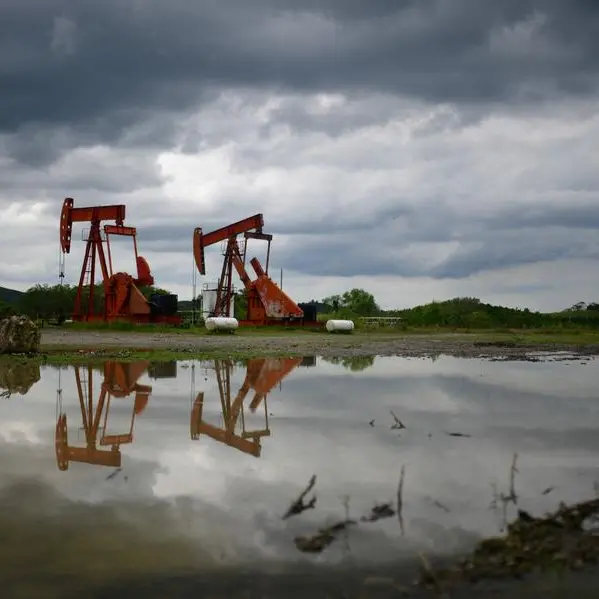
The NCB report said GCC economies remain well positioned by global standards to deal with the prospect of renewed economic instability. The speedy recovery of oil prices from their 2008 lows has restored fiscal balances and replenished reserves. The IMF expects the aggregate budget surplus of the GCC countries to increase from $136 billion in 2010 to $304 billion this year. The actions of the authorities earlier during the crisis have underscored their willingness to tap the reserves, with assumptions about the duration of the crisis likely to be the main source of uncertainty. Fiscal break-even oil prices have risen sharply in recent years and worries about demand erosion risk producing recurrent periods of softness in the oil market even if the market fundamentals remain historically tight. Beyond their reserves, the GCC countries are generally well positioned to raise additional funding through bond and sukuk issues both directly by the government and by government-related entities. The creditworthiness of the regional economies is internationally strong and there is likely to be considerable pent-up demand for quality paper both regionally and internationally.
In spite of this underlying strength, the GCC economies have a number of points of vulnerability as the global economy looks likely to enter another period of weakness. The main risks, much as in 2008 remain the financial markets and the oil price. The financial sector has regrouped significantly since the previous dip and is relatively shielded from the weaknesses of the European economy. However, ,major disruptions along the lines of a Lehman Brothers-style exogenous shock would both test investor mood and potentially hit regional institutions through counterparty risk. Oil is vulnerable to short-term corrections due to concerns about demand erosion but the experience of 2008-2009 highlights the underlying resilience and tightness of the market.
Property market dichotomy
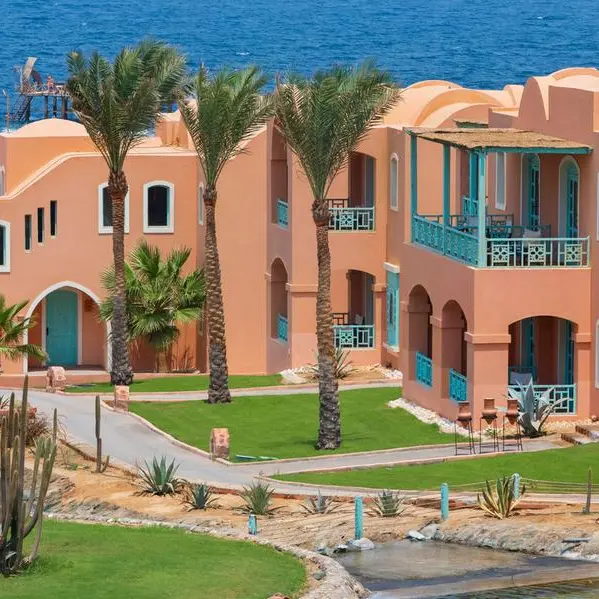
Even as the GCC real estate sector is beginning to see a growing number of pockets of strength, its overall recovery looks likely to remain uneven and potentially discontinuous. Dubai, which in many ways remains the epicenter of the regional real estate story, continues to struggle to digest a significant excess supply with up to 15,000 new units due to come to the market by the end of the year. Nonetheless, demand in some segments is clearly now recovering, further helped along by perceptions of Dubai as a relative safe have after a period of political turmoil in parts of the Middle East. Even as much of the Dubai real estate sector remains soft, select market segments have begun to see actual price growth. Even the overall price and rental declines are now in the low single digits. Apart from prime residential property, the demand for high quality office space is increasing, the report said.
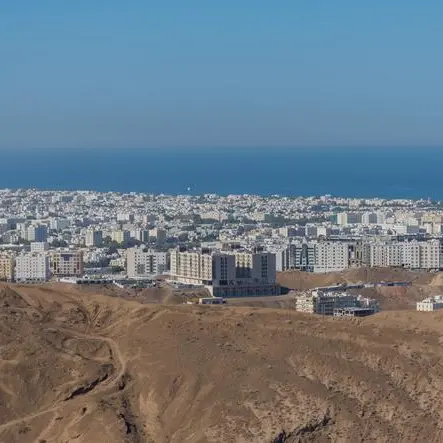
In neighboring Abu Dhabi, the large pipeline of new supply is now translating into rental deflation of up to 10 percent in the weakest market segments. By contrast, the office market has shown greater stability, although a large pipeline of new supply looms as a potential risk. Also Oman rents are still falling at double digit rates with prime office space now the most resilient market segment due to shortages. By contrast, the situation in Qatar and Kuwait is more mixed. The Qatari market appears to have bottomed out with residential rents more or less stable in recent months and weakness largely confined to the commercial real estate space. In Kuwait, the residential market has in fact rebounded vigorously with volume and price gains but the commercial segment is still weighed down by vacancy rates of up to 25 percent.
Bahrain now likely faces some of the toughest challenges in regional real estate. It experienced its own powerful housing boom in the pre-crisis days and the effects of the cyclical correction have been amplified by political uncertainty following open protests in February-March. Oversupply is likely to prove an enduring challenge, although also the Bahraini market has become increasingly dichotomous with some prime areas showing considerable resilience. Office vacancies current stand at up to 40 percent of total with an ongoing construction pipeline equaling roughly 30 percent of this. By contrast, the demand for affordable housing is strong and a key focus of government investment. Bahrain is further hit by a weak macro environment. The government estimated a 1.4 percent QoQ drop in GDP in Q1 with the service sector particularly hard hit.
According to the NCB report Saudi Arabia is increasingly establishing itself as the most robust housing market in the Gulf region, in large part due to a significant shortage of housing, estimated at around 200,000 units a year in the near to medium term. Sizeable government spending commitments are seeking to address this problem, led by SAR250 billion allocated to the new Ministry of Housing in the spring for the purpose of constructing 500,000 new housing units over the coming 5-10 years. Also the possibility of taxing undeveloped land under consideration, while the implementation of the mortgage law is seen as necessary for addressing the affordability gap that currently exists. Even as the office market, especially in Riyadh, is stagnating because of oversupply, the problem is far less pronounced than elsewhere in the region with vacancy rates of up to 15 percent and some market segments still suffering from shortages. By contrast, residential rents, in spite of temporary moderation in recent months, are still increasing at an annual pace of almost 8 percent. Some estimates suggest that Saudi residential property prices rose by as much as 60 percent in H1, 2011 in the most desirable areas, although the national figure was closer to 10 percent.
Looking forward, although the contours of a recovery are now emerging in the GCC housing market, the outlook is both uncertain and mixed. For many of the coastal markets, the global economic environment is likely to have implications for office and prime residential demand. Renewed global weakness will almost certainly delay the stabilization of these markets and even the prospect of further price corrections cannot be ruled out. The limited availability of mortgage finance in many markets, including the UAE, will contain residential demand. But beyond this, it is increasingly obvious that any recovery will likely prove fairly uneven virtually across the region. As investors seek value in what remains an uncertain environment, they are likely to veer toward attractive developments in good locations. At the same time, the affordable segment will be underpinned by excess demand and should benefit from increased government spending and potentially improved access to mortgages, especially in Saudi Arabia. However, many markets will continue to be characterized by significant excess supply outside the prime segment, the NCB report said.
© Arab News 2011