24 September 2011
Despite the global economic downturn that weighed down other ports in the wider region, the ports of Oman registered across-the-board improvement in its overall performance. The three main port facilities -- Muscat, Salalah and Sohar -- are benefiting from the country's economic development. The remarkable transformation has made it become the best with the latest technologies, systems, equipment and major shipping lines.
Development of the port sector paved way for setting up of industrial areas and special economic zones in the country. This has also spurred the growth of ancillary sectors like logistic activities and other works driving the national economy achieve its goals, which are outlined by the government in its Vision 2020.
The ratification of the proposal to convert Port Sultan Qaboos into a tourism hub and to relocate all cargo operations to Port of Sohar, effectively scotches any lingering doubts about the future of the latter port.
Started as a green field project in the year 2002, Port of Sohar has developed into a fully fledged industrial port, just outside the Strait of Hormuz and the Gulf, right in between Muscat, Dubai and Abu Dhabi.
A joint venture between the Government of Oman and the Port of Rotterdam with an investment of around $250 million, Port of Sohar is a deep-sea industrial port that has grown tremendously in size and importance.
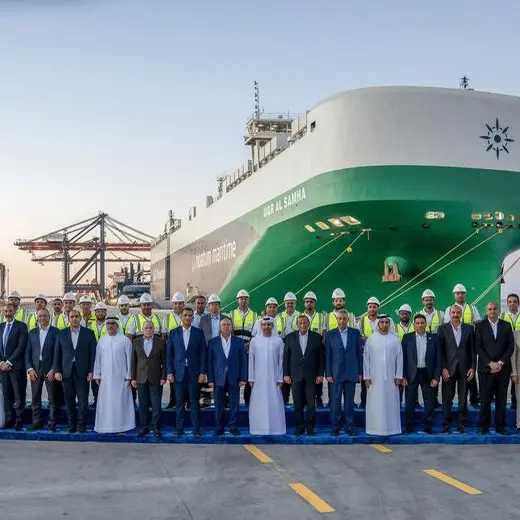
The industrial development of Sohar is remarkable with many international firms setting up projects thanks mainly to the services of the port. The arrival of Vale Oman's first ultra-large ore carrier at its newly commissioned deepwater jetty at the Port of Sohar is another feather in the cap of the port.
The roughly 1.4km long jetty was built by Sohar Port Special Projects - a corporate spinoff of the joint venture Sohar Industrial Port Company. It is one of only a handful of bulk terminals in the world with that can handle a new generation of Valemax-class ships.
MV Vale Brazil, with 400,000 tonnes of Brazilian iron ore, arrived last week on its maiden voyage to Oman.
Around 10 ore-laden ships have so far called at the terminal since it was brought into operation.
According to reports, Vale Oman expects between 200-400 ships call annually at its deepwater jetty covering both the import and export facets of its pelletising business in Sohar. Around 10 ore-laden ships have so far called at the terminal since it was brought into operation in July.
This year, the port is expected to show its biggest growth in its existence. The throughput for dry bulk and liquids will grow to 18.5 million FRT which is an increase of more than 60 per cent compared to the previous year.
This volume together with the growth of Port of Sohar and the development of Freezone Sohar will strengthen the industrial hub of Oman, as described by experts: "an ideal point of entry for products shipped around the Gulf countries and as a gateway to the rest of the world". These developments will also strengthen Oman's efforts to diversify its economical drivers away from the oil and gas industry.
Oman's economic boom is also generating a huge amount of construction activity and this is sucking in imports, to the benefit of those active in Oman's shipping business.
Another advantage with the Sohar port is that petrochemical products brought from the region can be stored in the facilities, if necessary, and transported to onward destinations -- an activity that was once chiefly done at petrochemical hubs like Rotterdam, Houston, Singapore. This opens up opportunities for added value growth as downstream investors see the cost advantages of setting up operations in the vicinity because of the competitive access to all their feedstock requirements.
Despite the global economic downturn that weighed down other ports in the wider region, the ports of Oman registered across-the-board improvement in its overall performance. The three main port facilities -- Muscat, Salalah and Sohar -- are benefiting from the country's economic development. The remarkable transformation has made it become the best with the latest technologies, systems, equipment and major shipping lines.
Development of the port sector paved way for setting up of industrial areas and special economic zones in the country. This has also spurred the growth of ancillary sectors like logistic activities and other works driving the national economy achieve its goals, which are outlined by the government in its Vision 2020.
The ratification of the proposal to convert Port Sultan Qaboos into a tourism hub and to relocate all cargo operations to Port of Sohar, effectively scotches any lingering doubts about the future of the latter port.
Started as a green field project in the year 2002, Port of Sohar has developed into a fully fledged industrial port, just outside the Strait of Hormuz and the Gulf, right in between Muscat, Dubai and Abu Dhabi.
A joint venture between the Government of Oman and the Port of Rotterdam with an investment of around $250 million, Port of Sohar is a deep-sea industrial port that has grown tremendously in size and importance.
The industrial development of Sohar is remarkable with many international firms setting up projects thanks mainly to the services of the port. The arrival of Vale Oman's first ultra-large ore carrier at its newly commissioned deepwater jetty at the Port of Sohar is another feather in the cap of the port.
The roughly 1.4km long jetty was built by Sohar Port Special Projects - a corporate spinoff of the joint venture Sohar Industrial Port Company. It is one of only a handful of bulk terminals in the world with that can handle a new generation of Valemax-class ships.
MV Vale Brazil, with 400,000 tonnes of Brazilian iron ore, arrived last week on its maiden voyage to Oman.
Around 10 ore-laden ships have so far called at the terminal since it was brought into operation.
According to reports, Vale Oman expects between 200-400 ships call annually at its deepwater jetty covering both the import and export facets of its pelletising business in Sohar. Around 10 ore-laden ships have so far called at the terminal since it was brought into operation in July.
This year, the port is expected to show its biggest growth in its existence. The throughput for dry bulk and liquids will grow to 18.5 million FRT which is an increase of more than 60 per cent compared to the previous year.
This volume together with the growth of Port of Sohar and the development of Freezone Sohar will strengthen the industrial hub of Oman, as described by experts: "an ideal point of entry for products shipped around the Gulf countries and as a gateway to the rest of the world". These developments will also strengthen Oman's efforts to diversify its economical drivers away from the oil and gas industry.
Oman's economic boom is also generating a huge amount of construction activity and this is sucking in imports, to the benefit of those active in Oman's shipping business.
Another advantage with the Sohar port is that petrochemical products brought from the region can be stored in the facilities, if necessary, and transported to onward destinations -- an activity that was once chiefly done at petrochemical hubs like Rotterdam, Houston, Singapore. This opens up opportunities for added value growth as downstream investors see the cost advantages of setting up operations in the vicinity because of the competitive access to all their feedstock requirements.
© Oman Daily Observer 2011