Sunday, May 05, 2013
Dubai
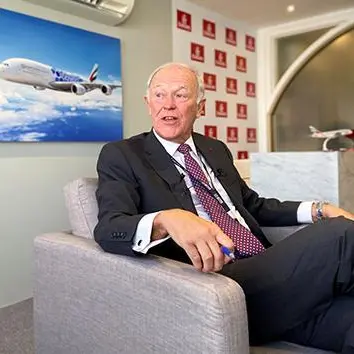
Emirates, one of the world’s fastest airlines, will recruit 6,000 people during its current financial year, from April 2013 to March 2014, Gary Chapman, President of Emirates Group Services and Dnata, told Gulf News in an interview.
“Of this, we intend to recruit between 900 to 1,000 UAE nationals, as part of our UAE National Development Programme,” Chapman, who oversees the operations of Emirates Group’s human resources, among other services, said. “We have recruited 850 emiratis last year and would like to see an increased number of them on our payroll in the coming years.”
Emirates Group which includes Emirates Airline and Dnata - its ground handling and ticketing arm - has 2,500 UAE nationals working for the Group - mostly in mid-level, senior management and technical services. “This is going to change significantly in the coming years as we plan to recruit on an average 1,000 emiratis out of the 6,000 every year.
Emiratisation in Emirates Group’s technical, mid-level and senior management varies from 10 to 25 per cent. The airline has 426 UAE national Captains and pilots, which represents more than 10 per cent of the 4,000 pilots employed.
However, when it comes to emiratisation, Chapman says, it’s not about numbers - it all boils down to quality. “We are a world-class airline offering the best services. We not only continue to ensure this, we want to constantly improve upon the existing service level,” he says. “For that, we need to have world-class professionals to ensure that we continue to deliver those.”
Analysts say, the development of home-grown talents will help the airline sustain its business in the long run.
“Given the expansive reach of the airline, it is no surprise that Emirates wants to hone in on natural “home grown” talent. With aviation, aerospace and associated industries booming in Dubai and the wider UAE, many Emiratis are finding careers here and Emirates is keen to extract that talent rather than have it go elsewhere,” Saj Ahmad, Chief Analyst of the UK-based StrategicAero Research, told Gulf News.
“It’s a smart move and one that will provide it with a better competitive advantage against its rivals who don’t seem to be as proactive in this regard - especially in the management team area where non-UAE nationals like Tim Clark are instrumental to the success of Emirates,” he added.
However, getting the right skills set and quality mix is a challenge. “We have a solid human development programme that transforms an entry-level person to a good professional and a leader, through training, education and mentoring programmes built within the organisation,” Chapman says.
“We have created a significant infrastructure - that has stood the test of time - to attract emiratisation, induct, train and develop them to take on new responsibility and leadership.”
“So, if we have a graduate with the right kind of attitude, we can turn him or her to a very good professional. However, the person should be ready to take up challenges, work in shifts and have a long-term commitment to the organisation.”
Emirates, which had earlier been rated as one of the best employers in the region, is currently competing with government entities in attracting UAE nationals. “Our attrition rate is less than 1 per cent as we are seen as a good employer offering great benefits and opportunity and a successful brand,” Chapman says.
Globally, companies struggle to get the right match between attitudes and skill-set among their staffs. New recruits come in different attitudes and skills. Finding the right mix is a challenge. However, it is far more difficult in the aviation industry where one could not go wrong.
Chapman feels the government should raise the bar in deliverables and setting the expectations of the employers on emiratisation. “We are working closely with the leading academic institutions to ensure that we get the right and quality mix of graduates when we recruit emirates,” he said. “We do not want the employees to leave the company after a few months simply because of the attitude.”
He said, lack of skill could be fixed, not attitude. “Give me someone with the right attitude and commitment, we will do the rest. But we can’t deal with someone who lacks in attitude as we seek to promote professionalism.”
Sidebar
One standard for all
Although ‘one-size may not fit all’ from a management perspective, every company needs to have one standard for all - in terms of proving equal opportunity in employment that could help them become a ‘great’ company, from a mere ‘good’ employer.
Companies should not adopt a ‘different strokes for different folks’ policy in treatment, officials and analysts say.
At Emirates Group, all employees are treated equally and fairly - in terms of package and benefits, unlike many others where packages vary depending on background.
“We have only one standard across 62,000 employees as we are a global organisation and compete with the leading global airlines,” Gary Chapman, President of Emirates Group Services and Dnata, said.
“We do not discriminate. There is no double-standard in the organisation,” he underlined. “All our UAE national employees work the same way as their foreign colleagues - in shifts and with responsibility.”
Analyst hail the policy, saying it will go a long way in creating the best place to work where employees are treated fairly.
“This strategy is to prove that there is no bias at Emirates. Equal opportunities exist for everyone - and as the airline expands, so do the new openings for all staff, irrespective of their background,” Saj Ahmad, Chief Analyst of the UK-based StrategicAero Research, says.
“Not only does this supress employee strife, it also demonstrates Emirates capability to ensure its workforce is happy. Put simply, a happy workforce is a lot more efficient and flexible than an unhappy one.”
While emiratisation remains a strong challenge, Chapman says, it’s rewarding. “Yes, it remains a challenge. However, it’s also rewarding and we are proud of the way we have managed to mould these young emirates into good professionals, managers and leaders,” he says.
Box 1
Shinning examples
Emirates has, over the last quarter of a century, developed a strong emirati talent pool and leadership cadre that is forming the backbone of its senior management.
The airline has a strong leadership programme and most of them are renowned for their professionalism, integrity and hardwork.
“The future is theirs and the airline belongs to them,” Gary Chapman, President of Emirates Group Services and Dnata, said. “Our job is to ensure that they remain the best in profession to maintain our leadership position in the industry.”
Shaikh Ahmed Bin Saeed Al Maktoum, Chairman of Emirates Airline and Group, is the best example of leadership in the aviation industry. Within a quarter of a century, he has not only led in the development of an international airline, he has - in many ways - changed the game in the global aviation industry. Backed by Western executives, he has led from the front in developing Emirates as a sustainable airline that consistently delivers profits year after year and enhances shareholder value - at a challenging time in the global aviation industry.
Gaith Al Gaith, a senior manager in Emirates, remains a good example of leadership in the aviation industry. He was groomed by Emirates Airline as a top-class professional who was later hand-picked by Dubai Government to set up FlyDubai - the low-cost start-up in 2009. In four years he has spread the airline’s wings to 57 destinations in Asia, Africa and Europe with a fleet of 29 aircraft. The airline is currently giving its rivals a run for their money through good services as it becomes profitable.
Box 2
Emirates facts
1985 Established
200 aircraft on the fleet
198 aircraft on order
$18.4 billion annual turnover
$71 billion size of the Emirates order book
133 destinations served
77 countries served by the fleet
62,000 employees on payroll
40,000 employees that are based in Dubai
2,500 number of UAE nationals on payroll
By Saifur Rahman Associate Editor By Saifur Rahman Associate Editor
Gulf News 2013. All rights reserved.