Alarm bells are ringing in Damascus as western and Arab governments are looking to put pressure on the Assad regime.
New sanctions and a new report by the United Nations Human Rights Council (UNHCR) is a damning indictment of how Syrian President Bashar Al Assad the domestic crisis that has engulfed his country - by sheer brute violence.
The Syrian crisis may or may not have entered its final phase, but it undoubtedly has entered its most dangerous one to date, says the International Crisis Group.
"The current stage is defined by an explosive mix of heightened strategic stakes tying into a regional and wider international competition on the one hand and emotionally charged attitudes, communal polarisation and political wishful thinking on the other.
"As dynamics in both Syria and the broader international arena turn squarely against the regime, reactions are ranging from hysterical defiance on the part of its supporters, optimism among protesters that a bloody stalemate finally might end and fears of sectarian retribution or even civil war shared by many, through to triumphalism among those who view the crisis as an historic opportunity to decisively tilt the regional balance of power," says an ICG report on the troubles in Syria.
The Arab League's actions against Syria is unprecedented and the toughest it has imposed on a member state. Together with the European and American sanctions, they have become too formidable a hurdle for Assad's government to ignore or even bypass.
Here are the various sanctions imposed on Syria:
ARAB LEAGUE SANCTIONS:
1 Travel ban on key Syrian government officials
2 Freezing of assets linked to President Bashar Al-Assad's government
3 No transactions with Syrian Central Bank and Commercial Bank of Syria
4 Trade deals and agreements suspended
EU & U.S. SANCTIONS:
- The European Union already initially issued travel bans on 13 Syrian government officials, apart from freezing of their assets - that number has now been extended to 74.
- Switzerland has also frozen the assets of key Syrian officials
- The U.S. has also imposed travel bans on some Syrian officials, and frozen assets of Syrian officals.
- Other companies under sanction the Syriatel, Hamsho International Group, Commercial Bank of Syria, Syrian Lebanese Commercial Ban
- On Aug. 4, the Treasury added Muhammad Hamsho and his holding company, the Hamsho International Group and the Syrian Petroleum Company to its sanctions list.
'A DECLARATION OF ECONOMIC WAR'
The Syrian Minister of Economy has condemned the Arab league move and called it 'a declaration of economic war'. He is right.
Arab and western powers are hoping that the impact on business will compel key businessmen who support the Al Awaite regime may be tempted to change allegiances. Al Awaites' make up 10% of the population, but dominate the country. They also make up the majority in the key positions of the State apparatus, including the officer corps of the armed forces, the Republican Guard and the Fourth Division.
While Syria is no strangers to sanctions, these severe sanctions could well impact Al-Assad's powerbase, and lead to divisions within the tightly knitted ranks of the Al Awaites.
The inclusion of Syrian businessmen in the sanctions list, means that Western and Arab powers are looking to turn the key pillars of the regime against each other.
The economic costs are already beginning to show. Syrian tourism has seen a 24% drop in numbers between January to May of this year, which is likely to be revised downwards due to the escalation of the crisis in the latter part of the year.
The Damascus stock exchange, which had opened a few years ago amid much fanfare as it suggested the return of Syria in capital markets, has fallen 50% this year - the worst performing in the region.
Syria, which claims to have USD18-billion in reserves, has also seen the Syrian pound fall against the American dollar by at least 10% over the past few months. One U.S. dollar now fetches SYP50.
Overall, the International Monetary Fund expects the $60-billion economy to contract by 2% this year and rise a mere 1.5% in 2012.
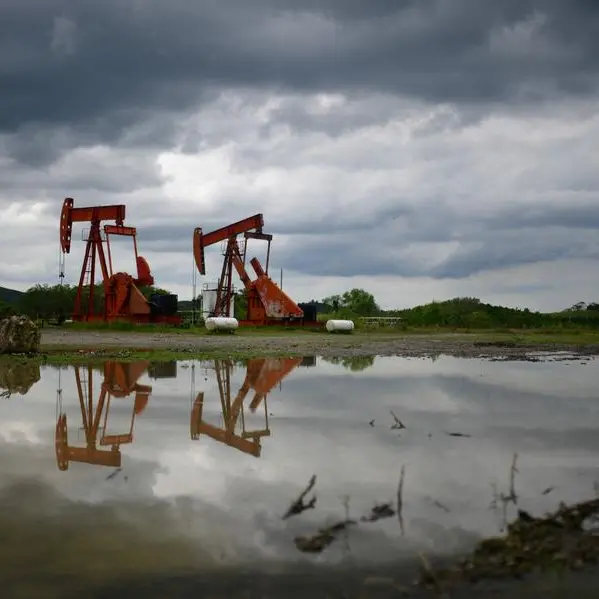
Syria also produces 400,000 barrels of oil per day of which it used to export around 150,000 barrels per day primarily to Germany, Italy and France.
But the new EU sanctions now mean that these will mean Syria will be desperate to look for other buyers.
Its key ally Iran is also being squeezed by the international community, especially after news that the South Koreans are under pressure from the United States to ban Iranian petroleum products.
Clearly, the screws around the Iranian-Syrian alliance are being tightened.
Not surprisingly, oil prices have shot up recently, as the threat of existing oil supplies being wiped off the market.
"There is little doubt that the sanctions are having a significant economic impact, but it remains unclear whether they are having a political one - and whether whatever political benefits might accrue outweigh the inevitable socio-economic costs," notes the ICG.
"For now, no further sanctions should be considered without first assessing both the immediate implications of those already in place and the longer-term burden they would impose on Syria's economic and social recovery.
"At the same time, Syria's opposition and the international community should begin planning on how to rebuild the economy in the context of a transition."
DAMNING UN REPORT
As part of keeping the pressure on the Syrian government, the UNHCR has published a shocking report on its handling of the domestic crisis and its treatment of its citizens.
It all started in the early days of the Arab Spring in February 2011, when limited protests broke out around issues such as rural poverty, corruption, freedom of expression, democratic rights and the release of political prisoners in Syria. Subsequent protests called for respect for human rights, and demanded far-reaching economic, legal and political reforms. By mid-March, peaceful protests erupted in Dar'a in response to the detention and torture of a group of children accused of painting anti-Government graffiti on public buildings.
On 25 April, Syrian armed forces undertook the first wide-scale military operation in Dar'a. Since then, protests have continued across the country, with an increasingly violent response by State forces. Other major military operations were carried out in different locations. On 8 November, OHCHR estimated that at least 3,500 civilians had been killed by State forces since March 2011. Thousands are also reported to have been detained, tortured and ill-treated. Homs, Hama and Dar'a reportedly suffered the highest number of casualties, the report notes.
Here is sampling of the horrors alleged by the UN against the Syrian regime:
* Numerous defections from military and security forces have occurred since the onset of the protests, and have, by many accounts, increased in recent months. An unknown number of defectors have organized themselves into the "Free Syrian Army", which has claimed responsibility for armed attacks against both military and security forces (although there is no reliable information on the size, structure, capability and operations of this body). Colonel Riad Al Asaad, who declared his defection in July, is said to be in charge of the Free Syrian Army.
* From the start of the protests, the Government has claimed to be the target of attacks by armed gangs and terrorists, some of whom it accused of being funded by foreign sources.
* According to individual testimonies, including those of defectors who have acknowledged their role in policing and quelling the protests, State forces shot indiscriminately at unarmed protestors. Most were shot in the upper body, including in the head.
* Checkpoints and roadblocks were set up to prevent people from moving freely and joining demonstrations, especially on Fridays. Defectors who were deployed at checkpoints told the commission about "black lists" with names of people wanted by the authorities.
Defectors were tortured because they attempted to spare civilians either surreptitiously or by openly refusing to obey orders. A defector showed scars on his arms compatible with electroshock marks and about 30 stitches on his scalp.
* Reliable sources indicated that 256 children had been killed by State forces as at 9 November.
* The commission received credible information regarding the destruction of property, including of homes and household possessions. In the context of raids, security and military forces received orders from their superiors to systematically loot homes, shops and other properties, steal money and other valuables. Motorcycles were confiscated, piled up and destroyed to prevent people from joining rallies outside their place of residence.
CONCLUSION
The ICG believes that major economic crisis also is looming, with ruinous consequences for the future.
"The regime almost certainly will empty state coffers in order to hold on to power as long as possible. Meanwhile, international sanctions are bringing business to a virtual standstill, generating growing unemployment. As the price of imports rises and local production is disrupted, Syrians find it harder to obtain commodities, including medicine and milk powder."
As the economic spirals out of control and businessmen scramble to run for cover, the financial institutions are also facing tremendous pressure.
It's not looking good for Syria's economy in the immediate future - it's probably looking worse for Al Assad's regime.
© alifarabia.com 2011