Although Dubai has seen a pick up in its economy with tourists and hotel occupancy on the up and external trade much improved, it has not yet reflected on credit growth or trickled down to other parts of the economy.
In addition, Dubai's faces challenges to keep the momentum going given the adverse external conditions ranging from an EU debt crisis to the more direct danger of a U.S. escalation of conflict with Iran.
These external challenges are exacerbated by Dubai's sovereign and government related debt that needs to be rolled over or restructured.
Dubai's GDP is estimated to have grown by 3.1% in 2011, according to the Institute of International Finance (IIF), a figure that will slide to 2.8% in 2012, suggesting that an economic pick up may not be sustained.
Like its sister emirate Abu Dhabi, Dubai had a better year than its regional neighbours, and like the capital, some of the dynamic emirate's sectors fared better than others.
As Arab states exploded in a frenzy of popular movement in the early part of the year, most analysts expected Dubai to benefit: there was much talk of international tourists changing their flight plans from Cairo and Tunis to Dubai, more businesses in Manama will shift to the emirate and investments that were meant for elsewhere in the region would find a home in the emirate.
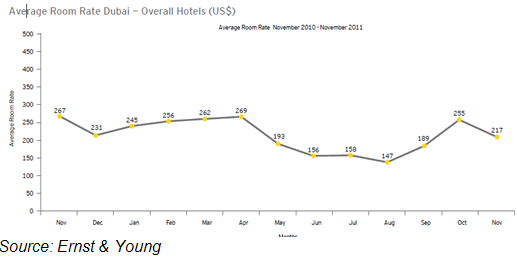
Some of that occurred but not to the degree analysts were anticipating. According to Ernst & Young's Hotel Benchmark survey, average room rates in Dubai for volatile for much of the year, even falling to $147 in the hotter, summer months, from $267 in November 2010.
Overall, average room rates in Dubai were down a mere 0.2% in the first 11 months of the year, compared to the same period last year.
And while there may have been many citizens of other Arab nations heading to Dubai to escape the turmoil of their own country - they were in no mood for a vacation, as beach hotels saw a 6% decline. Meanwhile, Dubai apartments' average room rates were up 4.0% during the year.
While Manama saw a 52.3% decline in room yield and Cairo was down nearly 48%, Dubai's was up 4% for the first 11 months of the year, according to E&Y data.
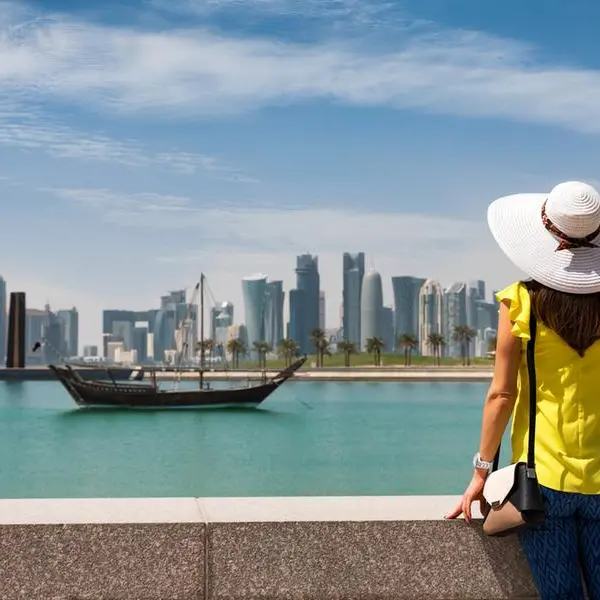
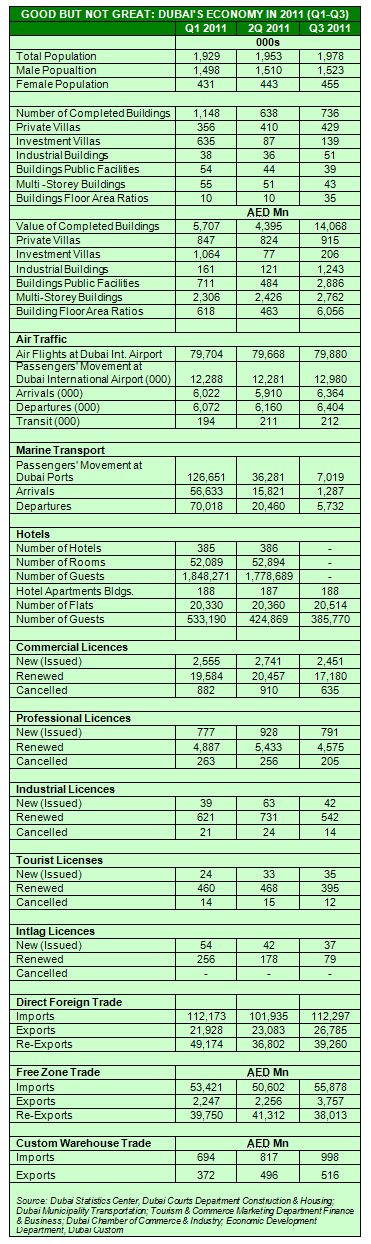
Meanwhile, air traffic in Dubai rose nearly 8% in 2011 to reach 46.3 million passengers by November 2011, despite a tough tourism and business environment. The emirate is on track to cross the 50 million traffic figure for the year, according to Dubai Airports.
Other statistics also show Dubai's tourism sector took some advantage of the Arab revolution. Hotel and restaurants sector posted a sterling 12.8% in the first half of the year, pushing the economy up by 0.5 percentage points, according to the Dubai Statistics Centre (DSC).
In addition, the retail sector grew 5% during the first six months of 2011, and now contributes around 30% of the emirate's GDP, says the statistics centre.
As a reflection of that trend, Emaar Properties' Dubai Mall saw 54 million visitors in the year, making it the most visited shopping and leisure destination, according to the company.
Other sectors also contributed to the Dubai economy: manufacturing was up 1.4% and financial services 7%, transport and communication was up 3.3% and utilities 5.6%.
However, there were a few laggards and none of them was a surprise: construction sector was down 10.4% and real estate nearly 6% during the first half of the year compared to the same period last year.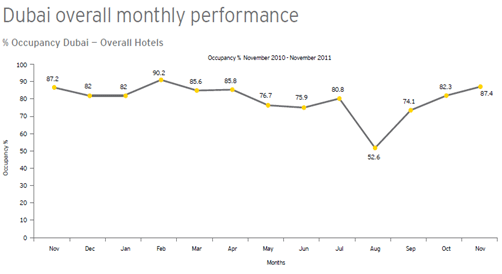
REAL ESTATE DRAG
The real estate sector continues to hang over Dubai's economy like a gloomy cloud.
"In the real estate sector, besides the challenge of oversupply, there are sporadic build quality and breach of contract problems that have to be addressed in order to attract long-term investors," says EFG. "We remain cautious on Dubai's growth outlook, in light of these challenges, and expect them to remain a drag on UAE's overall credit growth."
But there are signs of life: real estate transactions in Dubai were up 16% year-on-year in transactions numbers to reach 35,297 with total value rising 20% year-on-year to AED143 billion, with land sales leading the activity.
"Availability of financing for the real estate sector also reportedly increased from this perspective with mortgages accounting for around 60% of value transacted," says Global Investment House.
According to industry reports, average Dubai house prices reached Dh750 per square feet by the end of 2Q11.
"Based on our view of Dubai's residential clearing price -likely AED600-650 per square feet (i.e., at least 70% peak-to-trough decline from peak of about AED2,000 per square feet) - we estimate an additional 15-20% downside from current levels is likely," says Rasmala, the Dubai-based investment bank.
Riyadh-based Samba echoes that sentiment: continued real estate weakness and Dubai Inc.'s heavy debt burden will also present challenges, such that the UAE will be doing well if it manages 3% growth in 2012.
IRAN-UAE TRADE
Iran is a major trade partner with the UAE, especially Dubai, and tight international sanctions on the Islamic Republic suggest that Dubai's trade will likely be the most affected in the region.
The UAE's non-oil trade grew by AED 120-billion in the first nine months of the year to reach AED676 billion, with Iran among its leading trading partners.
But while Iran is no stranger to sanctions and its trading partners no strangers in finding a way around them, the new set of curbs by the U.S. is stricter and specifically implemented to weed out loopholes and further turn the screws on Iran.
Also Read: Iran Cornered
In addition, many Iranian businesses in the UAE have also taken a hit due to the international sanctions on financial dealing with Iranian banks, further exacerbating the problem for Dubai. Some media reports suggest a 40% decline in Iranian businesses in Dubai in the past few weeks alone.
Iranians are also the third largest buyers of Dubai property, according to Dubai Land and Property Department, with AED3.8-billion investments in 2011 alone, and any curbs in moving funds would deter many Iranians.
DEBT CRISIS
And then there are the debt risks.
The emirate's debt obligations falling due in 2012 remain high, equivalent to 13.4% of Dubai's GDP.
The government of Dubai has returned to international capital markets following Dubai World's (DW) restructuring agreement with its creditors on September 9, 2010.
Following discussions with the Dubai authorities, foreign and domestic creditors agreed to refinance their loans of $14.4 billion to Dubai World through maturity extensions of 5-8 years at interest rates slightly below market levels.
Indeed, Dubai is no longer among the ten sovereigns most likely to default, according to the latest report from CMA Datavision, as spreads have come down and other countries, especially in Europe and the Middle East, are seen to be at higher risk.
Also Read: Dubai Is No Longer At High Risk.
While the agreement between Dubai World and its creditors is expected to improve the outlook of Dubai's economy, but it does not remove all uncertainties.
"Backed by UAE federal resources and having successfully restructured a large portion of its debt, Dubai's financial position has improved markedly," says the IIF.
"Capital markets are encouraged by the emirate's efforts to improve governance, reform real estate finance, sell assets, and remain current on interest payments."
In June 2011, Dubai returned to capital markets, launching a USD500-million 10-year bond priced at 5.6%. The markets were further encouraged by the announcement by the Investment Corporation of Dubai (ICD) of its intention to repay USD4-billion of its debt falling due in the third quarter of 2011.
Ratings' agency Moody's says Dubai's exposure to contingent liabilities emanating from state-owned corporations (excluding the debt of state-owned banks) as amounting to around USD33.7 billion -- significantly below Dubai's state-owned corporate debt of USD68.6 billion, and excluding USD5.1 billion of government-guaranteed corporate debt.
In total, Moody's has identified USD101.5 billion of debt linked to the Dubai government and its state-owned non-financial corporations.
"Despite growing concerns, we think that Dubai's government-related entities (GREs) should be able to service the USD3.8 billion in bonds that mature next year," said Capital Economics in a note to clients.
"Instead, the more pressing issue is the on-going restructuring of loans by banks, and delayed payments by GREs to trade creditors. Until these problems are resolved, domestic credit growth will remain subdued."
Whilst mortgage portfolios continue to be risky year-on-year as private sector wages are unlikely to see a substantial year-on-year increase, individual leverage remains high and there are risks of job losses if Dubai's economic recovery sputters, says EFG-Hermes.
"Furthermore, after Dubai World, the debts of other Dubai-based GREs are likely to be restructured as maturity of at least USD10 billion looms, which makes us cautious on the outlook of UAE banks' cost of credit for 2012."
The subdued mood is reflected in the Dubai Financial Market index which fell 17% last year, and has already lost nearly 4% within the first two weeks of the New Year.
CONCLUSION
Barring a catastrophic event in Iran, Dubai's economy should see another good year in 2012, but the emirate is yearning for the heydays when things were great. Even if the international geopolitical events cool down, the EU debt crisis subsides, and none of its other Mideast neighbours implode, Dubai still has to work on its own structural weaknesses and nurse back its real estate market back to life. That will take more some time still.
Also Read: Austere Abu Dhabi
© alifarabia.com 2012