What's in store for oil and gold -- the ying and yang of the global economy? At least one analyst thinks gold is a bubble poised to burst.
In the space of a short few weeks, the world looks less sure of its self. Aggressive forecasts are being toned down, massive plans are being scaled back, growth figures are being revised downwards, and bulls have turned slightly bearish.
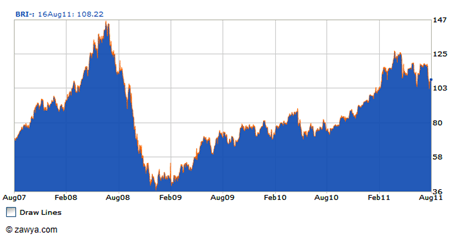
Commodity prices have trekked the global economy's ebbs and flows. With oil sliding down from its yearly high of $126.65 per barrel in April, and gold scaling new highs, commodities have reacted to in typical fashion.
And the world does seem to be a less self-assured place than it was a few weeks ago. With the EU debt crisis worsening, the U.S. growth stalling and the Chinese economy in danger of a hard landing, oil prices are off the boil.
"The mixed picture is typified by the $3.9bn Q2 net outflow of institutional and retail investments funds from commodities, the largest quarterly outflow since Q3 2005," says Barclays Capital. "The bulk of that is attributable to commodity indices, which saw withdrawals of $5bn in Q2."
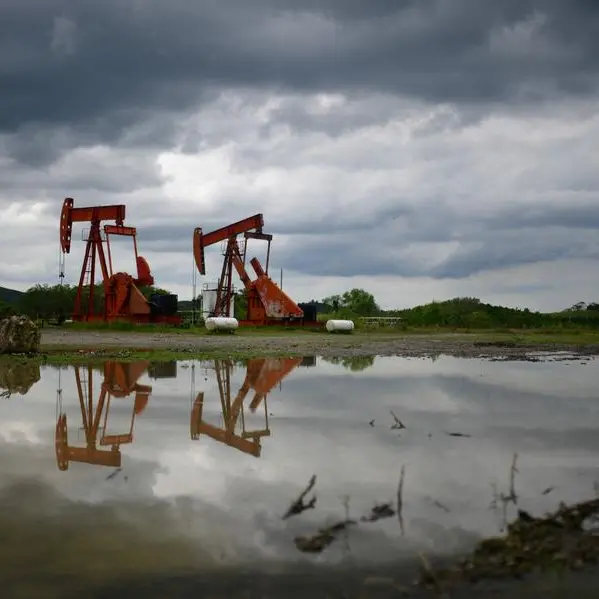
Oil
Barclays Capital is looking slightly beyond the immediate growth constrictions and believes global oil demand is on a solid upward trajectory, led by structural changes in non-OECD countries. The ineffectiveness of the supply side to catch up with it has created an extended period of supply capacity tightness, which will be apparent in 2012.
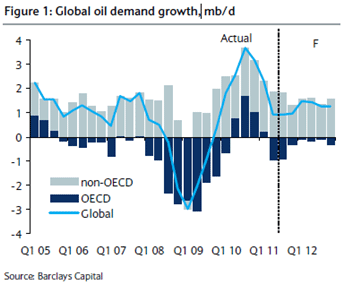
"Against that backdrop, key oil producers seem set on a sustained path of far higher social expenditure and therefore far higher oil price requirements," says Barclays. $100 oil, in our view, is the new sustainable norm. Further, political evolution in both consumer and producer countries is not only changing their priorities, it is also altering the interaction between them - a key dynamic that will underpin the market next year."
In short, this won't be like 2009 when Brent crude briefly flirted with $40 a barrel, primarily because oil demand has not contracted and financing constraints are not that acute as they during the height of the global financial crisis. On the supply side, oil production is less guaranteed given the Libyan production outages and other oil-producing countries (Saudi Arabia, Iraq, Iran) carrying perceived levels of high political risks.
And then there is China. While American and other OECD demand has trudged along, the share of non-OECD demand has risen from about 44% in 2008 to 48% this year, and en-route to almost 50% by next year. Within that, China's share of global oil demand has increased by more than 2%, says Barclays.
Also, expect Opec to intervene if the bottom fell of prices.
Another key factor is the shrinking non-Opec supply due to power outages and maintenance issues.
However, Deutsche Bank, which also maintains a $114 Brent for much of 2011, warns that the contracting global economy is a very real danger.
"Every percentage point of lower GDP growth is worth about one percentage point less oil demand or about 0.9mmb/d on a base of circa 90mmb/d,' says Adam Sieminski of Deutsche Bank.
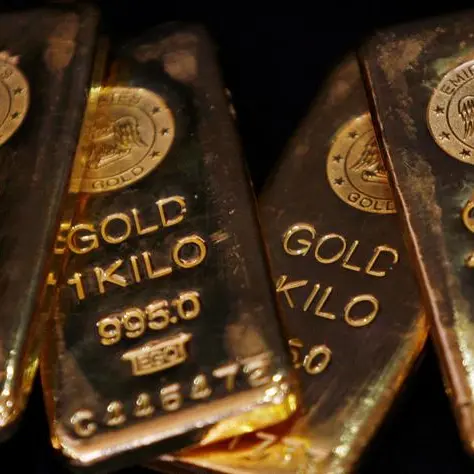
Gold
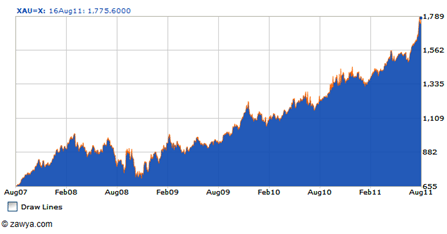
Barclays Capital believes gold will reach $2,000 per ounce on the back of three pillars:
First, a structural shift in macroeconomic insecurity on the back of heightening sovereign debt risks and credit downgrades
Second, sharp acceleration of broad investment demand, which was mostly absent H1 11.
Third, central bank buying has returned and from new corners in sizeable tranches, a trend that is set to continue.
"Given that we are in the seasonally slow period for physical demand, we believe prices could be subject to temporary corrections as profit-taking steps in," notes Barclays. "A repeat of 2009 could occur whereby jewellery demand is hampered by the high prices and forced buying only emerges during the festive and wedding seasons and upon significant price dips."
Barclays thinks the macro environment is evolving increasingly favourably for gold prices, and a much more positive global economy, coupled with high and increasing real interest rates and controlled inflation, will be required to end gold's party.
Bubble Trouble
However, not everyone is convinced. A Wells Fargo analyst notes that the gold is a 'bubble ready to burst'. "We have seen the economic damage" of past bubbles and "feel compelled to ring the warning bells," notes the analyst, adding that once the global economy shows signs of recovery, there might be an exodus from the yellow metal.
Bank of America Merril Lynch clients appears to agree with the Fargo view. The latest BofA ML of fund managers shows that 43% see gold overvalued, a major increase from last month when only 17% that felt the yellow metal was overpriced.
But as gold scaled a new high of $1,788.40 on August 16 on fears of an escalating euro crisis, for now these views appear to be that of the minority.
© alifarabia.com 2011