Thursday, Jan 19, 2012
ABU DHABI (Dow Jones)--A key member of the Bundesbank's board called Thursday for investors from outside Europe to buy the sovereign debt of crisis-stricken European states, stressing that such states deserve more confidence than markets currently grant them.
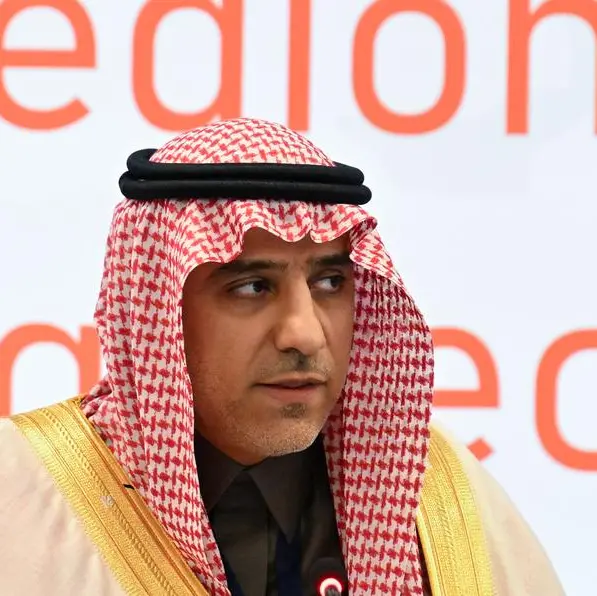
Speaking at a meeting of European and Gulf central bankers in Abu Dhabi, Bundesbank board member Andreas Dombret underlined the progress that countries such as Ireland and Italy have made towards fiscal reform, and said global investors can help solve Europe's debt crisis.
Investors outside Europe "can and should" buy bonds of stressed European sovereigns "because they have confidence in the long-term sustainability of the fiscal position of the countries in question, and because they are interested in portfolio diversification," Dombret said. Such purchases would also ensure that Europe's crisis doesn't create systemic risk at a global level.
"European sovereigns deserve more confidence than markets are currently willing to give them," he added, in a copy of his speech seen ahead of time by Dow Jones Newswires.
Dombret's comments come a day after the International Monetary Fund said it is seeking to boost its financial firepower by $500 billion in an effort to cope with the effects of Europe's continuing debt crisis. Oman's central bank Governor Hamood Al Zadjali confirmed Thursday that the oil-rich Gulf Cooperation Council states are among the nations that have been approached by the IMF to increase their contributions in line with their IMF quotas.
Dombret stressed that global imbalances play an "important role" in establishing financial stability and that "global players can help to solve the current crisis in Europe."
"The savings glut is seeking safe and high-yield assets," he said.
"Sometimes, international investors ask me 'Why should we buy bonds from sovereigns in crisis if their European partners are unwilling to do so to a larger extent?'" Dombret said.
"My answer is 'Look, the European partners have to be aware of moral hazard implications, because they are players in the European political game.'"
By contrast, investors outside Europe "need not take into account moral hazard implications," he said.
Dombret stressed that European countries including Ireland and Italy are making progress in tackling the debt crisis. Italy's new government "is going to implement fiscal measures" and "can build on what is essentially a sound economy," he said.
Turning to systemic risks, Dombret said central banks should help analyze such risks, but warned that "monetary policy instruments are not in the first instance financial stability policy instruments."
Progress on analyzing risks stemming from the shadow banking sector is only advancing "at a snail's pace due to the lack of data," Dombret added.
He also said private and public recapitalization must be implemented where necessary to prevent market uncertainty.
-By Tom Fairless, Dow Jones Newswires, +496929725505; tom.fairless@dowjones.com
(Leila Hatoum in Abu Dhabi contributed to this article.)
(END) Dow Jones Newswires
19-01-12 0900GMT