Botswana is Africa's most desirable mining jurisdictions, according to one of the most influential rankings in the mining world.
The southern African country was the 17th most popular mining destination in the world, according to senior executives of 742 mining companies surveyed by Fraser Institute, a think tank based in Vancouver, Canada.
One manager of an exploration company described Botswana's mining rules this way: "Favorable attitude of government, fair social and environmental approach, fair taxation and no added requirements, and government is increasingly investing in assets such as infrastructure and education."
Fraser has been ranking mining jurisdictions since 1997, to gauge policy factors that determine the desirability of mining regions.
Measures include indices of regulations and environmental policies, regulatory duplication, taxation regime, uncertainty concerning protected areas and disputed land claims, infrastructure, socioeconomic and community development conditions, trade barriers, political stability, labor regulations, quality of geological database, security, labor and skills supply, corruption, and uncertainty.
The ranks offer a window into the challenges and strengths of each destination and highlights where mining companies should be investing in the future.
Botswana emerged as a jurisdiction with the least uncertainty concerning administration and enforcement of regulations. And although Botswana may be a bright spot in Africa, the rest of the continent did not fare so well.
Average, policy potential index (PP) score for Africa was below last year's survey, which reaffirms a declining trend over the past five years, the institute said.
Mali saw the biggest drop in its rank in the survey, falling from 42nd to 79th, out of the 96 jurisdictions.
"Mali dropped on nearly every policy factor, but most significantly in its survey ratings for uncertainty concerning environmental regulations (-29%); uncertainty concerning the administration, interpretation, or enforcement of existing regulations (-28%); and taxation regime (-23%)," the institute noted.
The country also dropped in security (-12%) and political stability (14%), although both factors were already rated very low in the 2011/2012 survey.
Meanwhile, Madagascar also fell in the rankings from 59th in the most recent survey to 85th in due to worsening perceptions amongst respondents for uncertainty concerning what areas will be protected as wilderness, parks, or archaeological sites (-23%); uncertainty concerning environmental regulations (-21%); and uncertainty concerning the administration, interpretation, or enforcement of existing regulations (-16%); although it did improve significantly on its rating for trade barriers (15%).
South Africa - the continent's biggest mining destination -- was ranked a poor 64th. The country suffered in the eyes of investors after strikes and violence that shocked the industry last year.
"Both South Africa and Zimbabwe are driving social experiments not driven by logic and economy, but by ideology," vice-president of an exploration company offered his candid comment to the Fraser Institute. "In the absence of reason, primary industries become the cash cows to fund the un-fundable. The rise of oligarchs in both countries evidences decline."
Risks threaten Africa's mining boom
The biggest fears among investors interested in Africa are resource nationalism and corruption, which are sure-fire ways to drive away investors.
Democratic Republic of Congo emerged as the worst African mining destination among investors surveyed by the Fraser Institute.
"Corrupt beyond description and, from a mining point of view, a shambles in each and every conceivable respect," opined the president of a producer company with more than USD 50 million, about DRC's business environment.
But other jurisdictions in Africa did get high marks from investors. Burkina Faso government was lauded for its understanding of the importance of mining to the economy, while Mauritania and Ghana also earned praise.
Morocco, one of MENA's two jurisdictions featured in the survey, also did quite well, coming in as the 25th most promising mining destination in the world.
Meanwhile, Egypt was ranked 69th as investors worried about weak mining codes, political instability, corruption and labor issues.
While miners bemoaned weak and unclear jurisdictional rules, they also had one eye peeled on developments in their sector.
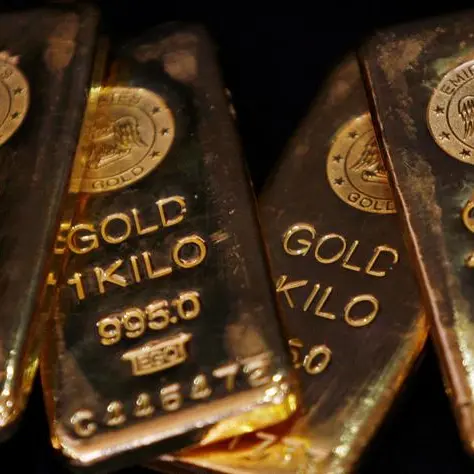
Most miners were pessimistic on commodity prices in the next two years. Interestingly, they were least pessimistic about gold prices, which they expect to see rising 20% over the next two years.
"Only 38.8% thought gold prices would either increase by 10% or less, or decline over the next two years; 53.4% thought they would increase by 20% to 50%, while 7.7% expected increases of more than 50%," said Fraser.
Like most surveys of almost every description, Scandinavian countries topped the rankings. Finland and Sweden emerged as the world's best mining destinations, while the Canadian provinces of Alberta and New Brunswick took the next two spots. US states Wyoming, Nevada and Utah were among the top ten jurisdictions, while Norway bookended Scandinavian presence in the top most popular mining destinations in the world.
© alifarabia.com 2013