29 March 2010
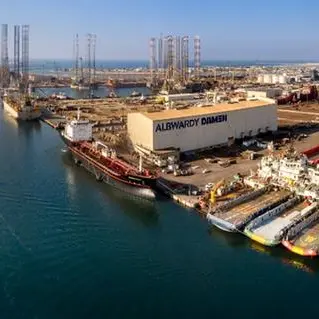
Bahrain's showcase ship-handling facility, the new Khalifa Bin Salman Port (KBSP), appears to be meeting the expectations of the government and its operator, fast becoming integral to the Kingdom's drive of developing into a major transport hub.
Built at a cost of some $365m, the KBSP started operations in April 2009, though it was not formally opened until December, and has begun to rack up some impressive results.
According to figures released by the General Organisation of Sea Ports (GOP) in mid-March, since the port began operations there has been an average increase of 14.9% per month in the number of vessels using the facility, with 62 vessels berthing in January, a new record.
Hassan Al Majed, GOP's director-general, says the most recent results showed that the KBSP had already begun to solidify its prominence among the shipping hubs of the region.
"KBSP's performance continues to improve month-on-month, both in terms of commercial and operational activities," he said.
With the global economy starting to pick up, movements at the KBSP are expected to increase still further, maintaining or even bettering the trend over the first year of its operations.
The new port has quadrupled the capacity of the 50-year old Mina Salman Port, which it replaced. Though the old facility served the country well, and helped establish Bahrain's credentials as a reliable maritime cargo centre, by the early 2000s Mina Salman's productivity was being compromised by progress. With ships getting steadily larger, and much deeper drafts than when the port was first built, Mina Salman was restricted in its ship-handling capacity, a fate less likely to befall the KBSP.
Indeed, while the port is about to mark its first full year of operations, work is continuing to increase its ship-handling capacity, with dredging being carried out to deepen the main approach channel.
In mid-March, the Ministry of Works (MoW) announced that the first stage had been completed, deepening the route from 12 metres to 15 metres, a project that involved moving some 4.6m tonnes of material.
According to Ghazi Al Saleh, the director of strategic projects at the MoW, the deepening of the approach channel will boost the port's capacity and its contribution to the economic master plan.
Covering an area of 110 ha at a site in the north-east of the island, the port is only minutes away from Bahrain International Airport. Significantly, it will also be connected to the mainline rail link that is to be constructed as part of the wider expansion of the Kingdom's transport system.
As far as the aspirations of Bahrain to become a leading shipping and logistics centre in the Gulf, the most important element of this expansion process will be the building of the causeway linking the Kingdom with Qatar. The 40-km causeway will provide Bahrain with a broad gauge rail connection with the mainland, alongside a second road link tying Bahrain to Saudi Arabia. Scheduled to be completed in 2015, the causeway will increase the KBSP's potential to reach wider markets, greatly adding to the port's capacity to trans-ship cargos to and from land-based transport modes.
Though designed primarily as a container-handling port, with a capacity to shift more than 1.1m twenty-foot equivalent units (TEUs) a year, the KBSP also has facilities to accommodate passenger ships, general break-bulk and roll-on/roll-off cargo vessels, giving it a versatility many of its regional rivals lack.
And rivals are certainly not lacking, with most of the countries around the Gulf investing heavily in maritime transport centres. One that stands out in particular is Abu Dhabi's Halifax Port, set to start moving cargo in 2012. With an initial capacity to handle 2m TEUs a year, along with up to 800,000 tonnes of general cargo, the Abu Dhabi port will have twice the capacity of the KBSP.
Though not the largest port in the region, KBSP is still well positioned to challenge its larger rivals, thanks to its strategic location in the middle of the Gulf and the high-speed land links it will enjoy in the coming years.
Bahrain's showcase ship-handling facility, the new Khalifa Bin Salman Port (KBSP), appears to be meeting the expectations of the government and its operator, fast becoming integral to the Kingdom's drive of developing into a major transport hub.
Built at a cost of some $365m, the KBSP started operations in April 2009, though it was not formally opened until December, and has begun to rack up some impressive results.
According to figures released by the General Organisation of Sea Ports (GOP) in mid-March, since the port began operations there has been an average increase of 14.9% per month in the number of vessels using the facility, with 62 vessels berthing in January, a new record.
Hassan Al Majed, GOP's director-general, says the most recent results showed that the KBSP had already begun to solidify its prominence among the shipping hubs of the region.
"KBSP's performance continues to improve month-on-month, both in terms of commercial and operational activities," he said.
With the global economy starting to pick up, movements at the KBSP are expected to increase still further, maintaining or even bettering the trend over the first year of its operations.
The new port has quadrupled the capacity of the 50-year old Mina Salman Port, which it replaced. Though the old facility served the country well, and helped establish Bahrain's credentials as a reliable maritime cargo centre, by the early 2000s Mina Salman's productivity was being compromised by progress. With ships getting steadily larger, and much deeper drafts than when the port was first built, Mina Salman was restricted in its ship-handling capacity, a fate less likely to befall the KBSP.
Indeed, while the port is about to mark its first full year of operations, work is continuing to increase its ship-handling capacity, with dredging being carried out to deepen the main approach channel.
In mid-March, the Ministry of Works (MoW) announced that the first stage had been completed, deepening the route from 12 metres to 15 metres, a project that involved moving some 4.6m tonnes of material.
According to Ghazi Al Saleh, the director of strategic projects at the MoW, the deepening of the approach channel will boost the port's capacity and its contribution to the economic master plan.
Covering an area of 110 ha at a site in the north-east of the island, the port is only minutes away from Bahrain International Airport. Significantly, it will also be connected to the mainline rail link that is to be constructed as part of the wider expansion of the Kingdom's transport system.
As far as the aspirations of Bahrain to become a leading shipping and logistics centre in the Gulf, the most important element of this expansion process will be the building of the causeway linking the Kingdom with Qatar. The 40-km causeway will provide Bahrain with a broad gauge rail connection with the mainland, alongside a second road link tying Bahrain to Saudi Arabia. Scheduled to be completed in 2015, the causeway will increase the KBSP's potential to reach wider markets, greatly adding to the port's capacity to trans-ship cargos to and from land-based transport modes.
Though designed primarily as a container-handling port, with a capacity to shift more than 1.1m twenty-foot equivalent units (TEUs) a year, the KBSP also has facilities to accommodate passenger ships, general break-bulk and roll-on/roll-off cargo vessels, giving it a versatility many of its regional rivals lack.
And rivals are certainly not lacking, with most of the countries around the Gulf investing heavily in maritime transport centres. One that stands out in particular is Abu Dhabi's Halifax Port, set to start moving cargo in 2012. With an initial capacity to handle 2m TEUs a year, along with up to 800,000 tonnes of general cargo, the Abu Dhabi port will have twice the capacity of the KBSP.
Though not the largest port in the region, KBSP is still well positioned to challenge its larger rivals, thanks to its strategic location in the middle of the Gulf and the high-speed land links it will enjoy in the coming years.
© Oxford Business Group 2010