16 January 2012
In the context of the region, the UAE and especially Abu Dhabi, was the proverbial safe haven along with Qatar.
While it was not a great year by any stretch of the imagination, the UAE looked good simply because others such as Egypt, Bahrain, Libya and Syria were imploding.
And much of it was oil-driven. As the world worried about oil supplies, Abu Dhabi was among the few Opec members (along with Saudi Arabia and Kuwait) to raise production limits to keep the global markets well-supplied.
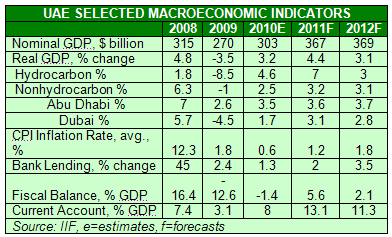
The reward for the UAE was a hydrocarbon economy that's set to be 7% in 2011, according to the Institute of International Finance (IIF). With Brent crude well above $100 a barrel, Abu Dhabi's oil Juggernaut was in full-blown action much of the year.
Overall, the UAE is expected to post a 4.4% growth for the year, with Abu Dhabi expected to post 3.6% in 2011, according to IIF estimates.
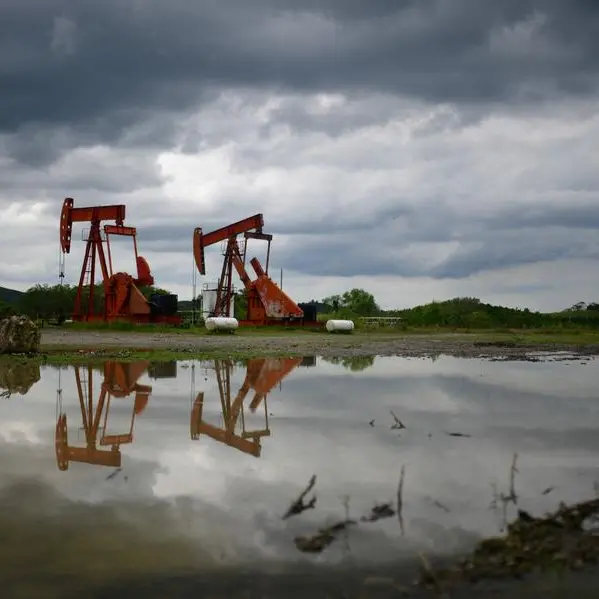
The emirate has been pumping 2.5 million barrels per day on average for much of 2011, in sharp contrast to the average 2.2 million in 2009 and 2.34 million in 2010.
In terms of its oil economy, Abu Dhabi holds 9% of the world's proven oil reserves and almost 5% of the world's natural gas.
"It can be conservatively assumed that Abu Dhabi can maintain current oil and gas production levels, and relatively low production costs, for the rest of the century," says ratings agency Standard & Poor's which has an AA+ rating for the emirate.
"To meet its targets for stronger growth in the non-oil economy, we expect that the government will continue to use its oil wealth to deepen and diversify the economic production base, decouple it from the volatility in the oil economy, and enhance the employability of the national labour force."
SELF-IMPOSED AUSTERITY
But despite its riches, Abu Dhabi has been exceptionally austere this year, spending much of the year, curtailing spending and putting a few landmark projects on ice - these include the Louvre and Guggenheim museums and MGM Grand Abu Dhabi Hotel. Overall, close to USD30-billion worth of projects are on hold, according to reports.
Fitch notes that Abu Dhabi has been cutting its spending on construction-related projects, due to concerns about oversupply in the real estate market, an increase in the Emirate's financial commitments, and the slowdown in the global economy.
"Nevertheless, key projects remain in the pipeline; some contracts have been delayed or possibly cancelled, as the Abu Dhabi government has prioritised major infrastructure projects. However, a sharper-than-anticipated slowdown in the construction sector in Abu Dhabi could have some implications for contractors operating in the UAE," says Fitch.
Abu Dhabi's sovereign wealth funds and investment companies have also been unusually restrained in acquiring foreign assets and there has been a determined assets to streamlines policies in the government-related entities and avoid any ambitious undertaking.
While the past few years in Abu Dhabi had been characterised by an ambitious agenda that sought to emulate Dubai in many ways, 2011 saw the return of the 'classic' Abu Dhabi - prudent and restrained.
Still, the emirate intervened went it felt it was necessary. Bailing out flagship real estate developer Aldar Properties was a signal that it will not let strategically-important companies to fail. A message that many analysts suggest would also extend to Dubai's strategically-important companies.
Aldar is a minority state-owned entity via government-owned Mubadala. But the government of Abu Dhabi announced a second support package, in the form of asset purchases and debt relief, worth around USD4.6 billion.
Fitch ratings estimates that it takes the total size of government assistance this year to AED36 billion, and confirms Abu Dhabi's willingness and ability to support strategically important companies in which it has a stake.
"The support extended to property developer Aldar demonstrates that contingent liabilities remain a risk to Abu Dhabi's balance sheet. But the emirate will not be subjected to as severe a strain as in 2008 and 2009, when its strong balance sheet enabled it to deal with such contingencies," says Fitch Ratings.
S&P notes however that with its exceptionally robust net asset position, the Abu Dhabi government has the financial resources to cover fiscal costs from contingent liabilities, including those that may arise from the high debt burdens of GREs, which it estimates at 54% of 2010 GDP.
"At the same time, we believe that the government is aware that the changed global economic environment and continued risks in the real-estate sector warrant a review of the pace of spending on the various projects that GREs are undertaking," says S&P. "It has therefore taken measures to scale back some of these projects, and to strengthen the monitoring of financing needs and debt management practices at the different GREs and SOEs."
The IIF projects total gross foreign assets of the UAE to continue rising to about USD600 billion by end-2012. This would result in an overall net external asset position of about USD480 billion, equivalent to 130% of 2012 projected GDP.
"Such large financial resources will be more than adequate to finance likely fiscal deficits for several years if oil prices fall below $85/b, which is the estimated breakeven price of oil that balances the consolidated 2011 budget for the UAE.
REAL ESTATE DRAG
Money can't always buy recovery, however. Abu Dhabi's real estate woes continues with close to 25,000 new units expected to come into the market this year, further depressing prices which are already down 45% from 2008.
While that means a lowering of the cost of living for residents, as rents have become far more competitive, buyers remain on the sidelines hoping for a further fall in prices.
Indeed inflation was up a mere 1.9% in 2011 compared to 2010, as housing costs were particularly depressed in the year.
DANGEROUS POLICY
But there is a danger that Abu Dhabi's prudent approach may dampen business sentiment. Analysts are worried that the emirate's scaling back of projects could impact contractors and real estate developers. Banks will also have fewer lending opportunities, further curtailing activity.
Credit growth in the UAE already lags that of Qatar and Saudi Arabia, where private sector lending growth (year-on-year) was close to 15% and 10%, respectively, by mid last year.
Indeed, unlike Saudi Arabian and Qatari governments which are taking the lead on leading business activity in their respective countries, the Abu Dhabi government has taken a back seat, which may be problematic as the private sector is looking up to the government to take the lead.
HSBC's purchase managers index (PMI) fell to a four-month low in December to 51.7, from 52.5 in November, suggesting weaker improvement in business conditions.
"The U.A.E. economy may still be expanding, but another weak PMI score strongly suggests that growth has continued to lose momentum. Given how troubled the global outlook is, the U.A.E. is unlikely to pick up pace over the first months of 2012," said Simon Williams, Chief Economist for Middle East & North Africa at HSBC, according to a Zawya Dow Jones report.
OIL PRODUCTION COOLING DOWN?
The EIU has also revised down further UAE's real GDP forecast for 2012 to 3.5% (from 3.8% previously) owing to the slowdown in Abu Dhabi, modest oil production and the EU crisis, which might make it more difficult for GREs to refinance debt.
"Growth will be stronger from 2013 onwards as oil production increases and some projects that have currently been put on hold resume. These projects will significantly boost the services sector in the latter half of the forecast period. Oil production will increase substantially in 2015-16, reaching 2.95m barrels/day in 2016, which will boost real GDP growth," said the EIU.
But with international sanctions impacting Iran's ability to supply oil, Abu Dhabi and its Opec counterparts may once again be called upon to keep their oil production near capacity, translating into yet another bumper oil bonanza for 2012.
CONCLUSION
It seems that Abu Dhabi and the UAE economy may benefit from another troubled geo-political 2012, thanks primarily to their oil production.
But while that might fill up the coffers of the Abu Dhabi government, it does not serve as an engine for job growth, non-oil development and a diversification away from oil revenues - which are some of the key goals of the emirate's 2030 Development Vision.
With Dubai government going through its own debt restructuring process, Abu Dhabi needs to take the lead in driving non-oil growth for the UAE, and reinforce the UAE's position as a key business hub in the region and bring in much need foreign direct investment and technical expertise to spur growth, innovation and a positive vibe in business confidence.
In the context of the region, the UAE and especially Abu Dhabi, was the proverbial safe haven along with Qatar.
While it was not a great year by any stretch of the imagination, the UAE looked good simply because others such as Egypt, Bahrain, Libya and Syria were imploding.
And much of it was oil-driven. As the world worried about oil supplies, Abu Dhabi was among the few Opec members (along with Saudi Arabia and Kuwait) to raise production limits to keep the global markets well-supplied.
The reward for the UAE was a hydrocarbon economy that's set to be 7% in 2011, according to the Institute of International Finance (IIF). With Brent crude well above $100 a barrel, Abu Dhabi's oil Juggernaut was in full-blown action much of the year.
Overall, the UAE is expected to post a 4.4% growth for the year, with Abu Dhabi expected to post 3.6% in 2011, according to IIF estimates.
The emirate has been pumping 2.5 million barrels per day on average for much of 2011, in sharp contrast to the average 2.2 million in 2009 and 2.34 million in 2010.
In terms of its oil economy, Abu Dhabi holds 9% of the world's proven oil reserves and almost 5% of the world's natural gas.
"It can be conservatively assumed that Abu Dhabi can maintain current oil and gas production levels, and relatively low production costs, for the rest of the century," says ratings agency Standard & Poor's which has an AA+ rating for the emirate.
"To meet its targets for stronger growth in the non-oil economy, we expect that the government will continue to use its oil wealth to deepen and diversify the economic production base, decouple it from the volatility in the oil economy, and enhance the employability of the national labour force."
SELF-IMPOSED AUSTERITY
But despite its riches, Abu Dhabi has been exceptionally austere this year, spending much of the year, curtailing spending and putting a few landmark projects on ice - these include the Louvre and Guggenheim museums and MGM Grand Abu Dhabi Hotel. Overall, close to USD30-billion worth of projects are on hold, according to reports.
Fitch notes that Abu Dhabi has been cutting its spending on construction-related projects, due to concerns about oversupply in the real estate market, an increase in the Emirate's financial commitments, and the slowdown in the global economy.
"Nevertheless, key projects remain in the pipeline; some contracts have been delayed or possibly cancelled, as the Abu Dhabi government has prioritised major infrastructure projects. However, a sharper-than-anticipated slowdown in the construction sector in Abu Dhabi could have some implications for contractors operating in the UAE," says Fitch.
Abu Dhabi's sovereign wealth funds and investment companies have also been unusually restrained in acquiring foreign assets and there has been a determined assets to streamlines policies in the government-related entities and avoid any ambitious undertaking.
While the past few years in Abu Dhabi had been characterised by an ambitious agenda that sought to emulate Dubai in many ways, 2011 saw the return of the 'classic' Abu Dhabi - prudent and restrained.
Still, the emirate intervened went it felt it was necessary. Bailing out flagship real estate developer Aldar Properties was a signal that it will not let strategically-important companies to fail. A message that many analysts suggest would also extend to Dubai's strategically-important companies.
Aldar is a minority state-owned entity via government-owned Mubadala. But the government of Abu Dhabi announced a second support package, in the form of asset purchases and debt relief, worth around USD4.6 billion.
Fitch ratings estimates that it takes the total size of government assistance this year to AED36 billion, and confirms Abu Dhabi's willingness and ability to support strategically important companies in which it has a stake.
"The support extended to property developer Aldar demonstrates that contingent liabilities remain a risk to Abu Dhabi's balance sheet. But the emirate will not be subjected to as severe a strain as in 2008 and 2009, when its strong balance sheet enabled it to deal with such contingencies," says Fitch Ratings.
S&P notes however that with its exceptionally robust net asset position, the Abu Dhabi government has the financial resources to cover fiscal costs from contingent liabilities, including those that may arise from the high debt burdens of GREs, which it estimates at 54% of 2010 GDP.
"At the same time, we believe that the government is aware that the changed global economic environment and continued risks in the real-estate sector warrant a review of the pace of spending on the various projects that GREs are undertaking," says S&P. "It has therefore taken measures to scale back some of these projects, and to strengthen the monitoring of financing needs and debt management practices at the different GREs and SOEs."
The IIF projects total gross foreign assets of the UAE to continue rising to about USD600 billion by end-2012. This would result in an overall net external asset position of about USD480 billion, equivalent to 130% of 2012 projected GDP.
"Such large financial resources will be more than adequate to finance likely fiscal deficits for several years if oil prices fall below $85/b, which is the estimated breakeven price of oil that balances the consolidated 2011 budget for the UAE.
REAL ESTATE DRAG
Money can't always buy recovery, however. Abu Dhabi's real estate woes continues with close to 25,000 new units expected to come into the market this year, further depressing prices which are already down 45% from 2008.
While that means a lowering of the cost of living for residents, as rents have become far more competitive, buyers remain on the sidelines hoping for a further fall in prices.
Indeed inflation was up a mere 1.9% in 2011 compared to 2010, as housing costs were particularly depressed in the year.
DANGEROUS POLICY
But there is a danger that Abu Dhabi's prudent approach may dampen business sentiment. Analysts are worried that the emirate's scaling back of projects could impact contractors and real estate developers. Banks will also have fewer lending opportunities, further curtailing activity.
Credit growth in the UAE already lags that of Qatar and Saudi Arabia, where private sector lending growth (year-on-year) was close to 15% and 10%, respectively, by mid last year.
Indeed, unlike Saudi Arabian and Qatari governments which are taking the lead on leading business activity in their respective countries, the Abu Dhabi government has taken a back seat, which may be problematic as the private sector is looking up to the government to take the lead.
HSBC's purchase managers index (PMI) fell to a four-month low in December to 51.7, from 52.5 in November, suggesting weaker improvement in business conditions.
"The U.A.E. economy may still be expanding, but another weak PMI score strongly suggests that growth has continued to lose momentum. Given how troubled the global outlook is, the U.A.E. is unlikely to pick up pace over the first months of 2012," said Simon Williams, Chief Economist for Middle East & North Africa at HSBC, according to a Zawya Dow Jones report.
OIL PRODUCTION COOLING DOWN?
The EIU has also revised down further UAE's real GDP forecast for 2012 to 3.5% (from 3.8% previously) owing to the slowdown in Abu Dhabi, modest oil production and the EU crisis, which might make it more difficult for GREs to refinance debt.
"Growth will be stronger from 2013 onwards as oil production increases and some projects that have currently been put on hold resume. These projects will significantly boost the services sector in the latter half of the forecast period. Oil production will increase substantially in 2015-16, reaching 2.95m barrels/day in 2016, which will boost real GDP growth," said the EIU.
But with international sanctions impacting Iran's ability to supply oil, Abu Dhabi and its Opec counterparts may once again be called upon to keep their oil production near capacity, translating into yet another bumper oil bonanza for 2012.
CONCLUSION
It seems that Abu Dhabi and the UAE economy may benefit from another troubled geo-political 2012, thanks primarily to their oil production.
But while that might fill up the coffers of the Abu Dhabi government, it does not serve as an engine for job growth, non-oil development and a diversification away from oil revenues - which are some of the key goals of the emirate's 2030 Development Vision.
With Dubai government going through its own debt restructuring process, Abu Dhabi needs to take the lead in driving non-oil growth for the UAE, and reinforce the UAE's position as a key business hub in the region and bring in much need foreign direct investment and technical expertise to spur growth, innovation and a positive vibe in business confidence.
© alifarabia.com 2012