The Gulf's centres of finance - some old and some new - are still struggling to get the recognition and reputation they need to compete in the global arena, ROBERT BAILEY reports.
For decades, Gulf financial activity was mainly concentrated in Bahrain, a country whose offshore banking industry surged after the demise of war torn Beirut's regional banking role in the 1970s.
Manama's long established role as the region's offshore banking and financial centre was finally challenged, perhaps inevitably, by the opening of rival centres, notably the 110-acre purpose built Bahrain International Financial Centre in 2004 and by the start up of the Qatar Financial Centre a year later.
For its part, the island responded with new facilities and its $1.5 billion Bahrain Financial Harbour. The concrete has been poured, the towers built and the glass-clad monuments of capitalism completed. However, the concept of the Gulf as an international financial centre is still new and the ambition of the region's cities to join the global big league is being tested.
Nonetheless, some in the region still strive to join this exclusive club with Saudi Arabia investing heavily in the new King Abdullah Financial Centre in Riyadh. When the kingdom announced plans for the vast $8 billion King Abdullah Financial District in Riyadh, which is expected to be opened in 2012, critics were quick to ask whether this was not a financial centre too far in the Gulf region.
However, a sound case can be made for the various centres, particularly their role in assisting regional economic growth and stimulating development and diversification.
Qatar, for example, is a market that can become important for the distribution of mutual funds, hedge funds and other collective investment vehicles over the medium-term. The emirate is also well placed to play a key role in the development of Islamic finance, and, perhaps the growth of Islamic investment funds.
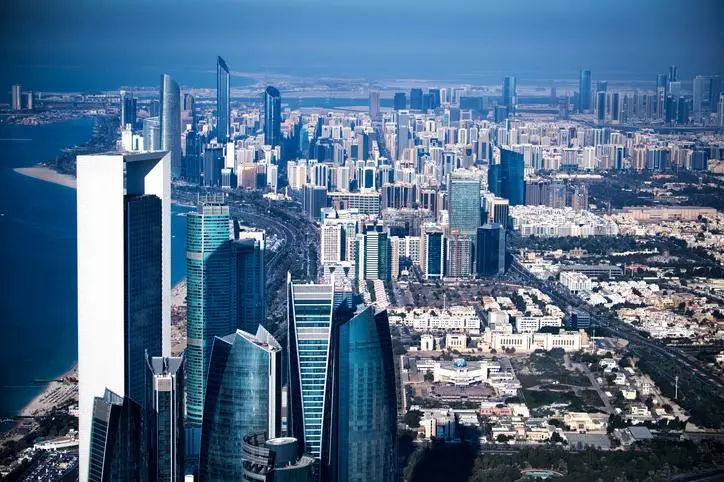
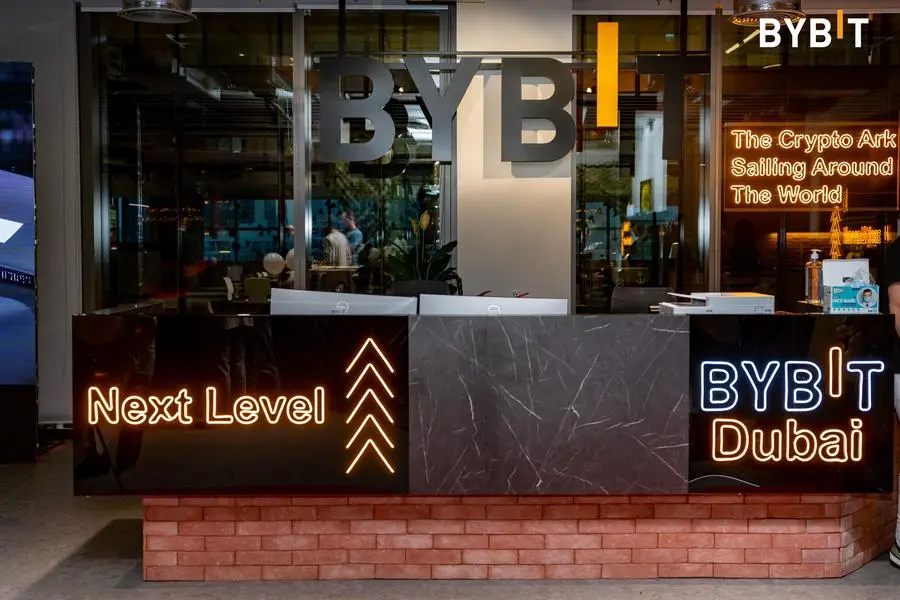
Dubai, on the other hand, has been likened to Singapore. In each case the government of a city state is mobilising excess savings, much of which in Dubai's case comes from neighbouring Abu Dhabi, to develop an economy that revolves around regional trade and services.
Both countries also have geographical location as an advantage as well as the official commitment to promotion of financial services. The development of private wealth management may turn out to be the catalyst for the next stage of growth of Dubai's financial services industry.
Bahrain is facing strong competition. However, it still retains one important advantage of having focused on financial services, which now account for 27 per cent of the gross domestic product, for far longer than others in the region. Essentially, this means it has also weathered many economic cycles and unforeseen events intact.
The island has a well established, sound regulatory environment, is conducive to financial innovation and is widely regarded as a pioneer in the development of Islamic finance. Bahrain is also home to the Accounting and Auditing Organisation for Islamic Financial Institutions.
As one of the leading centres for the issuance of Islamic bonds (sukuks) it is highly likely that Bahrain will be able to consolidate its importance as an Islamic asset management centre.
While each of the Gulf financial centres may find its own market niche, the long-term aims of each of the financial centres, and their state sponsors, have the common thread of economic diversification.
The aspirations of Dubai and others to achieve the status of important international financial centres should also be understood in the context of job creation. Unemployment is high among the indigenous population, 35 per cent among 16-24 year olds in Saudi Arabia, Bahrain and Oman alone.
It has been estimated that every job in the financial sector generates two or more in other related industries including accounting, legal work as well as indirect services such as hotels and travel.
The management consultant McKinsey has estimated that by fostering deep and efficient capital markets the region could create two million jobs over the coming decade.
How far this might benefit nationals in a sector that draws extensively on expatriate staff, is an open question but the overall dynamic effect on economies can only be positive.
Dubai International Financial Centre in 2009 accommodated 243 authorised firms, 57 ancillary service providers, 17 registered auditors and two markets, together generating thousands of jobs.
While the pressures of recession and the high cost of maintaining offices in the DIFC resulted in contraction during 2009, firms that have left have been replaced by others. Recent entrants include Bank of Nova Scotia, Euram Asia Bank, Russia's VTM Capital, and India's Kotak Mahindra Bank.
Hitherto the emirate has been cited as a one of the world's financial centres that might become significantly more important over the next two to three years. Clearly that fast pace momentum has been stalled by events.
However, just how much Dubai's image has been dented by its debt crisis and real estate market collapse will be seen over the next few months and possibly years.
In the meantime, it is clear that far greater attention is going to be paid to the legal and administrative regimes governing the Gulf's financial dealings and markets. Observers say more work needs to be done to craft a stable financial environment including supervisory processes and strengthening regulatory frameworks.
Viable regulatory regimes are essential to prevent crony capitalism, which observers believe was a significant factor, for example, in the 1997 Asian financial crisis. Here, market mechanisms and controls were thwarted by too close a relationship between government and business. For the GCC, this means focusing heavily on corporate governance, disclosure and transparency.
The Damas scandal has been a reminder that corporate governance standards in the Gulf still lag behind those in established financial centres.
The jewellery and gold trading concern, which is controlled by one of Dubai's oldest merchant families, has been racked by controversy over alleged unauthorised transactions. These were conducted by the majority owners following its $270 million initial public offering on the DIFC.
In Saudi Arabia, lenders are still reeling from a spectacular default by Ahmad Hamad Al Gosaibi & Brothers Company and the Saad group headed by billionaire Maan Al-Sanea who is connected to the Al Gosaibi family by marriage. The two groups may have borrowed up to $20 billion from banks worldwide. In Bahrain, banks owned by the two groups have been placed in administration.
In 2008, a study by the Dubai-based Hawkamah Institute for Corporate Governance and the World Bank affiliated International Finance Corporation found that there was not a single publicly-listed company in the region that followed best practice.
The danger lies in nurturing an environment in which corruption may escape public exposure. Critics of the region's governance blame the lack of a tradition of participation and of a pluralistic civil society. This stifles development of transparent and open governing structures.
The reality, though, is that no global centre is immune to scandal. One only has to reel back to the UK and Barings Bank's collapse in 1995, the Enron scandal in the US and Societe Generale's near $6 billion losses due to rogue trading in early 2008. Dramatic and damaging as these criminal episodes were, the markets in which they occurred were big enough to recover relatively quickly.
Emerging markets, particularly those with large volumes of foreign money flowing through them, are far more vulnerable, especially in terms of international perceptions of their reliability and competence.
Giving real teeth to the regulators in Gulf 's financial centres and instilling a higher degree of transparency and accountability in companies operating within them will enhance the centres' status, even during a difficult phase of regional and world economic recovery.
The level of commitment already made in terms of construction, operations and international partnerships represents a very visible statement of intent. With regard to long-term plans, developments so far indicate that the Gulf is not simply aiming at a niche or local role. Competing with the likes of Singapore and Hong Kong means not just emulating those centres' well-established standards of propriety, but convincing the international financial community that this is the case.
Solid progress is being made. In the City of London's twice yearly rankings of international financial centres, Dubai was placed 25 out of 65 centres worldwide in 2007. Qatar and Bahrain entered in 47th and 44th place respectively. In the latest 2009 survey, Dubai had risen to 21st place with Qatar placed at 43 and Bahrain at 44.
Analysts believe that the Gulf's financial centres have the potential to move up further in the IFC rankings. However, a reality check is in order since there are weaknesses in key areas compared to other countries.
The region's bond markets, for instance, remain underdeveloped with little sovereign issuance, little corporate debt issuance and little secondary trading. In terms of the debt market broadly consisting of government and corporate bonds, and accounting for 35-40 per cent of total world debt, the GCC plays a small role.
However, there are other pivotal factors. The GCC represents a sizeable proportion of world wealth with national domestic wealth at just over $2 trillion. Official external wealth, mainly sovereign wealth funds, is estimated to be worth more than $2 trillion. Taking into account external private wealth, the total probably comes to $5 trillion.
Observers believe that this high level of wealth, combined with the fact that the individual SWFs of the GCC represent some of the largest single fund management operations in the world, endows the Gulf's fund management business alone with a potentially powerful international role.
The volume of money and deal flow means it is highly unlikely any of the region's financial centres will fail. But bricks and mortar alone will not establish and underpin the solid reputations for financial dealings achieved by the world's more mature locations.
© Gulf Business 2010