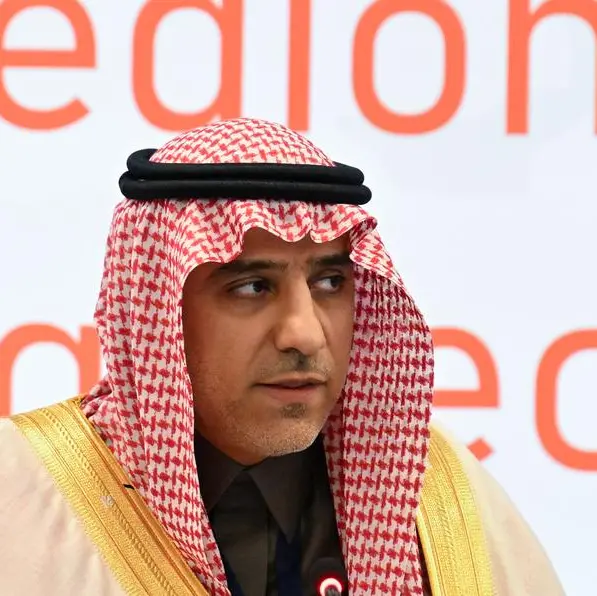
(With photos) KUWAIT, Dec 31 (KUNA) -- Kuwait Fund For Arab Economic Development (KFAED) has notched up its main goals since it was created 51 years ago; primarily its aid to development projects in Arab and developing countries, KFAED Director General Abdulwahab Al-Bader said here on Monday.
In a press statement marking the KFAED's 51th anniversary of creation, Al-Bader said that KFAED had extended concessionary loans, technical aid, grants and counsel to developing countries.
The KFAED's development aid has played a core role in serving and supporting the foreign policy of the State of Kuwait, and in consolidating its relations with beneficiaries, he said.
On the KFAED's 2010-2011/2014-2015 strategy, he said it envisions a hike in annual loans from KD 200 million to KD 250 million on average.
It also provides for enabling the KFAED to broaden its activities, especially in bankrolling such development goals as cutting poverty, prioritizing agricultural, health and educational sectors, funding local development banks and social funds and backing small and medium-sized projects as well as creating new jobs, Al-Bader added.
On the KFAED's recent activities, he pointed to GCC resolutions to help Bahrain and Oman with USD 10 billion each for five years, together with another five-year development program for Jordan and Morocco with USD 5 billion each.
Kuwait's share in the GCC contributions hits USD five billion to Bahrain and Oman and USD 2.5 billion to Jordan and Morocco, he said, adding that the KFAED was asked to run Kuwait's USD 7.5 billion in grants.
The KFAED chief vowed to continue helping and aiding development projects in Arab and developing countries, hinging upon its own resources and scientific experience.
For his part, Deputy Director General of the KFAED Hisham Al-Waqayan said the main goals of the KFAED were to help Arab and developing countries achieve their economic and social development and provide their peoples with decent lives.
The fund has adequate efficiency and economic and administrative experience to run concessionary loans and technical to beneficiaries, he said.
The fund mainly finances farming, transport, communications, energy, industry, water, sewage, health and education, he added.
These projects, which have various development goals, contribute to enabling the beneficiaries to provide their citizens with basic needs, improve their living conditions, cut poverty, and provide infrastructure utilities, he pointed out.
Earlier in the day, the KFAED said in a release marking the 51th anniversary of its establishment that it had initially supported development in Arab countries between 1962 and 1974.
Kuwait then decided to broaden the fund's activities to include other developing countries all over the world as part of the Gulf nation's interest in development there, it said.
The fund is running Kuwaiti grants worth KD 355 million to Arab and developing countries, in addition to KD 100 million in aid to 22 Muslim nations in the field of food security.
As part of an initiative adopted in 1996 by the World Bank and International Monetary Fund to help heavily indebted countries, the Kuwaiti fund is rescheduling the loans of 25 countries, including 24 in Africa and only one in Latin America, according to the release.
On the fund's local role, it is contributing to local development in Kuwait, it said, adding that it provided the Savings and Loans Bank with KD 500 million to boost its resources by buying 20-year bonds at an easy interest of two percent.
It also allocates 25 percent of its profits to the Public Authority for Housing Care.
In 2004, it launched a training program for young engineers in Kuwait with an annual sum of KD 1-2 million, it pointed out.
To support Kuwaiti companies, the fund has allowed Kuwaiti contractors to participate in the implementation of its projects, it said.
Until in late August 2012, the fund contributed to bankrolling over 800 projects in some 102 countries around the world with a sum of USD 15.5 billion; including 16 in Arab world, 40 in Africa, 35 in Asia and 11 in Latin America and Caribbean Sea.
KFAED chief expounds on 51 years of accomplishments
(With photos) KUWAIT, Dec 31 (KUNA) -- Kuwait Fund For Arab Economic Development (KFAED) has notched up its main goals since it was created 51 years ago; primarily its aid to development projects in Arab and developing countries, KFAED Director General Abdulwahab Al-Bader said here on Monday. In a press statement marking the KFAED's 51th anniversary of creation, Al-Bader said that KFAED had extend
December 31, 2012