We are at the inferface where faith meets financial engineering. Bankers of all persuasions are ever in search of higher margins of the sort that hedge funds have generated for some of the globes sharpest-witted investors, at least before this summer's markets melt-down. But so far one of the globe's boom financial sectors has missed out: the quest to create a sharia-compliant hedge fund has proved elusive and controversial - opinions remain polarised.
Several players over recent years have claimed to have created a product that will deliver returns comparable to a successful hedge fund in a sharia-compliant way. However, the fundamental sticking point apparently remains: whether the fund's underlying asset is halal (allowed) or haram (forbidden).
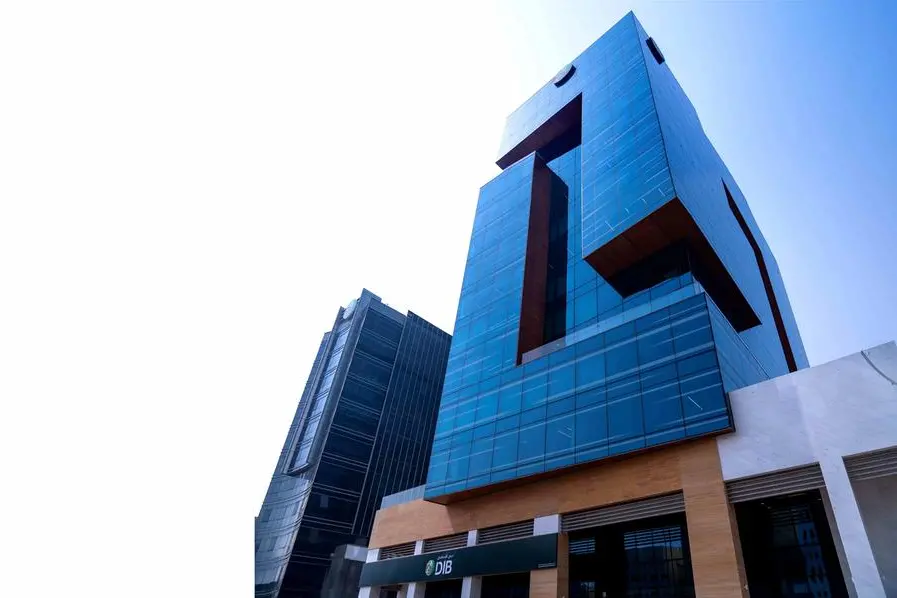
Typical is the debate among Islamic scholars and bankers triggered by Dubai Islamic Bank (DIB)'s recent creation of a fund of funds, launched in partnership with Deutsche Bank (DB) and Goldman Sachs Hedge Fund Asset Management (GSAM). This employs five-year capital protected notes linked to the DB-GSAM Hedge Fund's performance, using an underlying index that tracks the performance of a 'B' class fund share in the Goldman Sachs Alpha Limited Partners Strategies Fund (GSAM ALPS Fund) a fund of hedge funds managed by Goldman Sachs Hedge Fund Strategies.
Critics say that because the underlying asset is not shariacompliant, the whole scheme is haram because under sharia law the underlying asset must be halal. Dr Hassain Hamid Hassan, president of DIB's Fatwa and Sharia Supervision Board,which approved the fund as sharia-compliant, sees things differently. He argues that although the fund profits indirectly from the performance of non-sharia hedge funds, it does not invest directly in them; therefore it is still sharia-compliant.
Hassan argues the fund is halal because DIB and its partners used a technique based on a credit swap, which means an Islamic investor is exposed at a distance from non-sharia compliant assets but does not actually invest in them.
The arguments appear finely balanced, even for DIB employees. "You'll have to read the terms of the fund yourself and determine for yourself whether the fund is shariacompliant," a senior DIB banker told GSN.
Other critics are concerned that other aspects of the fund may not be sharia-compliant, such as whether its investments could be in prohibited items such as pork or alcohol.
Islamic bankers and the sharia scholars who determine what is halal and what is haram have for years been assiduously working to find Islamically compliant ways to mirror hedge funds' risk-balancing properties. In the last decade, developers trying to fill the gap in Islamic markets for instruments that mirror conventional hedging tools have created a smattering of such funds. In 1997, Kuwait-based The International Investor (TII) launched its Al-Khawarizmi Market Neutral Fund. In the same year, Saudi Economic and Development Company (Sedco) in Jeddah and NewYork-based Permal Group launched the Al- Fanar Hedge Fund. In February 2006, the Jersey Financial Services Commission approved a sharia-compliant hedge fund known as Algo Al-Qayyim Fund Ltd developed by Jersey based Volaw.But after a decade of development, this year's crop of Islamic finance conferences (of which there is no shortage) in Dubai, Bahrain, the United Kingdom and elsewhere have all produced people who take opposing views on whether the objective of creating a sharia-compliant hedge fund has been achieved. A substantial constituency, if not the bulk of Islamic financiers, say that common hedge fund strategies break Islamic law and cannot be accommodated within the sharia.
sukuk (bond equivalents) in terms of value, with eleven issues so far totalling more than $13bn.
Dubai wants regional players to avail themselves of its ability to facilitate Islamic financing, and appears to be succeeding in its quest. Al-Rajhi Cement Investment Company, a subsidiary of Saudi Arabia's Al-Rajhi Group, was recently established in Dubai and is using the emirate's financial services sector to raise money. The company, newly incorporated in the Dubai International Financial Centre (DIFC), has mandated Siraj Capital Ltd, Al-Aoun Capital Group and Capital Bank of Jordan's investment banking arm Capital Investments as coarrangers for the issuance of $595m worth of sukuk. This claims to be the first sukuk issuance of its kind in the regional cement industry.
Dubai is attracting new players such as Mawarid Finance, a private joint stock Islamic finance company with a paid-up capital of Dh1bn.
UAE companies are increasingly using Islamic finance in their financing mix. Abu Dhabi-based Etihad Airways says 52% of its 37 aircraft have been financed through conventional finance leases, 14% through operating leases and 10% through Islamic finance leases.
Securitization deals
Dubai is keen to ride what may be a soaring new Islamic debt market. Islamic finance is particularly suited to securitisation because the holder always has recourse to assets. According to DIFC, the debt market has the potential to be worth up to $250bn in two to three years, from about $2.5bn to date.
Innovative Islamic products are flowing out of the emirate too. Dubai-based mortgage lender Tamweel recently issued what Moody's Investors Services described as the Gulf 's first internationally rated asset-backed securities to comply with Islamic law. Tamweel used lease-to-purchase contracts on residential properties to back its debt.
One reason why Dubai may see steep growth in securitisation is the large volume of property and land deals going through the emirate. Assets in a securitisation can be rated independently of the borrower, making it possible for bonds to attract a higher debt rating than the borrower itself, thus making borrowing cheaper.
The Tamweel securitisation is innovative because it is the first residential financing securitisation that relies solely on the underlying assets, it is multi-tranched in a sharia-compliant structure and it is rated. The most senior class of this offering were expected to receive ratings of Aa2 from Moody's and AA from Fitch Ratings. Another notable issuance on the Islamic debt market is Emirates Islamic Bank's $1bn Sukuk Trust Certificate Programme, of which the first $350m tranche has already gone to the market.Emirates National Securitization Company (Ensec), one of the first securitisation companies in the Middle East, played a key role in structuring the $210m asset-backed issuance of notes on behalf of Tamweel.
Ensec is a private specialised structuring and advisory boutique focused on real estate, real estate securities and securitisation founded in 2003 by US property magnate Andrew Farkas and two Dubai state-owned entities, Istithmar and Dubai Islamic Bank. The involvement of the two Dubai owned entities points to the emirate's willingness to underwrite new players in the nascent Islamic finance sector.
According to DIFC governor Dr Omar Bin Sulaiman, Dubai is already "one of the major centres of innovation in Islamic finance," but there is still scope for development: "Within Dubai this helps create a dynamic atmosphere, which in turn attracts both the financial and human capital that, in its turn, generates further innovation."
© Gulf States Newsletter 2007