The EU and the US economies are not the only headaches for Middle East economies. China's faltering economy could also hurt the region's growth prospects.
As the advanced economies were contracting and falling behind earlier in the year, the Gulf and the wider MENA states were hoping Chinese and wider Asian demand to ensure their oil production finding eager buyers.
Now they can't be so sure. News coming from the Chinese economy is that of a significant cooling off, with analysts predicting anywhere between a soft or a hard landing.
The bearish outlook is already visible on commodity prices. Negative sentiment across the commodities market continued into last week amid a combination of negative global factors. Chinese manufacturing numbers contracted yet again, and the persistent Greek debt crisis with higher inflation in Europe has translated into downward speculation about the world economy.
"Fears of a hard landing in China have once again intensified," says Yiping Huang, an analyst with Barclays Capital. "While our base case remains for a soft landing led mainly by an investment slowdown, we see increasing downside risk from the situation in Europe and at home."
Investor sentiment towards the Chinese economy deteriorated sharply in the past two weeks, as reflected in the sharp correction in Hang Seng H shares and red-chip stocks.
While the increasing risks of European crises and a double-dip in the global economy have contributed to this worldview, China has a number of home-grown problems that have also worsened lately.
While BarCap does not the share the view of a high risk of a near-term collapse of the Chinese economy, it admits that the risks have increased significantly.
"In the unlikely event of another global recession, we think the Chinese economy would probably not be able to avoid a hard landing, partly due to its high dependency on trade connections. In fact, the most direct channel through which China would be affected by a global recession is via a collapse in exports. It could cause substantial worsening of the overcapacity problem, as happened in 1998-99, 2001-02 and 2008-09."
This, in turn, could lead to a return of the deflation problem. A global recession would also have serious adverse effects for both investment and consumption.
In addition, the EU which is another major trading partner for the Middle East, clearly has seen the wheels come off.
ECB President Claude Trichet recently presented the ECB staff projections, insisting on the uncertainty surrounding this outlook and the possible spillover effects from financial tensions to the real economy.
The ECB staff projections lowered growth from a midpoint of 1.9% in 2011 and 1.7% in 2012 down to 1.6% in 2011 and 1.3% in 2012. This is a sizeable revision that most likely reflects a somewhat subdued outlook in H2 11. In spite of these revisions to growth prospects, the inflation midpoint projections remained unchanged in both years, though the range of projections narrowed for 2012.
Impact on the Middle East
For the GCC, the most important effect of what is happening globally is the impact on the price of oil, notes NBK Capital.
Oil prices, although having dropped by 29% since their 2011 high, are still holding steady at around USD 80 to USD 85 per barrel (WTI), not significantly below the USD 90 per barrel at the start of the year, which is relatively high from a historical perspective.
But even with a sharp drop in the price of oil, NBK believes that GCC governments, especially in Saudi Arabia, Qatar, and Abu Dhabi, will carry on with their ambitious government spending plans.
"These governments have amassed significant surplus capital that they can deploy to implement countercyclical fiscal policies if need be. The real risk will arise, however, if a scenario of a significant and long-term drop in the price of oil materializes."
Citibank is not so optimistic, especially about the UAE economy.
"The deteriorating global outlook spells risks for the UAE on three fronts, and we now consider risks to our economic forecasts to be on the downside. First, the fall in recent months in global oil prices will squeeze revenues at the Abu Dhabi level, and we have already seen that emirate begin to pull back from some previously anticipated investments, particularly in the non-oil sector," notes Frank Soussa, an analyst at Citibank.
Slower growth in global demand may impact Dubai's ongoing recovery, dependent as it is on global trade, tourism and transportation. Finally, the retrenchment in global risk appetite will expose entities in the UAE to heightened refinancing risks if financial conditions remain tight in the medium term.
"That said, we believe that Dubai in particular continues to benefit from its safe-haven status at a time of continued Middle East unrest, providing significant tailwinds to its tourism and banking industries," writes Soussa.
"Latest figures show a surge in domestic deposits in the UAE, easing previous liquidity constraints in the banking sector and creating conditions for a renewal of growth in bank lending."
Oil cooling off but not as much
On October 4, Brent fell below $100 for the first time in two months, falling below a psychological line as crude demand slows.
With Saudi production increasing sharply in recent months and North Sea plus some Libyan output coming back on line, the market should remain well supplied in the fourth quarter of the year.
"Net, we see limited near-term upside on Brent given that OECD demand growth has been negative since the second quarter," says Bank of America Merrill Lynch (BAML).
"Although EM demand growth is still resilient, it has also decelerated as a result of the tightening monetary policy cycle that started in the middle of last year. As a result, we stick to our forecast that Brent crude oil prices will average $102/bbl in the fourth quarter of 2011."
Luckily, for the oil-exporters, supplies remain tight thanks to disrupted production from Libya, the UK North Sea and Africa.
"Overall, these supply issues have caused a shortfall of 1.4 million b/d of output relative to last year over the first eight months of the year (Chart 11). On top of this, European refiners will lose about 25 thousand b/d of light crude due to the ongoing situation in Syria," notes BAML.
Other worries
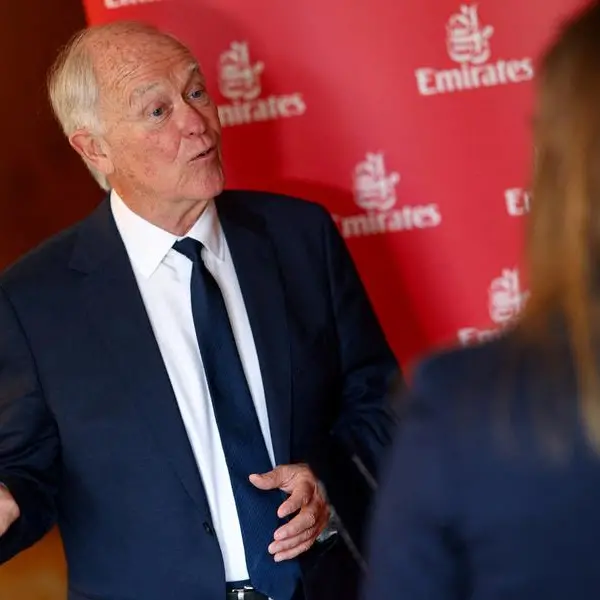
The global crisis especially among international financial institutions will also be felt by regional companies. Emirates airline recently told Zawya Dow Jones that French banks, which are usually eager financiers of its plans, were hesitant, on account of their own worries back home.
"I am seeing one or two French banks being a bit nervous," said Emirates president Tim Clark. "Usually they are behind us."
Clark told the newswire that further escalation of Europe's banking crisis would have widespread ramifications for the airline industry. "If they won't lend to us they won't lend to anybody," he said.
European and American banks have shed more than 100,000 jobs this year, sold off some of their units and rolled back branches and it is only natural to assume that some of the retrenchment will be felt in their Gulf operations as well.
Tourism, a key revenue generator for places like Egypt and Dubai, could also suffer as the Europeans could postpone their holiday on account of global economic uncertainty.
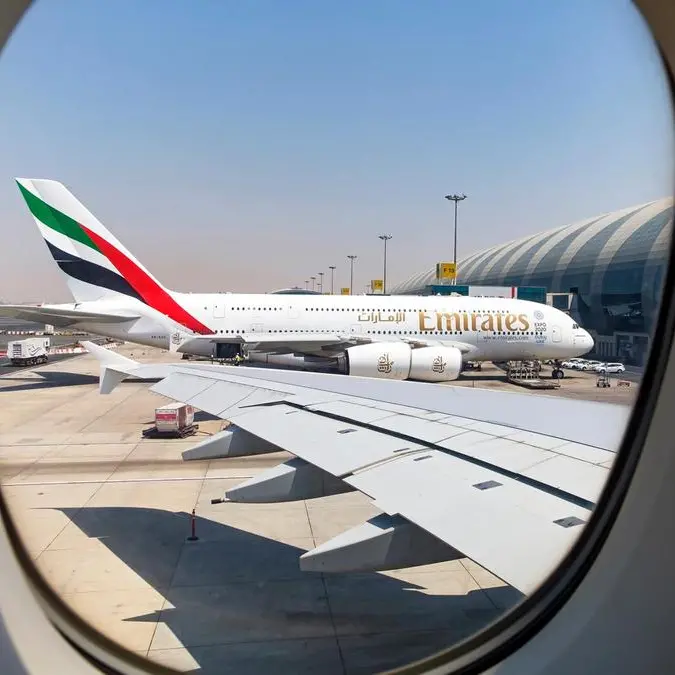
Dubai posted a mere 0.8% growth in its August airport traffic compared to the same period last year. Meanwhile, air freight volumes have slumped 7.9 per cent as Dubai handled 182,781 tons of cargo in August compared to 198,543 a year ago. Year-to-date freight volumes contracted 1.2 per cent due to ongoing uncertainty in the U.S. and Europe, statistic show.
Meanwhile, in Saudi Arabia the rock solid banking sector was the only one to fall on Tadawul last month reflecting declines in global banking shares owing to concerns about a possible Greek debt default.
Conclusion
'China-dependence' is not a new phenomenon in the global economy, but its importance has been reinforced in the past few months.
Back in March, Citi expected 24% of global GDP growth to be generated by China in both 2011 and 2012. Its latest forecasts show this contribution rising to 28% this year, and to 30% next year.
Not surprisingly, China's economic performance would play a key role in the region's own economic performance and the price of oil.
Back in the first global crisis of 2008 critics argued that the region, especially the Gulf, was in a great position to weather the storm, given the continued high prices and years of surpluses preceding it. But that did not stop the complete annihilation of the real estate markets and the collapse of the stock markets in the region and a general lack of business confidence.
If the world continues its journey towards a global recession, it will be hard to see how the Gulf will escape from its clutches.
Related article: Global recession: What the analysts say
alifarabia.com 2011