12 August 2012
The last time food prices started shooting up, it led to riots in some countries which ultimately ended up disposing a few regimes in the region.
The latest warning by the United Nations Food and Agriculture Organization (FAO), suggests we mare primed for another big jump in food inflation, and that should worry regional governments, especially in wider Middle East North Africa that have limited resources to depend heavily on food imports and don't have the deep pockets of the smaller Gulf states.
The FAO Food Price Index (FFPI) averaged 213 points in July 2012, a 12-point surge from June, although it's still well below its peak of 238 points reached in February 2011.
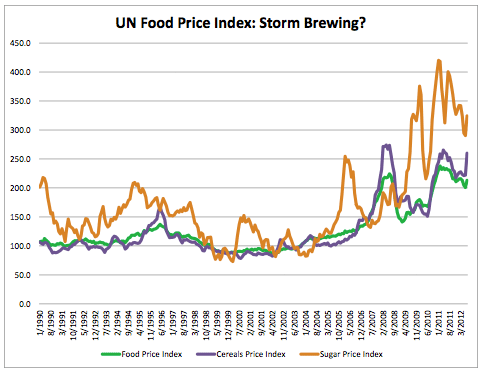
"The sharp rebound was mostly driven by a jump in grain and sugar prices, and more modest increases in oils/fats, although international prices of meat and dairy products were little changed," noted the FAO in its latest report.
Major drought in the United States due to excessive heat pushed up maize prices by almost 23% in July. International wheat quotations also surged (by 19%), amid a worsening of production prospects in the Russian Federation and expectations of a firm demand for wheat from the livestock sector for the second consecutive season because of tight maize supplies, the FAO notes.
"While adverse weather has meant supply concerns have driven prices, the market has been digesting the implications of lowered supply for a while now," said Sudakshina Unnikrishnan, analyst at Barclays. "Demand adjustments will be key to defining a sustainable level for prices. So far much of that demand debate in the US has been focused on ethanol which is facing an increasing political backlash and growing demands for a waiver from the ethanol mandate."
Meanwhile, a report issued Friday by the United States Department of Agriculture saw a further downward revision to the U.S. corn production estimate for 2012/13. Drought has caused the USDA to reduce its U.S. corn yield estimates to 123.4 bushels per acre compared to 146.0 bushels in July.
In addition, global wheat supplies for 2012/13 are projected 2.1 million tons lower mostly reflecting a 3.7-million-ton reduction in foreign production, the USDA noted.
This could be the makings of a global food crisis as the shortage of soyabean and corn could spill over other commodities.
"There are signs of contagion: wheat prices have increased over 50% in the previous five weeks, probably as the livestock industry switches from corn to wheat as a cheaper alternative for animal feed," wrote Robert Bailey, analyst at Chatham House. "A flurry of export controls among nervous governments or a poor wheat harvest in a key exporting region such as the Black Sea or Australia could easily precipitate a full-blown crisis. The most vulnerable countries to spiking wheat prices remain those of North Africa and the Middle East, as well as Pakistan."
While the last food crisis came at the height of an asset and commodity bubble, the latest crisis coincides with more benign factors such as low inflation, slightly more subdued oil prices.
Still, unlike the previous years, the food importing nations are going through a slow growth period after the political upheavals of the past 18 months. Egypt, Tunisia, Morocco are expecting less than stellar growth due to the EU crisis and their own domestic issues. In fact, inflation levels have been trending lower, so any food price spike could take a while before it hits consumers.
In North Africa, wheat crop prospects are mixed: the outlook is unfavourable in Morocco, where severe drought has sharply reduced yield prospects, but more favourable in Algeria and Tunisia, reflecting ample moisture supplies.
Meanwhile, wheat imports by Algeria, Egypt and Tunisia may decrease slightly but purchases by Morocco could surge by 1.5 million tonnes, because of the anticipated decline in domestic production following prolonged dry conditions, the FAO notes.
While the UN organization expects Egypt's wheat and sugar production to rise, outbreak of disease among livestock in Egypt could raise prices of meat products.
The FAO expects Egypt and Saudi Arabia to increase meat imports, apart from diary and a whole host of other products.
Worryingly, most of the key food categories are showing an upward trend after coming down from their highs of early 2011.
The FAO's Sugar Price Index, for example, shot up 12% in June, triggered by untimely rains in Brazil, the world's largest sugar exporter, which hampered sugarcane harvesting in July. Concerns over delayed monsoon in India and poor precipitation in Australia also contributed to the price increase, the FAO noted.
But Chatham's Mr. Bailey thinks this time around riots are less likely.
"...Because riots are less likely, governments are less inclined to impose export controls, reducing the chance of a collapse in confidence, as one country after another bans exports, pushing up international prices further and encouraging others to do the same. This dynamic was a major factor in both the 2007/8 crisis and the 2010/11 spike."
The last time food prices started shooting up, it led to riots in some countries which ultimately ended up disposing a few regimes in the region.
The latest warning by the United Nations Food and Agriculture Organization (FAO), suggests we mare primed for another big jump in food inflation, and that should worry regional governments, especially in wider Middle East North Africa that have limited resources to depend heavily on food imports and don't have the deep pockets of the smaller Gulf states.
The FAO Food Price Index (FFPI) averaged 213 points in July 2012, a 12-point surge from June, although it's still well below its peak of 238 points reached in February 2011.
"The sharp rebound was mostly driven by a jump in grain and sugar prices, and more modest increases in oils/fats, although international prices of meat and dairy products were little changed," noted the FAO in its latest report.
Major drought in the United States due to excessive heat pushed up maize prices by almost 23% in July. International wheat quotations also surged (by 19%), amid a worsening of production prospects in the Russian Federation and expectations of a firm demand for wheat from the livestock sector for the second consecutive season because of tight maize supplies, the FAO notes.
"While adverse weather has meant supply concerns have driven prices, the market has been digesting the implications of lowered supply for a while now," said Sudakshina Unnikrishnan, analyst at Barclays. "Demand adjustments will be key to defining a sustainable level for prices. So far much of that demand debate in the US has been focused on ethanol which is facing an increasing political backlash and growing demands for a waiver from the ethanol mandate."
Meanwhile, a report issued Friday by the United States Department of Agriculture saw a further downward revision to the U.S. corn production estimate for 2012/13. Drought has caused the USDA to reduce its U.S. corn yield estimates to 123.4 bushels per acre compared to 146.0 bushels in July.
In addition, global wheat supplies for 2012/13 are projected 2.1 million tons lower mostly reflecting a 3.7-million-ton reduction in foreign production, the USDA noted.
This could be the makings of a global food crisis as the shortage of soyabean and corn could spill over other commodities.
"There are signs of contagion: wheat prices have increased over 50% in the previous five weeks, probably as the livestock industry switches from corn to wheat as a cheaper alternative for animal feed," wrote Robert Bailey, analyst at Chatham House. "A flurry of export controls among nervous governments or a poor wheat harvest in a key exporting region such as the Black Sea or Australia could easily precipitate a full-blown crisis. The most vulnerable countries to spiking wheat prices remain those of North Africa and the Middle East, as well as Pakistan."
While the last food crisis came at the height of an asset and commodity bubble, the latest crisis coincides with more benign factors such as low inflation, slightly more subdued oil prices.
Still, unlike the previous years, the food importing nations are going through a slow growth period after the political upheavals of the past 18 months. Egypt, Tunisia, Morocco are expecting less than stellar growth due to the EU crisis and their own domestic issues. In fact, inflation levels have been trending lower, so any food price spike could take a while before it hits consumers.
In North Africa, wheat crop prospects are mixed: the outlook is unfavourable in Morocco, where severe drought has sharply reduced yield prospects, but more favourable in Algeria and Tunisia, reflecting ample moisture supplies.
Meanwhile, wheat imports by Algeria, Egypt and Tunisia may decrease slightly but purchases by Morocco could surge by 1.5 million tonnes, because of the anticipated decline in domestic production following prolonged dry conditions, the FAO notes.
While the UN organization expects Egypt's wheat and sugar production to rise, outbreak of disease among livestock in Egypt could raise prices of meat products.
The FAO expects Egypt and Saudi Arabia to increase meat imports, apart from diary and a whole host of other products.
Worryingly, most of the key food categories are showing an upward trend after coming down from their highs of early 2011.
The FAO's Sugar Price Index, for example, shot up 12% in June, triggered by untimely rains in Brazil, the world's largest sugar exporter, which hampered sugarcane harvesting in July. Concerns over delayed monsoon in India and poor precipitation in Australia also contributed to the price increase, the FAO noted.
But Chatham's Mr. Bailey thinks this time around riots are less likely.
"...Because riots are less likely, governments are less inclined to impose export controls, reducing the chance of a collapse in confidence, as one country after another bans exports, pushing up international prices further and encouraging others to do the same. This dynamic was a major factor in both the 2007/8 crisis and the 2010/11 spike."
© alifarabia.com 2012