Four young Egyptian entrepreneurs have embraced risk and are now well on their way to creating a $100 million company out of an idea born over a PlayStation session
Technology has never really been my thing. I have never been wooed by automation, high-tech gadgets or the latest version of anything electronic. In other words, if it works, I am very reluctant to change it. But as I sat watching The Fifth Element Bruce Willis' award-winning 1997 sci-fi flick in the sublime comfort of a state of the art home theater, my convictions were shattered. For the first time ever, I found myself contemplating the idea of splurging for an upgrade of my fully functional audio-video equipment.
This kind of shift in attitude is precisely what Archimedia, the hot new residential systems integration company specializing in high-end home entertainment, is after. The company's month-old Maadi showroom has been designed to appeal to even the most technologically averse. The focus here is not on brands (many of which are so high-end that they may not mean much to the layman) but rather on solutions that are seamlessly integrated into interior design concepts to fully automate and optimize its entertainment features.
Set up to look like an actual house, the Archimedia showroom gives customers a sample of three different living room/home theater options that are guaranteed to at the very least pique consumers' interest. Plasma screens appear at the click of a button from behind funky art as your movie of choice streams in from an in-house media server. Sleek furniture specially designed for audio-video equipment helps complete an ultra-modern look that will catch the eye of the home décor enthusiast as much as that of the tech-junkie.
Behind this glitzy new company a smash hit in Dubai that is now moving into Egypt are four dynamic young Egyptian entrepreneurs who have put their heart and soul into a business they call "the best job that any of us could have ever wished for." Best friends since middle school at Cairo American College, Karim Zaki, Omar Hikal, Hassan Abdou and Halim Greiss all in their late 30s except for Greiss, who is 10 years younger are the poster boys for what's possible when young business-minded people embrace calculated risk.
"We tailor design systems to personally suit each customer's lifestyle," says GR MediaSolutions co-founder and CEO Karim Zaki. (GR MediaSolutions is the regional distributor and holding company the four established to own the Archimedia brand.) "Some people want home theaters, some want TVs in all the bedrooms, some want sophisticated sound systems. We can accommodate any of that. If someone wants a stock ticker in their bathroom, we do it. If he or she wants high speed internet access on a 42 inch plasma TV in their Jacuzzi, we can do it. We try to show people that the home entertainment and automation experience can follow them in every room of their home. But I think the most important element of what we do is the simplicity of user interface. We put everything on one remote control: your satellite, plasma, projector, full entertainment system, even your lighting and curtain controls."
While Zaki, the driving force behind the initial Archimedia concept, was the only one with previous experience in the home entertainment/audio-video sector, all four partners are passionate about an industry they created from scratch four years ago in Dubai.
"I remember I used to sit in my little shop [selling high-end audio-video equipment] in Cairo thinking how I could get 10 times as many customers to make the people that I worked for happier," says Zaki. "In Germany, Italy, Spain or the United States, a distributor would have 80-100 dealers under him. But the problem with our part of the world is that distribution is really fragmented: The distributor and the dealer are usually one and the same because you can't find more than a handful of dealers that sell high-end products in Egypt."
Hikal, the company's chief operating officer, chimes in here: "Not only are you of very little importance to the manufacturer, but you also become a nuisance. You represent very little in terms of his overall sales, and yet he still has to make phone calls, send faxes and meet you at trade shows."
Frustrated by those limitations, but certain of the potential, Zaki grew restless. While attending an industry trade show in 2002, he came to the conclusion that manufacturers needed to be convinced to see the Middle East not as being made up of Egypt, Lebanon, the Emirates, etc, but as one country.
"I realized that the dealer should be a single-branded store with the same storefront in 10 cities around the region. Regional marketing communications above the line would then become possible through certain media that could potentially multiply store traffic by 10-15 percent on average per store," says Zaki.
"This is really the crux of the model," Hikal adds. "Once you have enough retail showcases in the region, you reach the economies of scale where you are going to be able to communicate with your consumer in his living room through something like Showtime or Orbit. The category has been very poorly communicated in this region because thus far it has not been cost effective to do so."
Putting Theory into Practice
An entrepreneur at heart, Zaki knew what he wanted to do, but he wasn't quite sure how to go about doing it.
"This really all started with me and Halim [Zaki's lifelong friend and neighbor, currently managing partner of Archimedia UAE] playing PlayStation in his bedroom," he chuckles. "We were both working for this other company at the time. He said, 'Karim you've really built a nice store, but you built it in the wrong city. Nobody understands what we are doing here. We should build one in Dubai I saw it on TV, it has all these tall buildings and looks like a really cool place. We should go there.'
"That's when I started writing the business plan," Zaki says.
Business plan in hand, we went to best friend Hikal with the proposition of "jumping ship and going into business together." Hikal, who had held top marketing and sales positions with multinationals and established Egyptian brands, had a passion for the type of business that Zaki was proposing, but from a musical angle, not a commercial one.
"I love music and I've been involved with it all my life," Hikal says. "I have played the drums since I was 9 with a number of bands during school and university. I also love gadgets, so this was a perfect fit for me, but I have to admit that initially I didn't see it as a commercially viable venture. The personal circumstances for me at the time were also not very conducive to jumping ship."
"So Omar's first response to my brilliant idea was, "Dude, go away and stop bothering me'," says Zaki. "But I don't actually blame him because I used to come up with a new cockamamie idea every six months, like 'Let's get a giant video screen, put it in Tahrir Square and sell ad space to everybody we know'."
"The first thing was always, 'Let's quit our jobs,' followed by the cockamamie idea," laughs Hikal at his more impulsive friend.
"I was really passionate about this one, but Omar couldn't see the difference. To him it was just another one of Karim's crazy ideas. So I decided to approach our other very close friend Hassan [Abdou] who was working for a private equity firm at the time. By that time I had already attended CEDIA Expo [the Customer Electronics Design and Installation Association], the premier trade show in our line of business. I met there with the executive VP of Bowers & Wilkins (B&W), the Mercedes-Benz of speakers. He was somehow convinced that I was their man and gave me the rights to the whole region," says Zaki.
Both excited and nervous about the prospect of exclusive distribution rights for a company such as B&W, Zaki got serious. He explained the business model to Abdou: Capitalize on the fragmentation of the supply chain in the Middle East by becoming a seamless, consistently branded distribution and sales network in major urban centers. Grow from a single store with a turnover of $2 million to a turnover of $12.5 million multiplied by eight storefronts across the region. Eventually, transform the venture into a $100 million company.
"There was basically no market for this kind of thing back in 2002, when Karim came to me with the idea, but it was clear from the beginning that the market did not exist because consumers did not know that these kinds of products existed," says Abdou, who currently wears two hats: one as partner and chief financial officer for Archimedia, the other as a top dealmaker for Naguib Sawiris.
"Hassan took in all my assumptions, asked a lot of questions, then put the figures into the grinder. Assuming that I was overly optimistic, he slashed the gross margin by 15%, cut sales forecasts in half and called me up 10 days later. He said, 'If you sell half of what you say you are going to sell, this is still a very viable business. In fact, this is a great business, and if you ever decide to cash out one day, you would be a very sellable company'."
Abdou then spoke with Hikal. Hard figures on spreadsheets and with what Zaki refers to as "Hassan's Harvard Business School language of valuations" convinced the once skeptical Hikal to leave his job as director of marketing and purchasing for Metro Supermarkets, a position that Zaki had also held earlier in his career, and come on board.
"Karim wanted to bring in a strategic partner from day one to reduce our execution risk. While that was the safer thing to do, it became quickly apparent from the forecasts that the key to success lies in owning the stores. We needed to not only capture the margins through the supply chain, but more importantly, control and manage the business to create a model, look, service that did not exist. I think we were all at a point where we were bored with our jobs, we wanted to try something different and have something of our own. So it was really good timing in that sense. I could really see this becoming a $100 million company in five year's time," says Abdou.
"Key to our success was the fact that we were able to put together this ideal team from the start," Zaki says. "We had the person who plans us financially and ultimately sells us or takes us public one day Hassan. We had the person who gives us scalability, builds our corporate identity, our back office, our document cycle, our processes and procedures Omar. We had the superb salesman Halim, the person to whom we as the seniors hand-off to and ask to send us reports while we are sipping away on nice drinks with umbrellas sticking out of them," he laughs. "And because we had known each other for so long, there was also this huge element of trust between us."
"Karim is the vision behind all this," Hikal says. "We are the nuts and bolts. It was that clarity of vision early on that allowed us to be prepared for the growth stage that we are currently in. Starting out with one showroom and having in mind that it will be just one showroom is completely different from starting with one showroom and knowing that you want to eventually grow to be 10. Many of our systems are already scaled to accommodate future growth," says Hikal.
Building Fortunes in Dubai
With zero access to financing in Egypt or the UAE, Archimedia began with a modest investment that came directly from the pockets of the four partners. Four years later, the rapidly growing business has hit an annual turnover the four partners expect will hit $20 million by year's end.
To put that figure in perspective: It makes Archimedia a top-10 global player in its industry. Already, its client list includes not just high-powered executives, but 10 heads of state, crown princes and prime ministers.
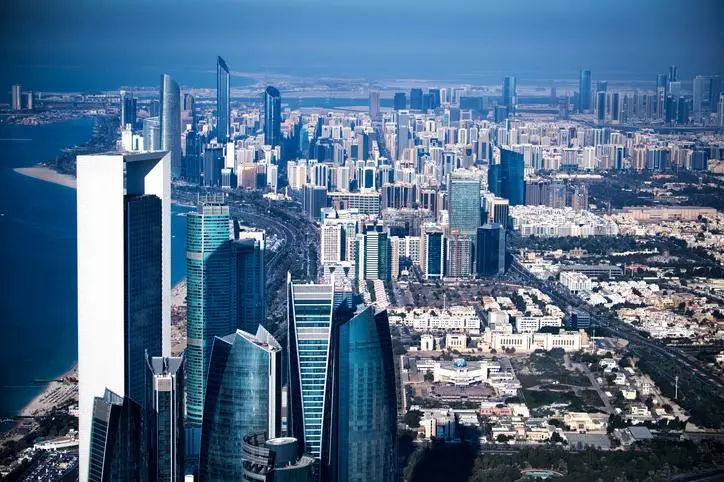
Dubai was the logical choice for the brand's 2003 debut. The real estate sector was booming and the market so awash in liquidity that consumers were ready to snatch up everything and anything the luxury market had to offer. The glitzier, flashier and more high-tech, the better. Combine that with the Gebel Ali Free Zone, excellent third-party logistics and the ease with which it is possible to set up a business in Dubai and the formula was complete.
"I quit my job and moved to Dubai full time in September '03 for about three months to start up the company," says Abdou. "By year's end, Karim moved over and I left to go work with Naguib. Now the guys run the day-to-day matters, but I am still involved, particularly when it comes to strategic financial decisions."
Logistically, it was very easy to establish the company, but UAE law required Archimedia to have a local partner.
"The only Emirati that we knew at the time was Youssef Mana Al-Otaiba, another old schoolmate of ours from CAC," Abdou recalls. "We called him up, got him on board and the partnership has been very beneficial for us ever since."
"We played on the same soccer team with Al-Otaiba at school, so we have known each other for about 28 years now," Zaki says. "He is a Georgetown graduate and he is currently the advisor for foreign affairs to Sheikh Al Maktoum. When the whole Dubai Ports thing exploded, he was the one being interviewed by Wolf Blitzer on CNN. Needless to say, he is very well connected and was instrumental in getting us into very key places early on in our lifecycle."
Still, their old school friend wasn't a guarantee of success: "Because we were using our own money, the first two years were very conservative," Abdou says. "We had no budget for advertising and marketing, so we depended solely on word of mouth but that worked out pretty well for us. Once you do someone's house and they like it, the ball just starts rolling. They tend to also want you to do their summer house, their yacht and, in some instances, even their airplanes."
Archimedia's first major project in the UAE was the Amiri Flight Terminal the royal family of Abu Dhabi's airline. "We installed a fully integrated and concealed audiovisual and video conferencing system for them," Hikal says.
Dubai's large expat population was another key factor in Archimedia's success. With much more awareness than the Arabs of top Western brand names in high-end audio-visual equipment, expats shopping for home theaters in Dubai tended to consult the manufacturers websites, which would in turn direct them to Archimedia as the local agent.
"This was very important in the early days, because we needed the cash flow that was generated from the sale of small systems. When you take on a project to build a home, particularly a large home or a palace, it can take anywhere from 6-18 months to complete, which squeezes your cash flow," says Zaki. "We do not yet do commercial real estate, no conference rooms or hotels, but when you are asked to do a palace, it is more like a hotel than a residence, so all of a sudden you are operating on those kinds of cycles."
"Dubai is probably the only city in the Middle East that could have allowed us to generate as much business as we have in other countries like Qatar, Kuwait, Jordan and Lebanon," adds Hikal. "We have been able to do jobs all over the region out of Dubai."
So far, Archimedia Dubai has done phenomenally well, particularly when you consider that the company created (and paid to grow) the market for high-end entertainment systems. Many of the jobs they initially took on in Dubai were partially finished projects that were handed over to them by American and European companies. The Dubai operation hit $7 million in sales last year and still has plenty of room to grow, the partners say.
"After about six months of operating in Dubai, the category began to grow. More and more people are now entering the market," Hikal says. "As our business grows, the competition grows. The market in Dubai today is competitive, but we are the leading residential systems integration company in the UAE by a good margin. In addition to competing, we also cooperate on certain things. For example, we do a lot of business with Dubai Audio Center, our main competition in the UAE. We buy a lot of things from them and vice versa, so it is very much a friendly relationship," says Hikal.
Zaki claims that the market in the UAE is now big enough to accommodate four or five Archimedia-like companies, saying the firm will retain its competitive advantage by maintaining the broadest distribution portfolio. The company has the exclusive rights to 11 top global brands including unique items such as media servers, wireless digital music systems and BDI TV stands (specially designed audio-video furniture).
"This region wasn't even on the radar screen for the manufacturers of high-end audio-video. Now we are well on our way to becoming one of the biggest distributors worldwide. It was obvious to me from the beginning. All you had to do was look at the US's top selling locations for this kind of business: West Palm Beach Florida and Southern California. Why? Because that's where the wealth is. Well, where can you find more wealth right now than the GCC countries?" says Zaki.
The Egyptian Market
The decision to open Archimedia's second showroom in Cairo last month rather than in Riyadh as originally planned had nothing to do with four Egyptians' love of their native Cairo. Instead, they say, the pace of growth here was such that they didn't want to lose market share when a competitor jumps in.
"There are certain economic indicators that we look into before we enter a market," says Hikal. "Real estate development is a major one. Dubai is the real estate development capital of the world, which is why it was the ideal market for us to start with. We see the same thing on a smaller scale happening in Egypt." says Hikal.
"There is a noticeable change in landscape. Without a doubt, incomes in Egypt are improving (some dramatically) and the real estate market is booming. Right now, there is a segment of the population that may not yet be ultra-wealthy by Gulf standards, but they have very strong earning power. They are working for multinationals or large Egyptian companies and earning 20-50 grand a month in pounds," says Hikal.
"We are very focused on attracting both consumers that are well-to-do and those that are going to be well-to-do. We have systems for a young manager who will eventually be promoted or have his own company one day. We want him to remain our customer and upgrade his system once he moves on to that bigger, better job," Hikal adds.
"In Dubai, the real estate market is very speculative. Lots of people are just investing in real estate, whereas a large percentage of the properties that are being bought here in Egypt are being bought to be lived in. The use for a company like ours is greater in Egypt than it is in a market where a guy goes in and buys half a tower," says Zaki. "When I compare New Cairo Katameya and Sixth October now to what they used to be four years ago when I first got on a plane and left, I am perplexed by what I see. It really makes me wonder if the numbers that we put down when we first decided to open in Egypt are not going to be at least five to 10 times lower than reality. When people move into these new homes, they are going to buy a TV, a DVD player and some form of surround-sound system. All we need to do is get the message out about what we do, how we do it and create awareness of the category."
During the run-up to the opening of their showroom in Maadi, Zaki kept running into the name "Fouad Tawfik." Tawfik, a veteran of the industry, had been leaving his business cards at trade shows with a lot of Archimedia's suppliers. It didn't take long for Zaki to realize that Tawfik had the same eye for solutions. He and Hikal arranged a meeting and found out that he was planning to open a similar type showcase. They offered Tawfik a partnership. He accepted and became the managing partner of Archimedia Egypt.
"It is very important to our business model that the manager of a business unit be a partner whenever possible. It keeps them loyal and switched on," says Zaki.
"There is also so much invested in training and development, so the last thing you want is for someone to leave you after having gone through all that. That's why we actually insist that the manager of every outfit is a partner. That will remain the same as we go into other markets as well," says Hikal, acknowledging that Archimedia already has competitors in the Egyptian market.
"We welcome the competition and I believe that the competition should welcome us. We are going to grow the market because I think we will be communicating more than they have been. We would like to tell people that just as they have a civil, electromechanical or design consultant for their home, they need an AV consultant, someone to tell them how to optimize their system," adds Hikal.
Archimedia solutions start as low as LE 50,000 for a small home theater system, and the sky's the limit on the upper end. "The key is that you are always getting value for money. Our solutions may be more expensive than a lot of the alternatives, but they are a better value: more robust, reliable and scaleable," says Hikal.
With a client list that already includes homes in the upscale developments of Katameya Heights, Palm Hills and the new Four Seasons Nile Plaza building, Archimedia is well on its way to making a strong name for itself on the Egyptian market.
Future Growth
Over the next 12 months Archimedia projects $20 million in consolidated sales with a target of hitting $100 million across eight to ten stores within five years not bad for a company that started out with less than a million dollars in invested capital just four years ago.
The original goal back in 2002-03: To reach $21 million from seven stores.
"B&W's director of sales was here last week for our Egyptian launch and press conference. He looked at us all and said, 'Guys, we made the right decision to do it this way.' He later sent us an email saying that if our numbers are similar for each showroom, by the time we open our fifth we will be their fourth largest distributor in the world," Zaki says. "But as Archimedia, we would probably be the largest single systems integration company in the world. The largest right now is a Texas-based firm that does $31 million in business. If we have our way, at eight showrooms we will be triple that size, and this is just if we keep doing what we are doing, we haven't even gotten into commercial work yet. We still have other plans for other divisions," explains Zaki. "With those kinds of prospects we could be teaching our stuff at CEDIA pretty soon."
Next on the horizon is Riyadh, slated to open in the first quarter of 2008, followed closely by Kuwait, Jeddah, Qatar and Abu Dhabi. The company is also negotiating franchise agreements in Beirut, Bahrain and Jordan. They expect expansion to move much quicker in the coming phase because the things of which scalability is made of software, corporate identity, policies and procedures have already been attended to.
"We usually deal with 10-12 different companies in order to put everything together for one solution. We would like to see ourselves turning around 80% of our orders within six working days [it can now take up to three weeks]. That will mean that all of the outlets will have to be linked to a central distribution point in Dubai. We have already started to work on this," says Zaki.
"We have learned a lot during the past four years. Now we are able to go into a market with a full kit. It's not like before where we were still figuring out how to do this and that," says Hikal. "We will be using Egypt as a base for training and recruitment. The quality of Egyptian engineers is absolutely fantastic. In Dubai, we have a very wide mix of nationalities and there are obviously a lot of Egyptians working for us there as well."
"Don't be surprised if you walk down Bond Street in London and find an Archimedia one day," Zaki says. "We are on the verge of signing maintenance contracts with our clients in the Arab world. When I total the number of homes in England, we have about 41 properties. Those 41 properties are a good starting point. Granted the UK doesn't have the real estate boom that we see in our part of the world, but there are still people who want to upgrade their systems which means there is still a market for us. We have to be ambitious and keep moving that bar further and further up."
"The coolest thing about all this is that it's not rocket science," Hikal smiles. "There was just a massive gap in the market, Karim was able to spot it, and we were able to capitalize on it. We're building a great company one day at a time, one customer at a time. It's not that we are looking at this eight store, $100 million target and forgetting everything else. We focus on every single customer that walks in that door. The thing you have to realize in this business is that you can't let your mind play tricks on you and tell you who is and isn't a customer because you never know. So I'm just a 'Sunday morning, what do we do next' kind of guy," says Hikal.
Selling Out?
Creating a company that would someday attract serious investors was an idea Abdou toyed with as he tweaked Archimedia's business plan into shape whether that meant an IPO, being bought out by a larger entity or selling an equity stake? Well, getting there was half the fun. Today, all four partners are in agreement that an IPO or some sort of sell-out may be on the horizon in the long term.
"The Archimedia story is definitely one that is still being written. We aren't there yet, but the potential is there and we can see quite clearly now where we are headed," says Hikal. "But right now we are just focusing on building a great company."
"When we reach $100 million a year in turnover you better believe we will cash out," Zaki interrupts. "But we see that happening five years down the road, not tomorrow."
Abdou agrees that it's still too early for an IPO: "Right now, however, we are in the process of negotiating with two large groups that we might bring in as financial partners. We are not looking at exiting the business at this point, but we may entertain the idea of selling 15-20% to help us achieve the necessary growth over the next five years."
In a society where the entrepreneurial spirit is generally lacking, the Archimedia story is the exception rather than the rule. Hikal offers this advice to others who are perhaps considering jumping ship and leaving safe jobs to pursue a business proposition that they firmly believe in, but are hesitant to try.
"Believe in your vision and chase it. The entrepreneurial spirit must be the engine that drives the economies of our region forward. And as far as I'm concerned, a big part of the reward is in the journey itself."
By Hassan Hassan
© Business Today Egypt 2007