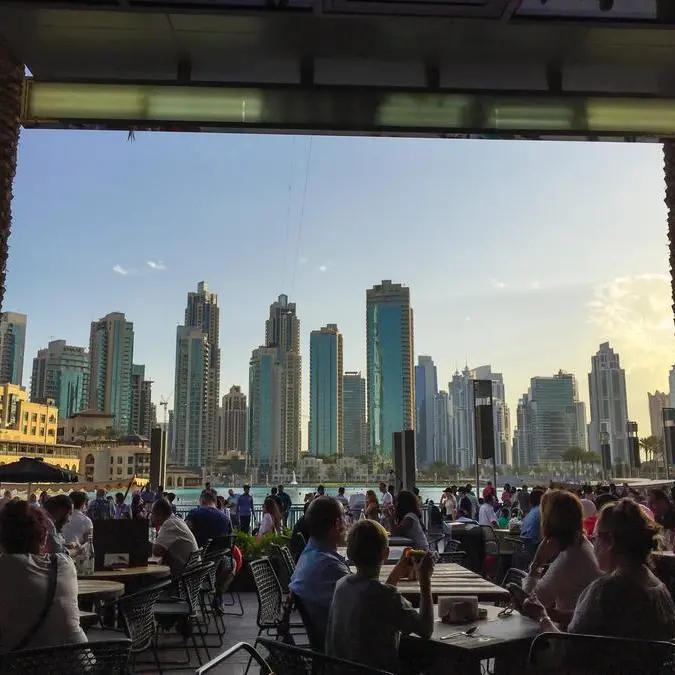
The United Arab Emirates celebrated its 40th birthday last Friday. The development of the seven-emirate nation over the past four decades has been phenomenal, witnessing a metamorphosis from dusty desert kingdom to global travel hub and financial center.
Along the way the UAE has also garnered itself a reputation as the birthplace of modern Islamic banking, playing host as it does to the world's first Islamic bank, Dubai Islamic Bank, establishedin 1975.
Cynics might argue that some form ofIslamic banking existed before this date in Egypt but DIB is now and always will be the world's first properly formed Islamic bank - representing as itdoes the vision of one man, Haj Saeed Ahmed Lootah, and his ruler, Sheikh Rashid bin Saeed al-Maktoum, the father of Dubai's current ruler Sheikh Mohamedbin Rashid al-Maktoum.
From those early steps Islamic finance blossomed in the UAE to the point where it now plays host to eight Islamic banks: Dubai Islamic Bank, Dubai Bank, Emirates Islamic Bank, Sharjah Islamic Bank, Abu Dhabi Islamic Bank, Noor Islamic Bank, Al Hilal Bank and Ajman Bank and a host of Islamic windows of conventional banks including Mashreq Al Islami, HSBC Amanah, Saadiq, ADCB Islamic Banking and a soon to be launched offering from RAKBank. As Moinuddin Malim, CEO of Mashreq Al Islami told The Islamic Globe: "Islamic windows will play a greater part in the overall scheme of things for conventional banks to not only retain their Islamically-inclined customers but also their ability to develop new products will have far reaching implications on their bottom line."
On the Takaful front the UAE is also well served with seven established Takaful companies (Noor Takaful, TakafulEmarat, Salama, Aman (Dubai Islamic Insurance & Reinsurance), Abu Dhabi National Takaful, Methaq Takaful and Al Hilal Takaful) with the prospects offive new providers set to launch soon. The picture is completed with the addition of two specialist Islamic home finance companies - Amlak and Tamweel -and the impartial observer might be forgiven for thinking that the UAE had a massive population rather than 8m or so that it actually has, only a tiny fraction of whom are local.
So, as the nation celebrates reaching the age of 40, how robust is the Islamic finance scene? The answer seems tovary depending on which segment you look at. It is clear that the two Islamichome financing companies are operating in a difficult environment since property prices in Dubai have halved from their peak and are continuing on adownward trend while real estate in Abu Dhabi has come under similar pressure.This has resulted in record defaults on home loans and absconding borrowers.
Amlak has just posted a net loss of AED40m ($11m) in Q3 2011 on higher provisioning and lower revenues. For the ninemonths to the end of September the firm made a loss of AED146m ($39.7m). Incontrast Tamweel produced net income for Q3 of AED15.7m ($4.3m) up from AED7.3m($2m) a year earlier. The company posted a net profit of AED70.7m ($19.2m) forthe first nine months of 2011, an almost four-fold increase from AED17.9m($4.9m) in the same period last year.
In the banking sector a line was drawnunder Dubai Bank's woes earlier this year as the Dubai government instructedEmirates NBD to take over the bank - and just this week ENBD appointed DouweOppedijk as interim CEO of Dubai Bank. Without doubt Dubai Bank has its workcut out for it to find a sustainable niche in the UAE Islamic banking landscapewhere it can prosper while the established players have significantly liftedthe quality of their game in recent years in response to the global financialcrisis.
According to Malim: "The future forIslamic finance looks very bright. Islamic banks and Islamic windows will playa key role in driving the market penetration. Once Islamic banks get their acttogether... in terms of their back office capabilities, operational efficiencies,processes, corporate governance, IT systems, delivery channels, riskmanagement, liquidity management and, more critically, human resourcedevelopment, these Islamic banks will target the conventional banking clientson service where price has now become the same."
But undoubtedly the golden opportunityfor immediate growth in Islamic finance in the UAE lies in the Takaful area asthe nation braces itself to become a regional and global Takaful hub.Admittedly both the Islamic banking and Islamic home financing areas are stillbeing hampered by non-performing loans after the real estate meltdown but theGCC as a whole is grossly under-insured and - if every dog has its day - thenthe day of Takaful has arrived.
© The Islamic Globe 2011