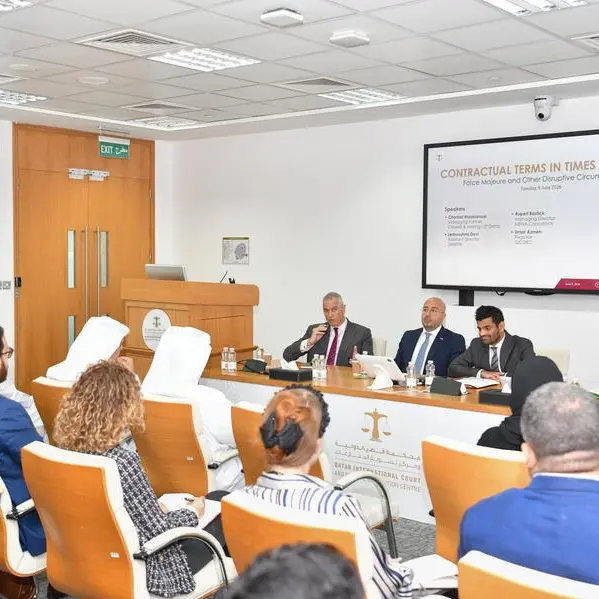
Muscat, May 20th 2013 - Experts and senior analysts from HSBC discussed how China's businesses and Renminbi currency (RMB) are playing an increasingly important role in world trade during a seminar organized for HSBC Bank Oman's corporate clients. The event explored the developing trend and what it means for companies in Oman.
Globally, the use of RMB has been increasing since 2009, when China launched a pilot programme to internationalise its currency by allowing the RMB to be used to settle cross-border trade. Since then, China's trading partners have increasingly been able to use the RMB when paying for imports or receiving payments for exports.
There are more than 30 markets worldwide conducting over 10% of their business with China in RMB, and the RMB cross-border capital flows have also taken off. RMB FDI almost tripled in 2012, and RMB ODI surged by 50%. In parallel, RMB investment opportunities are opening up all around the world - supported by thriving offshore markets that are expanding offshore hedging, fundraising and other financing needs denominated in RMB.
Iain Morrison, Head of Commercial Banking for HSBC Bank Oman S.A.O.G, explained that HSBC is capable of providing its corporate clients in Oman with unmatched industry analysis and insights as a result of the Group's long standing experience and international footprint.
He added: "The Renminbi has become part of everyday business for anyone trading with or investing in China. It is already an important global trading currency and is set to become a top three global trading currency by 2015. HSBC Bank Oman is in a position to help businesses and investors in the Sultanate seize this opportunity through a comprehensive suite of Renminbi-denominated products that are available onshore on the Chinese mainland and in offshore markets worldwide. These trades can be made with no restrictions from Chinese regulators."
Speaking at the session, Simon Williams, Chief Economist for HSBC Middle East and North Africa, commented: "China has been outperforming the US and EU despite cyclical slowdown in other Asian nations. Williams explained that China is setting the tone for generations to come in emerging markets with improved employment, increased public spending and economic reforms.
"The Middle East and specifically the Gulf States are in a prime position to benefit from the current trends with energy intensive economies naturally turning towards the East while oil prices continue to rise and public expenditure reaching unprecedented levels."
Trade between China and 16 of the largest Arab states grew from US$13.5 billion in 2001 to US$182 billion in 2011.
HSBC Bank Oman today serves more than 10,000 corporate clients from various sectors such as government, automotive, industry, oil and gas, telecommunications and construction. The bank provides expert local and international advice to clients and offers a comprehensive basket of products and services that are supported by global expertise to help make international business easier.
-Ends-
1. HSBC in the MENA Region
HSBC is the largest and most widely represented international banking organisation in the Middle East and North Africa (MENA), with a presence in 14 countries across the region. HSBC has operations in the United Arab Emirates, Egypt, Qatar, Oman, Bahrain, Kuwait, Jordan, Lebanon, Pakistan, Algeria and the Palestinian Autonomous Area. In Saudi Arabia, HSBC is a 40% shareholder of Saudi British Bank (SABB), and a 49% shareholder of HSBC Saudi Arabia for investment banking in the Kingdom. In Iraq, HSBC holds a majority shareholding in Dar Es Salaam Investment Bank. HSBC also maintains a representative office in Libya.
This presence, the widest reach of any bank in the region, comprises some 273 offices and around 12,000 employees. In the full year 2011, HSBC in the MENA region made a profit before tax of US$1,492m.
2. HSBC in Oman
HSBC is the largest international bank operating in the Middle East, and Oman is an important market in the region for the bank. Oman has one of the most stable political, social and economic environments in the region, with a growing economy supported by a young population and significant investments in infrastructure.
Oman is also a key access hub to the fast-growing trade corridors connecting the MENA region with Asia - a major focus for growth for HSBC. Its economy is forecast to grow at a compound annual growth rate of 4%1 forecast from 2011 to 2016.
3. HSBC Holdings plc
HSBC Holdings plc, the parent company of the HSBC Group, is headquartered in London. The Group serves customers worldwide from around 7,200 offices in over 80 countries and territories in Europe, the Asia-Pacific region, North and Latin America, the Middle East and Africa. With assets of US$2,556bn at 31 December 2011, the HSBC Group is one of the world's largest banking and financial services organisations.
For more information, please contact:
ShazaTaher
TRACCS Oman
Telephone: +968 24 649-099
Fax: +968 24 649-088
Email: shaza.taher@traccs.net
© Press Release 2013