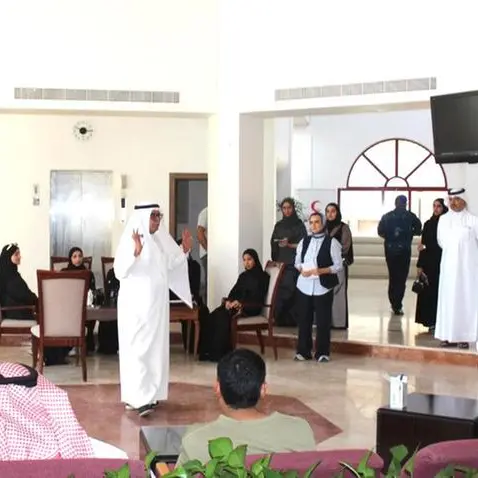
Beirut, 8 March 2013 (United Nations Information Centre) - On the occasion of the International Women's Day (IWD) the United Nations Information Centre in Beirut (UNIC) has organized a panel discussion on "Women and the Arab Spring" that reviewed the situation of violence against women and girls in Lebanon and the Arab region, assessed commitment of these countries to international conventions on women, the status of Arab women's political participation, and several other relevant topics.
The meeting, held under auspices of Lebanon's Social Affairs Minister Wael Abu Faour and in cooperation with the Association of Civil Action Organizations, also focused on gendering development policies and the role of media and civil society in promoting gender equality. The discussion was held 7 March at UNESCO's Regional Bureau for Education in the Arab States.
After welcoming participants, UNIC Director Bahaa Elkoussy went through the world organization's record of supporting the struggle of women to gain their rights, tracing it the 1945 adoption of the UN Charter. He noted that Secretary-General Ban Ki-moon has made women's issues one of the top priorities in his second term by intensifying a global campaign to end violence against women, promoting their political empowerment and ensuring their full participation in social and economic recovery. Elkoussy addressed the theme of this year's IWD - violence against women, citing the Secretary-General's call to turn sense of outrage at these practices into "concrete action" to stop these violations, bring perpetrators to justice and protecting women and girls at all levels.
Representative of Social Affairs Minister Antoine Zakhia said the winds of change sweeping the region provide a real opportunity for women to gain their lost rights, and that women were expected to "insist on equal rights, or their causes would take a back seat." He called for supporting women's efforts, shoring up their rights and "giving due diligence to ensure their participation in political life, but even in public life, and the adoption of constitutional and legislative reforms to put an end to violence against them, while ensuring the enforcement of global principles for the protection of their rights."
On the topic of women's political participation, renowned TV presenter Paula Yacoubian said women are aware of their real status and role, particularly Lebanese women who are empowered and equipped for political participation. She called for a "real action plan" promoting such participation. Yacoubian stressed upon the role of the United Nations in helping Lebanese Women "so as they won't beg" for parliamentary seats and leadership posts. She emphasized that women prove their efficiency compete well with men once they enter the job market, but that there is a "historical imbalance" where preference is given to men even when women possess same qualifications and that needs to be remedied. The TV celebrity demanded introducing quotas for women to open doors for their active participation, and cited their resounding success in media fields.
As for gendering development policies, former Lebanese minister Wafaa Dikah Hamzeh stressed that this integration is not limited to women only but benefits women and men alike with its impact affecting both sexes. She argued that development policies are a strategic approach adopted by the State to achieve parity and equal opportunities and to fight poverty, improve basic services, such as education, health, infrastructure and social protection. The leading member of the National Commission for Lebanese Women Affairs pointed to the 10-year strategic plan developed by that body in 2011, and highlighted major challenges that may face this strategy.
In discussing international conventions on women's rights, gender and women's rights advisor of the Regional Office for the UN High Commissioner for Human Rights Nada Darwazeh said that despite the commitment of most Arab countries to the Convention on the Elimination of All Forms of Discrimination against Women (CEDAW), "we are unfortunately still far from achieving concrete results on the ground, and we are still facing a deadlock in application and implementation." She added that "women's rights are not only human rights and integral ones, they are also a fundamental cornerstone for all people to enjoy human rights." The UN official contended that despite attempts to develop a new social contract in some Arab countries, "there are no constitutional amendments explicitly stipulating the principle of gender equality" and therefore they remain out of line with CEDAW.
Lebanese media expert Hikmat Beainin, speaking about the role of media in promoting gender equality, touched on the issue of media ownership in Lebanon and the Arab region by one party or another, whether religious, political or otherwise, and the impact thereof on their approach to various issues, including women's. According to Beainin, when media address women-related topics they take into account the interests and perspectives of their proprietors. He said he wants to see citizens becoming part media's ownership, leading to freedom from dependency and hence serving gender equality. He said unless the middle class in Lebanon and the Arab world turn into a cohesive caste supporting free media, none of these goals would be achieved.
Lebanese human rights activist Faten Abu Shakra, tackling the situation of violence against women, pointed to some progress in this regard from early 1990s to the present, especially in relation to the work of relevant civil society organizations. She listed some painful violence incident still being endured by women, and praised the role of media shedding light on civil movements striving to end violence against women and boldly addressing this issue. She also commended the hard work done by Lebanese NGOs in search for legislations to protect women from domestic violence.
In her presentation on the role of civil society, Ugarit Younan labeled civil society organizations advocating women's causes as the "struggling community." She spoke about efforts of civil society to amend what she considers the most important law for women, the personal Status Law, which can achieve "family and emotional justice." She saw this law as "the most important gateway for women and the sectarian system in Lebanon." Younan hoped that young people and relevant bodies would upgrade their plans and make them more professional and effective to reach desired objectives.
President of the Organization for Civil Activities Huda al-Khatib Chalak praised participation of women in the Arab Spring, and said: "Maybe none of them realized the existence of international agreements and treaties that protect their rights, but they deeply and instinctively knew they had the natural human rights. At every step of pride there was an appeal for a safe life," she said.
© Press Release 2013