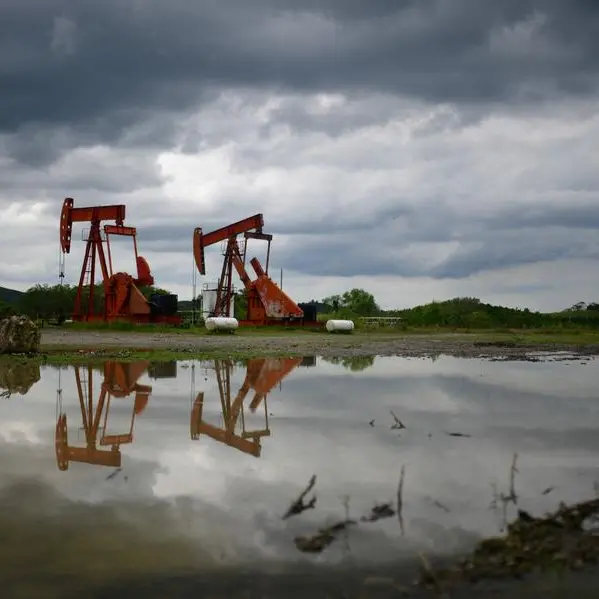
Libya's oil sector has returned quickly to full speed, but the rest of the country remains in a state of disrepair. Maplecroft identifies at least nine key challenges facing the country.
While Libya has done well in ramping up oil production to near pre-civil war levels, much remains to be done.
The ruling National Transitional Council recently approved a USD54-billion budget that depends heavily on the oil sector as the rest of the economy remains in a state of disrepair.
The budget deficit will reach USD10-billion as the government continues to pick up the pieces of the devastating war that led to the ouster and killing of Moammar Gaddafi.
"The production of oil has brought in $4 billion in the last five months, while the salaries of civil servants are $22 billion a year and spending on electricity and fuel $14 billion...The budget being prepared should be in deficit of $10 billion," said NTC Head Mustafa Abdel Jalil.
The government is also looking to repatriate close to USD100-billion, which remain frozen by western governments. The NTC claims only $6-billion has been repatriated to date.
Libya needs these funds desperately for its short-term needs and for infrastructure building.
"GDP is estimated to have contracted by 60 percent in 2011 while consumer prices increased by 14%," said the IMF in a recent report on the country.
Crude oil, Libya's foremost export, had virtually dried up from 1.77 million barrels per day in 2010 to 22,000 barrel per day by July 2011.
"Non-hydrocarbon economic activity was also affected by the destruction of infrastructure and production facilities, the departure of expatriate workers, disruptions to banking activity, and limited access to foreign exchange.
"Accordingly, hydrocarbon GDP is estimated to have contracted by 71 percent in 2011, while non-hydrocarbon output declined by 50%. Inflation picked up significantly in 2011, reflecting constraints on imports, domestic supply limitations, and monetary expansion."
The country faces formidable challenges in defining the core elements of a new political system. The country has been without a coherent national governance system for four decades and lacks the institutions to help manage a smooth transition, says the Institute of International Finance.
"The UN and other international organizations will be providing technical assistance and policy advice to help steer the transition towards reconciliation and to rebuild state institutions and the economy."
UNEMPLOYMENT
Maplecroft, the risk and research consultancy, says that unemployment in Libya before the war officially stood at 26% and is now likely to be much higher.
"Consumer prices are up by 14% compared to early 2011 when the uprising began. All this reflects on the systemic socio-economic problems faced by Libya - problems which the government cannot solve in the short-term and will be a contributory factor to social unrest."
As such the initial optimism surrounding the ouster of Gaddafi's oppressive regime has been replaced with worker strikes, who demand the fruits of their struggle - immediately.
"As such, the NTC is keen to court major foreign firms and investors in a bid to gain a public 'vote of confidence' in Libya, but the NTC is hamstrung by its lack of a democratic mandate to sign new contracts," notes Maplecroft.
Until elections for a constituent assembly take place, currently planned for June 2012, foreign firms are equally reluctant to commit capital to a country which is still very much in the middle of a post-conflict political transition, the consultant notes.
THE PRIZE
Libya sits on around 46.4 billion barrels of oil reserves, the largest in Africa, and close to 55 trillion cubic feet (Tcf) of natural gas reserves, combined with its proximity to energy-starved Europe, makes it an attractive country to invest in.
Maplecroft notes that the rapid resumption of oil production and the gradual return of foreign oil workers to the country has been hailed as evidence that things are moving in the 'right direction'.
The country, which produced around 1.7 million to 1.8 million barrels per day before the war, has quickly ramped up production to around 1.3 million barrels per day as foreign companies return to the country.
"Foreign businesses in other sectors of the economy have also sought to re-enter or explore new opportunities in Libya. They are seeking to benefit from years of under-development and Libya's post-conflict reconstruction effort," wrote the consultancy in a note. "Libya's infrastructure is in a parlous state and the need for foreign investment and expertise in multiple sectors of the economy is pressing."
But the political machinations will take some time to iron out. Parliamentary and presidential elections are set for 2013, and analysts expect the situation to remain fluid until all the political pieces fall into place.
Maplecroft notes that the country faces the following risks as it looks to attract foreign investment, create employment and stabilise the country:
Despite short-term opportunities for foreign businesses in Libya, significant risks persist. These need to be considered as Libya moves forward. A range of existent and potential pitfalls are discussed below:
1 LIQUIDITY SHORTAGE: The country's liquidity shortage means that the central bank has capped withdrawals, and many Libyans are wary of depositing their funds into banks. "The penetration of foreign banks in Libya is also low and new licences for banks such as HSBC (which already has a registered office in Libya) are not expected soon," says Maplecroft.
2 NON-OIL SECTOR: The lack of financial structures, coupled with an uncertain political set up means that most non-oil investors remain on the sidelines.
"Indeed, whilst some companies are carrying out 'quick win', small contracts such as stabilisation projects and tenders for larger projects have not yet taken place and foreign companies are hesitant to make potentially costly moves until an elected government is in place. Furthermore, key features of Libya's business environment under Gaddafi such as endemic levels of corruption and a notoriously cumbersome bureaucracy will take years to resolve. However, Libyan officials claim that tackling these issues is a priority in the 'new' Libya."
3 SCRATCHING THE REBELS BACK: Countries that favoured the rebel movement in their fight against Gaddafi's regime may find themselves securing more contracts at the expense of countries that were not as encouraging of the Libyan revolution.
"Given China and Russia's reservations about the NATO-led mission to support the anti-Gaddafi movement, ex-pat workers from these countries are unlikely to be welcomed back by Libyans. This may provide firms from Britain, France and Turkey for instance with a competitive advantage particularly in areas such as construction."
Companies should also note however that whilst power was centralised in Tripoli under Gaddafi, Benghazi is likely to become a prominent commercial hub - particularly given its vast oil wealth. On a broader level regional administrations will have greater influence over decision-making processes," notes Maplecroft.
4 REGULATORY FRAMEWWORK: Gaddafi's regime famously worked without much in the form of regulatory framework, which allowed the former dictator to change his mind and confuse the international community and even his own bureaucracy.
5 REVIEWING CONTRACTS: Similar to developments in Egypt, there are fears that the NTC may revoke or review contracts signed with international companies, but the government is looking to dispel those fears.
But Maplecroft says that the number of probes into deals signed during the Gaddafi era will likely increase.
"This is due in no small part to the weakness of the central government which can only retain a semblance of legitimacy by tackling emotive issues, such as corruption, which resonate strongly with the public. Nevertheless, the NTC's mandate and political will to annul major contracts will be tempered against the need to attract foreign businesses," the consultant notes, adding that contracts with European countries are unlikely to be revoked.
6 LAND RIGHTS: Like most of the Arab world, land rights remain sketchy or non-existent in Libya.
The government is reportedly working on a new commercial code which is expected to be "less favourable" to foreign businesses.
"Specifically, under the old system foreign companies were obliged to set up a branch with a local partner, wherein the foreign investor would hold a controlling 70% stake. Under new proposals, the Libyan partner would retain a 51% controlling stake. The minimum capitalisation required to establish a business in Libya may also increase, which could deter some investors," notes Maplecroft.
7 REAL ESTATE LAWS: Whilst Libya's real estate and construction market is likely to see rapid development and opportunities emerge in the coming years, investors should note that under Gaddafi large amounts of land and property were expropriated under 'Law 4'. In the wake of the regime's collapse, multiple disputes over property rights and ownership have emerged and this may create legal and reputational problems in the future for investors looking to enter this sector.
8 LABOUR STRIKES: Labour strikes and protests will continue to persist and could lead to trade unions in the country. Last year the NTC had published a "Vision of a Democratic Libya" which outlined workers right to uninionise.
"Strikes have been seen in a variety of sectors, with industrial actions taking place in Libya's airports, ports and oil facilities in recent months. Consequently, businesses can expect supply chain disruptions and operational challenges should workplace standards be inadequate or non-existent and labour rights protection be lacking. The large number of migrant workers in Libya increases the risk that supply chains may include illegal migrant workers, placing businesses' reputations at risk."
9 SECURITY RISK: While Tripoli remains relatively calm, travel to other parts of Libya can not be undertaken without security. The various factions and tribe in Libya are looking to defend their turf and strengthen their position before the elections.
"It should be noted that whilst certain militia brigades have been accused of human rights abuses, they are at the same time playing an important role in ensuring Libya's short-term stability," said Maplecroft.
Local brigades have played a crucial role by working with local councils to provision the resumption of basic services and retain a semblance of order. A major task for any future government will be to disarm the militias and integrate them into the political process and create a national army and police force.
CONCLUSION
The above risks show Libya has a mountain of issues to climb, but the fact that the country has not fallen apart with rampant violence among tribes suggest that a functional Libya is not in the realm of the impossible.
Indeed, the infrastructure development in Libya should be a source of great revenue and job creation not only in Libya but also the surrounding countries as well.
And that was the whole point of the Libyan revolution - to leverage the country's natural resources into a powerhouse of job creation and investment.
Also Read: Libya Revisited
Uniting Libya
© alifarabia.com 2012