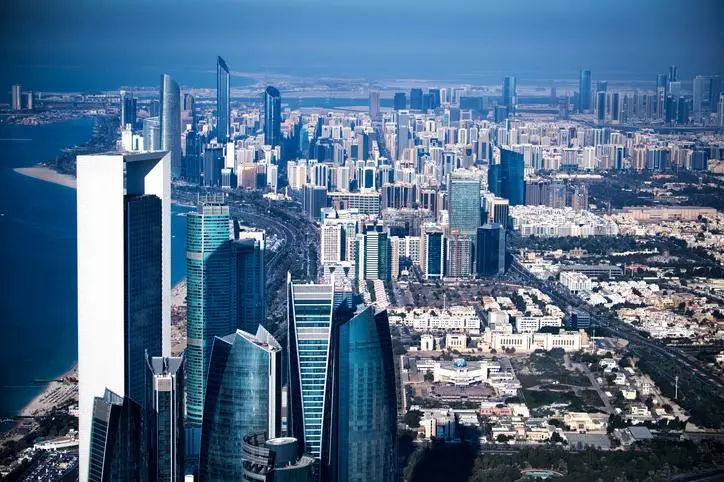
Dubai's bid to host the Olympics in 2024 is completely in line with the emirate's efforts to raise its international profile and emerge as a vibrant global city capable of hosting major events.
Hosting the Olympics is seen as the ultimate stamp of approval and shows that a city is capable of hosting a complex global event, across multi-disciplines that bring together the city's political, economic, social and leisure capabilities to the fore. For the duration of the event, the host city would have the entire world as a captive audience and it is a once-in-a-lifetime opportunity for the city to put all its greatest attractions and capabilities on display.
That sounds like something Dubai would thrive in. But while the event may give the emirate just the fillip it needs, it would also raise interesting questions on how the emirate will fund its Olympic-related investment needs.
Hosting the Olympics is as much about 'hard' infrastructure and economic acceleration as it is about 'soft' stuff such as national pride and raising the host city's profile on the global scale.
Dubai's decision to bid for the 2024 Olympics is bold and ambitious - and suggests that after a couple of years of lack of self-confidence, the city is once again looking to regain its status as the region's most dynamic city.
For let's face it, ever since Qatar ran its successful campaign to host the 2022 FIFA World Cup, Doha had earned bragging rights of being the region's most dynamic city.
Doha's winning bid - though not without its controversy - also shows Dubai that it can be done. No Middle East country had ever hosted the Football World Cup before - the greatest single-sport event in the world - and now Dubai's 2024 bid could well make it the first Middle East country to host the Olympics - the biggest sporting spectacle on earth.
Dubai needed a stimulus and a higher aspiration for the city to revive its glorious years of can-do, will-do attitude and this bid will be a leaf from the old Dubai book.
Hopefully though, this time it will not be a mad frenzy with poor legal and financial frameworks and un-coordinated financing that led to the almost-scandalous downfall in real estate and other sectors in Dubai.
This time, it is hoped it will be different.
A PriceWaterHouseCoopers study on Dubai's bid concludes that as much of 70% of the 'hard' infrastructure was already in place or planned, noted a National Olympic Committee of the United Arab Emirates.
Read the press release: UAE National Olympic Committee plans to bid for the 2024 Olympic Games
However, the press release that announced Dubai's intention to bid for the Olympics 2024 also suggested the emirate's pedigree of hosting major sporting events. It cites Dubai World Cup, the Dubai Desert Classic and Ladies Masters (golf), the Barclays Dubai Tennis Championships, as well as the Emirates Airlines Rugby Sevens, FINA 25m Swimming Championships (2010), UIM Class 1 World Offshore Powerboat Championship, as well as the Standard Chartered Dubai Marathon, as examples of major events the city has hosted.
These are great events no doubt, but they don't compare to what hosting the Olympics entails.
Just imagine the scale of the mega event:
The 2008 Beijing Olympics was watched by four billion people. China invested approximately $40-billion in infrastructure alone between 2002 and 2006 to prepare for the Olympics, building some 40 new stadia and athletic facilities, doubling the capacity of Beijing's subway system, completing the light-rail system, building and improving roads, and constructing a new airport. Olympic-related investment accounted for up to 15 percent of overall economic investment between 2002 and 2008, notes PWC in a separate report examining the impact of mega events on a country's economic fortunes.
Similarly, the 2012 Olympics in London is set to boost the country's economy by 5.1 billion pounds, generate 18,000 jobs, and increase economic output by 1.14 billion alone during the seven weeks of the event, according to Visa projections. London expects to spend around $15-billion for the Olympic Park under construction in East London and the regeneration of the entire region, including transportation, bridges, utilities, and walkways. Separately, new transportation projects indirectly linked to the event will be built at a cost of $8-billion.
The Olympic event will be - as it usually is for each city that hosts it - an unprecedented event for Dubai.
And the rewards will be just as generous. A report in 2009 by Mark Spiegel from the Federal Reserve Bank of San Francisco and Andrew Rose from the University of California, Berkeley, found that hosting a mega-event like the Olympics or the FIFA World Cup permanently boosts trade by 30 percent.
Their study of 196 countries' economic performance between 1950 and 2006 found that the "Olympic effect" derives from host countries signalling their intention of moving toward a more open trade policy.
Brazil, which is brimming with confidence at the prospect of hosting the FIFA World Cup in 2014 and the Olympics in 2016 is expected to invest $83-billion in infrastructure.
"A public-private partnership is likely among the best options to finance a high-speed train line--estimated to cost $20 billion--that would serve both the Olympics and the World Cup. Private investors from the Middle East, Europe, and the US have expressed interest in these infrastructure projects," notes the PwC report.
Meanwhile, next door Qatar is looking to spend $70-billion to host the FIFA World Cup in 2022 as part of its wider investment to achieve its 2030 Vision.
Dubai and other regional contractors, builders and businesses are expected to benefit from Qatar's mega event, and it will not be hard to imagine that a twin mega event within the space of two years would give local and regional businesses a major boost which could well be long-lasting.
"While the eyes of the world are on the events, athletes, and facilities for a few weeks during a mega-event, the transformative effect of well-thought-out supporting infrastructure has long-lasting economic, demographic, and social implications for the entire region," notes PwC.
Ultimately, residents and local businesses in cities hosting mega-events benefit over the long term when city planners and regional leaders create and upgrade supporting infrastructure in keeping with long-range plans already in place for the region. The mega-event serves as a catalyst for accelerated socioeconomic development, including securing sometimes elusive funding.
Major Development
Long before Dubai was looking to host the big event, it was certainly unconsciously gearing up for it.
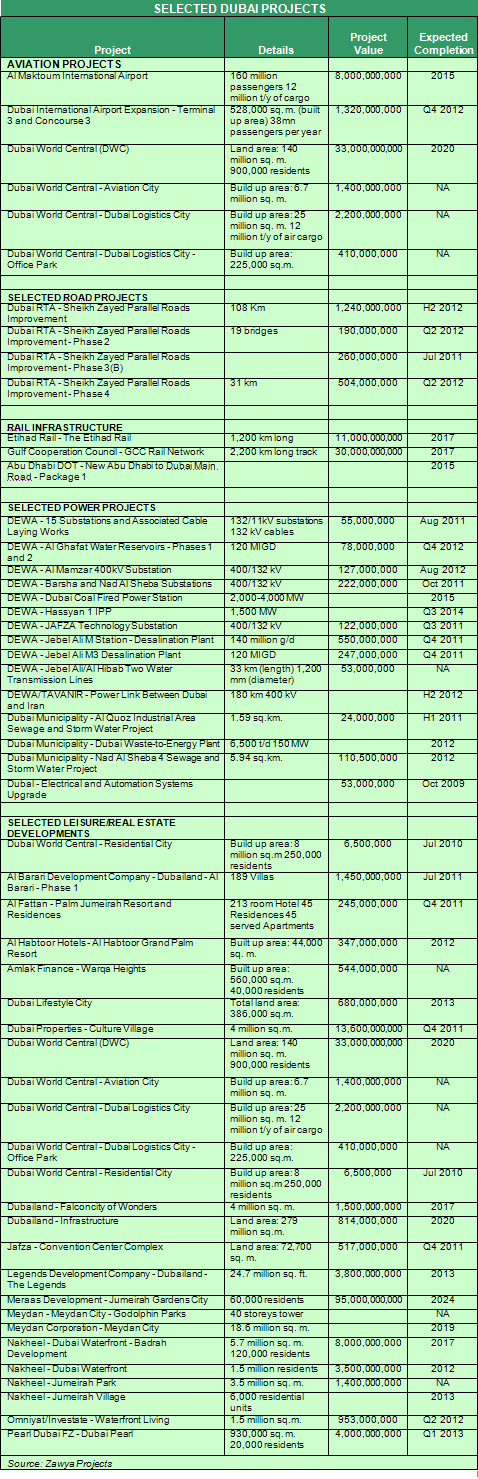
Some of these projects may get a new lease of life if the Olympic Committee selects Dubai as the winning host on September 7, 2013.
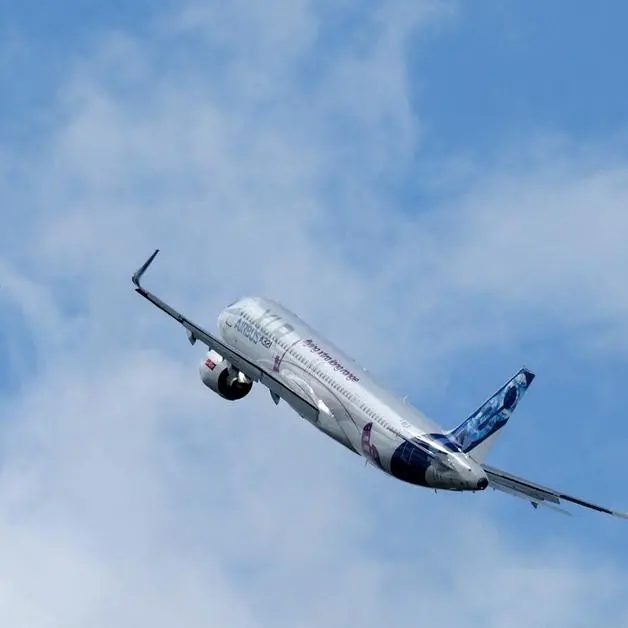
Emirates airline, for one, has been preparing for years for an event like this with a fleet order and route network that is the envy of many airlines. It has close to 200 aircraft on order at a combined value of $66-billion. It will probably need many more even if it as replacement, in another 13 years time.
In addition, no less than 48,500 new hotel rooms are expected to come on line in the UAE by 2015, according to STR Global.
A successful 2024 Olympics could lead to renewed interest in Dubailand/Bawadi. The development which had once been touted as a strip of 30-40 hotels, was shelved with the onset of the global financial crisis and domestic oversupply.
Olympic events often serve as a catalyst for areas in host cities that have suffered from neglect or where funding is exclusive - a successful bid could see a revival there.
Other key beneficiaries could be the Palm hotel developments, and the World island project.
The Huge Question Mark
Of course, Dubai has only recently come to terms with its debt pile of $110-billion. A successful Dubai bid would mean that some of the emirate's key corporations would be returning to the market to finance the new projects and developments that will no doubt come their way.
Immediately after the Dubai World debt debacle, the emirate's credit and reputation suffered tremendously and it is only the current regional turmoil that has made international investors look favourably to Dubai as a safe haven.
There will also be questions marks on whether the emirate has embarked on robust of financial, real estate and business reforms which would ensure that there is no repeat of 2008.
In a recent report, the International Monetary Fund (IMF) noted that Dubai's debt may become unsustainable in the absence of policy change.
The IMF blames debt piled on by government-related entities (GREs) for raising Dubai' fiscal vulnerability.
"Dubai's gross government debt, including guarantees, increased from 1.6% of Dubai GDP in 2007 to 10.3% in 2008 and 34% as of end-2010. This was mainly due to the bailout of GREs," the IMF notes.
Read the full story here: Dubai Debt Burden
Still, that bridge is a couple of years away before it will need to be crossed. For now, Dubai will have a spring in its step as it prepares for the 2024 Olympics. And that is just what the doctor ordered for the emirate.
Conclusion
The reference to "70% of hard infrastructure" is a valiant effort to suggest that the emirate may not need major investments given that much of the developments needed to stage the event are already in place or on the way. But experience of past events show that all cities need to spend tens of billions to successfully host the event. While the rewards are huge, there needs to be a strong and sustained investment plan long before the returns are realised.
Of course, such a major decision will have been co-ordinated with Abu Dhabi, and it will be interesting to see how involved the capital emirate will be to ensure Dubai gets what it wants.
© alifarabia.com 2011