Kurds put out the welcome mat for investors, as Middle Eastern troubles afflict Iraq's stable north
Foreigners visiting Sulaymaniya and Erbil airports for the first time find an unusual welcome awaiting them. Unlike every other Middle Eastern country, the Kurdish region of Iraq does not charge a cent for obtaining a visa. And with a highly inviting investment climate, that welcome is extended to foreign businesses too.
The Kurdistan Regional Government (KRG) - the Kurds' semi-autonomous authority - is not shy of touting its security advantage over the other 15 provinces of the conflict-racked country, branding itself "the Other Iraq" in a largely successful bid to elicit foreign investment in a region that is primed to become a major hydrocarbons player. Some 40 oil companies are exploring for oil and gas in the three northern KRG-controlled provinces.
The Kurdistan region has solicited rising volumes of direct investment from neighbouring countries like Turkey, with whom trade is running at about $7.5 billion a year. Iran, Lebanon, Syria and Gulf states like Kuwait and the United Arab Emirates are also prominent investors in the KRG.
The Kurdistan Board of Investment reveals that in excess of $17 billion has flooded into Kurdistan's economy in the past five years, $3.9 billion of that from foreign sources. The board has licensed 324 investment projects since August 2006, more than half of which are in the capital Erbil, with housing the single largest target sector for foreign investors.
But Kurdistan may find it an increasingly hard sell, as violent street protests against the KRG political establishment enter their third month. Like much of the Middle East, traditionally stable Kurdistan is feeling the heat as demonstrators throng the streets of Sulaymaniya and other urban centres, alleging that the region's senior political elite has become tainted with corruption.
In late April, the violence seeped from the street to parliament, with opposition MPs hurling water bottles at pro-government MPs.
The tension on the streets is tangible. In Sulaymaniya, a city that has doubled in size in the space of eight years, the main square has seen a daily game of cat and mouse played out between security forces and young protestors. Nine deaths have been reported
in Sulay alone, as clashes grow in intensity.
This street level noise jars somewhat with the investment pitch the Kurdish authorities have made over the past eight years, since Saddam's removal was heartily cheered on by Kurds.
The fear in Erbil, the KRG capital, is that the latest wave of protests will put investors off the only truly safe part of Iraq. The Kurdistan Investors Union, a lobby group, announced in Mid-April that the unrest had already affected investment projects that had created some 80,000 jobs for locals.
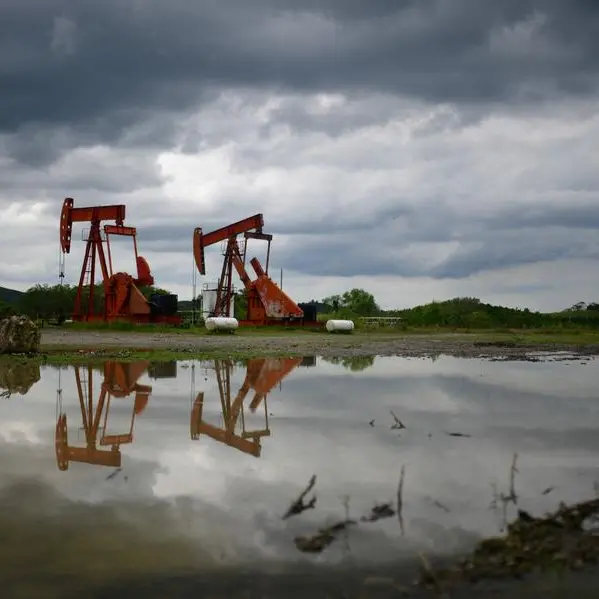
Fortunately, such investment jitters do not appear to have afflicted Kurdistan's burgeoning oil and gas sector, where foreign oil producers are now pumping 115,000 barrels a day (b/d) from two main fields. Norway's DNO is leading the way with more than 60,000 b/d from the Tawke field, the rest produced from a joint venture of China's Sinopec and Turkey's Genel Energy at the Taq Taq field.
The independent dominated hydrocarbons sector, encouraged by an investor friendly law that allows for production sharing contracts (PSCs) - affording international oil companies (IOCs) the increasingly rare opportunity to acquire equity oil positions - is proving a veritable Klondike.
Over the past month, the UK-based Gulf Keystone announced a "very significant upward revision" of volumes estimates at its Shaikan discovery in Kurdistan. The firm previously estimated that gross oil-in-place volumes at the field were between 1.9 billion barrels and 7.4 billion barrels. But in mid-April, it revealed that additional tests have boosted the estimates to between 4.9 billion and 10.8 billion barrels.
The UK's Heritage Oil signed a rig contract in April with China's Daqing International for a drilling rig to begin well exploration and appraisal drilling in the Miran block. The first well in the company's campaign, Miran West-3, is due to begin drilling in July.
Murphy Oil, a US firm, announced at the end of March it was adding a second block in Kurdistan, having finalised in November 2010 an agreement for 50 per cent of the Central Dohuk bloc.
Canada's ShaMaran Petroleum Corporation meanwhile, also announced a major discovery at its Atrush project in mid-April, with oil encountered at a 726-metre potential gross oil column. Flow rates were over 6,000 b/d, suggesting Atrush is could become a significant producing asset for the company upon development.
Even more encouraging for the KRG's ambitious Natural Resources Minister Ashti Hawrami - the architect of Kurdistan's oil production strategy - is the arrival of the largest IOC player, Marathon Oil, as a partner for ShaMaran at the Atrush block.
"Marathon is significant as it's a big fish, and we haven't had any of these IOCs yet," says one Kurdish oil consultant in Sulaymaniya.
Confidence in Kurdistan's hydrocarbons sector has been buttressed by an agreement with Baghdad's Ministry of Oil to recompense foreign oil companies for their costs incurred in northern Iraqi oil exploration. In April 20011, oil companies sent out their first expenses bills to the KRG, which in turn sent them on to Baghdad to settle.
As part of a deal reached in February between Hawrami and his counterpart Kareem Abdul Jabbar, Iraq's new oil minister, the KRG will hand over oil to Iraq's State Oil Marketing Organisation which will then be exported along with other Iraqi crudes. Revenues will revert to the KRG under the nationally agreed formula whereby the three Kurdish provinces receive 17 per cent of the national budget.
In fact, the deal is not yet sealed. Baghdad still doesn't recognise PSCs signed between the KRG and IOCs, arguing that only the national government has the authority to grant such contracts. The two sides remain at loggerheads on this issue and Baghdad has recently reaffirmed position, rejecting attempts by other provinces in Iraq - such as Dhi Qar and Karbala in the South - to gain greater control of their oil sectors.
Despite the uncertain investment climate facing IOCs active in the north, the attractions of Kurdistan's oil and gas reserves remain substantial.
"Kurdistan has the world's largest remaining undeveloped petroleum reserves and has the lowest extraction lowest worldwide," says Kiwan Siwaily, a consultant engineer in the Kurdish oil sector and a former oil adviser to the KRG. "Normally oil is found at depths in excess of 4,000 to 5,000 meters. But here they are encountering oil at 900 metres."
The 115,000 b/d being pumped out from just two fields suggests plentiful resources in the ground, justifying Hawrami's claims that Kurdistan is capable of pumping more than one million b/d.
"If that much oil is coming out of just two blocks out of 47, just think what the others may be capable of," says the Sulaymaniya-based oil consultant.
Such ambitions are frequently heard in Kurdistan, where unlike in the rest of Iraq, there has traditionally been little experience of oil and gas development - aside from Kirkuk, a massive one billion barrel field that is the fief of Baghdad's North Oil Company.
However, Kurdistan's efforts to transform itself into the Middle East's next oil titan will be constrained if Baghdad - which has a major say in the export capacity of Kurdish oil and gas - still wants to play hardball.
Hawrami's bitter foe, former oil minister and now Iraq's deputy prime minister for energy, Hussein al Shahristani, confirmed in April that oil companies with contracts with the KRG will not be paid any profit unless their contracts are ratified by Iraq's central government. This is unlikely to be a fait accompli.
The entry of Marathon, the US' fourth largest integrated oil company, has clearly raised expectation levels in the Kurdish north. But much more work needs to be done to build bridges with Baghdad and its other neighbours, before the Kurds join the ranks of the Gulf's major oil producers.
The welcome for outsiders remains hearty in Iraq's north; time will tell whether investors' risk appetite remains as robust as it has hitherto proved.
Investment
Gulf investors and Turks beat a path to Erbil
Despite the riots afflicting Iraqi Kurdistan's second city Sulaymaniya, the KRG is adamant that it remains a target for investors seeking a gateway into Iraq. Erbil has been named as the fifth most attractive foreign direct investment destination in the Middle East region, helping the Kurds to pull in an estimated $17.4 billion in investment over the past five years.
On the ground in Sulaymaniya, it is the Turks building the major housing projects. But overall, it is Kuwait's $1.5 billion, representing some 40 per cent of overseas investment estimated at $3.9bn, that heads the pack in terms of capital invested.
Turkey's $702.8 million of investment puts it behind Lebanon in third position, according to figures from the Kurdistan Board of Investment. However, Turks are become more aggressive investors in the KRG. In late March, Turkish prime minister Recep Tayyip Erdogan opened the first Turkish consulate in Erbil amid much fanfare, promising a greater Turkish presence in Iraqi Kurdistan - though Erdogan is careful not to mention the "K" word in public, for fear of inflaming sensitive opinion back home.
This year, more than 20 per cent of the total investments made in Iraqi Kurdistan by foreign investors were from Turkish companies. Turkish investors invested $536.1 million throughout the KRG in 2010, with the UK taking second position with $201.9 million in investments.
Construction is the biggest current driver of the Kurdish economy. The Board of Investment reports that $2.14 billion was invested in the housing sector in 2010, representing 45 per cent of total investments in 2010. Low income housing is the main focus of activity, with 150,000 affordable homes are needed over the next five to 10 years.
The Kurds are also looking to overhaul their public infrastructure, with plans for a 60-kilometre tramline in the capital Erbil, and 50-kilometre and 40-kilometre lines in Sulaymaniya and Dohuk respectively.
The Gulf 2011