Dow Jones Islamic Market Indexes in April: Growth is beautiful - or is it?
A number of Dow Jones Islamic Market (DJIM) Indexes posted gains in April. After diving 10.17% in the first quarter of 2011, the DJIM Kuwait Index rebounded, registering a gain of 7.04% to 963.52 (as of the close of trading on April 26). In a nation with nearly 95% of its federal budget tied to oil revenues, rising oil prices drove the Gulf state's stock market higher. The resignation of Kuwait's old and unpopular cabinet also helped. Kuwait was followed (on a percentage basis) by the DJIM Hong Kong Index, up 6.50% to 1,655.53; and the DJIM Philippines Index, up 5.90% to 1,855.26.
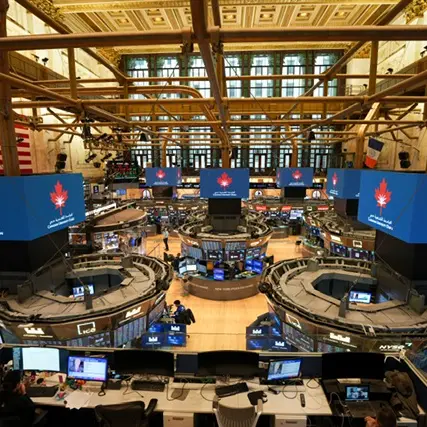
Only a few DJIM indexes lost value in April. As in March, the DJIM Japan Index (down 1.39% to 1,093.42) and the DJIM Sri Lanka Index (down 0.53% to 2,364.55) were the poorest performing indexes. Meanwhile, the DJIM Pakistan Index, after advancing 10.57% in the first quarter, dipped on profit-taking and closed 0.34% lower in April to 15,450.25. As a direct comparison, the bellwether Dow Jones Industrial Average (DJIA), which measures the performance of 30 U. S. blue chips, closed the month up 2.24% to 12,595.37 -- its highest level since June 2008. Strong U. S. corporate earnings as well as a number of key hiring announcements at companies including McDonald's and Citigroup, lifted the U. S. market. Among the non-Islamic, or conventional Dow Jones composites, the Dow Jones Turkey TSM Index posted the largest advance, gaining 7.74% to 1,499.83. Meanwhile, the Dow Jones Japan Index, down 2.61% to 84.51, underperformed its Islamic counterpart as the nation continues to suffer from the epic earthquake and tsunami that hit Japan on March 11, 2011.
The DJIM Index series measures the stock performance of firms that use rule-based pass screens for Islamic law or Shari'ah compliance. Companies engaged in the following businesses are excluded as non-Islamic or haram: alcohol, tobacco, pork-related products, weapons and entertainment. Conventional banks and insurers are also excluded, because they generate profits by charging interest; interest, or Riba, is forbidden under Shari'ah.
The DJIM Financials Index, up 2.87% in April to 1,877.10, tracks the performance of Islamic banks and Shari'ah-compliant insurance firms, together known as Takaful operators. According to an industry report Young, the global Takaful industry will reach US$12 billion in 2012, and, with the entire Islamic finance industry is estimated at US$1 trillion, the relatively small Takaful sector is the most dynamic Islamic finance sub-segment, growing at 25% per year. Examples for Takaful components -- which are part of the DJIM Financials Index -- are Saudi Arabia's Malath Cooperative Insurance & Reinsurance Co. and Solidarity Saudi Takaful Co.
Despite the mostly buoyant climate in the equity markets, regional political risks remain high. The conflict in Libya has yet to be solved, ongoing civil unrest in Syria and Pakistan and recent military clashes at the Thai-Cambodia border are helping to fuel the oil price rally and inflation fears. The uncertainty is also mirrored in rising gold prices. Gold is the only means of payment which has no liability attached to it and therefore considered a safe asset during times of crises. Islamic finance considers precious metals as acceptable or halal. On April 25, the price for the yellow metal rose to 2 an all-time high, while silver hit a 31-year high. As a result, the DJIM Basic Materials Index soared 5.19% to 2,735.76, the largest gain among the DJIM sector indexes.
But there is a flip-side: as prices for golden rings and necklaces skyrocket, jewelry traders in the sheikhdom of Dubai, the "City of Gold", complain about plummeting revenues. "The Islamic finance industry should increase its focus on planning and sustainability, and to a lesser degree on high growth rates", said Fares Mourad, Managing Director and Head of Islamic Finance at the Zurichbased Swiss Private Bank, Sarasin. "Money must be managed in a style to pave way for future generations without putting social stability or the environment at risk. Islamic financial planning is largely neglected by the Islamic banking industry. It requires a detailed process as well as structures and products to ensure Muslim investors are fully compliant with Shari'ah law."
When presenting Sarasin's second Islamic Wealth Management Report on April 18 in Dubai, Mourad identified a number of blank fields in Islamic Finance: "What does Shari'ah say to carbon certificate trading? How does Shari'ah judge nuclear energy? These are questions the industry has yet to address." However, merging the principles of Shari'ah with the idea of sustainability is not new; in January 2006, the DJIM Sustainability Index (up 3.79% in April to 2,648.57) was launched. This composite tracks stocks traded globally that, in addition to passing Shari'ah screens, are determined to be leaders in sustainable business fields such as waste management or renewable energies.
-Ends-
Gérard Al-Fil is a financial journalist in Dubai. He works as a Middle Eastern correspondent for the Swiss financial website moneycab.com, Dubai-based portal AME Info, Swiss banking magazine 'Schweizer Bank', and for the German weekly 'Euro am Sonntag'. He has reported from the UAE, Kuwait, Bahrain, Qatar, Oman, Turkey, Iran and China. Mr. Al-Fil holds a diploma in business administration from University of Duesseldorf and a post-graduate diploma from the Institute of Islamic Banking and Insurance (IIBI) in London.
© Press Release 2011