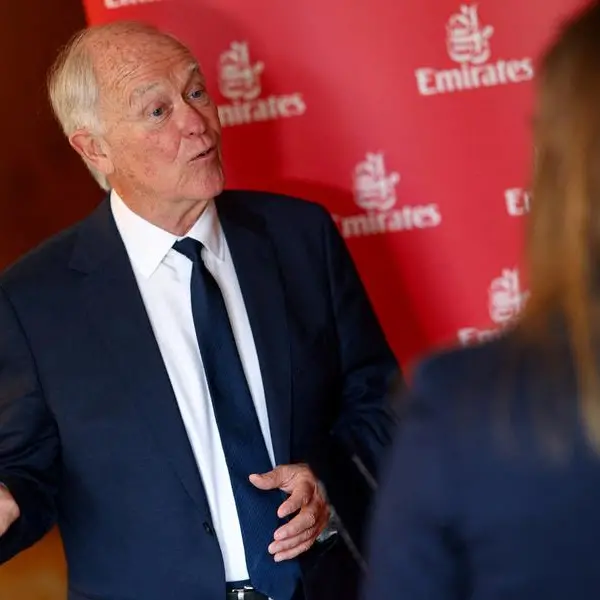
Professor Datuk Rifaat Ahmed Abdel Karim received the award for Outstanding Contribution to the Industry at the 2010 Islamic Business & Finance Awards. He spoke with Robin Amlôt about the development of the Islamic Financial Services Board and the outlook for Islamic finance.
The Islamic Financial Services Board (IFSB) is an international standard-setting organisation that promotes and enhances the soundness and stability of the Islamic financial services industry by issuing global prudential standards and guiding principles for the industry, broadly defined to include banking, capital markets and insurance sectors. The IFSB also conducts research and coordinates initiatives on industry related issues, as well as organises roundtables, seminars and conferences for regulators and industry stakeholders.
Professor Datuk Rifaat Ahmed has been Secretary General of the IFSB since its inception and is leaving the post in April 2011 to be replaced by Jaseem Ahmed, who, most recently, served as the Director, Financial Sector, Public Management and Trade, Southeast Asia Department of the Asian Development Bank (ADB).
Robin Amlôt asked Professor Datuk Rifaat Ahmed how the organisation has evolved in the eight years of its existence. "The IFSB started with nine founding members comprising eight central banks and the Islamic Development Bank in 2003. Prior to that, when I was with the Accounting and Auditing Organization for Islamic Financial Institutions (AAOIFI) I conceived the idea and discussed it with the International Monetary Fund (IMF). We organised a conference in 2000 that recommended the establishment of the IFSB.
"Today the IFSB has 195 members comprising 53 regulatory authorities, six international intergovernmental organisations, namely the IMF, World Bank, Bank for International Settlements, the Asian Development Bank, the Islamic Development Bank and the Islamic Corporation for the Development of the Private Sector. The remaining members are financial institutions and professional associations. All these come from 41 jurisdictions.
"We started with a blank page; today we have 14 standards and guiding principles. We address the banking, capital markets and insurance sectors in the financial services industry. Our work basically complements that of the Basle Committee on banking, the International Organization of Securities Commissions (IOSCO) for capital markets and the International Association of Insurance Supervisors (IAIS) for insurance. We are mandated to adapt to international existing conventional standards by catering for the specificities of Islamic finance."
How do you think Islamic finance is going to evolve to a global standard or does it not need to?
"It doesn't need to, because you have to be part of the overall global financial system. That means you have to adapt international standards whether these be accounting, auditing or prudential and cater for the specificities of Islamic finance. In this way you are not putting institutions that offer Islamic financial services at a disadvantage.
"Let me give you an example. In Basle II you have strict rules on capital adequacy that speak about credit risk, market risk and operational risk. These may be adapted to Islamic finance. Take simple, plain vanilla Murabaha, you have to acquire the assets, in Shari'ah you cannot sell what you do not own. The same thing applies with Ijarah, you cannot lease what you do not own. So first, you have to acquire the asset. That immediately exposes you to market risk. The minute you sell it or lease it, that transfers to credit risk. That is where you have to cater for the specificities. In an Ijarah whereby at the end of the contract you transfer the title of ownership from the lessor to the lessee you have multiple risks. The challenge is to adapt the international standard to Islamic finance."
Having adapted standards and promulgated them, how do you go about getting the industry to accept them?
"First of all the IFSB does not have any legal enforcement powers but I don't think we should depend on that. What we do depend on is the production of high quality standards, making them attractive for jurisdictions to use them.
"In order to do that we have a lengthy due process; in preparing standards we form working groups from both regulatory authorities and market players. The working group prepares a draft that is passed on to the Shari'ah committee of the Islamic Development Bank because we are mandated to do so. After that our technical committee issues an exposure draft, giving the public a period of between three to six months to comment. We also hold public hearings and workshops, availing people of the opportunity to comment and for educational purposes. We revise the exposure draft, taking into account the comments we have received. This is a lengthy process - we get a lot of comments both from regulatory authorities and from the public. So far we never had a 'negative' comment, they have always been constructive comments and I think that we believe this is a proper way of going ahead, producing high quality standards that will persuade people.
"We have developed a programme called Facilitating the Implementation of IFSB Standards. We hold workshops as a way of trying to train users. You have to train people in order for them to be comfortable to implement new standards.
"Let me give you another reason, in addition to the high quality of the standards. The industry has been growing and, in certain jurisdictions, the percentage of growth is high. In some, the Islamic financial services industry comprises up to 30 per cent. That's a big percentage. If you don't cater for the specificities of the industry there is likely to be a supervisory gap and that could trigger systemic risk at some point in time, threatening your financial stability. So there is an incentive there for jurisdictions to adopt our standards."
Where would you say you see the future growth of the industry? Through organic growth in Islamic countries or elsewhere in countries like South Korea, Japan, Singapore, Hong Kong, etc.?
"Islamic finance should not be perceived as only for Muslims. Obviously it must cater for Shari'ah-compliance, that is the raison d'être of the industry but even for the investor who likes to invest his/her funds in accordance with Islamic Shari'ah, that's a given assumption, they will expect compliance but in addition to this they also expect to be given a risk/return profile that matches their needs.
"This is where Islamic finance can be attractive to non-Muslims. Take the case of Malaysia, the Chinese population taps Islamic finance because it offers the risk/return profile that matches investor needs. These investors may not care that the transaction is Shari'ah-compliant or not but they will care about performance.
"In the past an investor who may desire to see his funds being invested in compliance with Shari'ah did not have many options but now more are becoming available. For the industry to survive, grow and open new markets, we really have to come up with risk/return transactions that cater for these new potential investors.
"The investors are there but to open up new markets the industry has to come up with good products, new products that will satisfy the demands of the investors."
Simply put, you must be Shari'ah-compliant but it is not enough just to be Shari'ah-compliant. Does the industry also need to educate its potential customers?
"This is where the industry has to form infrastructure organisations. The IFSB is only mandated with the prudential and supervisory aspects of Islamic finance. All our awareness programmes have been focusing on the prudential aspects that relate to our work. Creating consumer awareness of the industry should be done by other organisations that are specifically established to do so.
"What we do, as we have done in the past, we create awareness of the industry in countries like Japan. We organised a seminar with the relevant authorities in Japan, which led to the Central Bank, the Bank of Japan and a number of financial institutions joining the IFSB. We can take that first step but it is for other organisations to start capitalising on that, creating awareness and opening markets.
"However, even within existing, established markets you need to educate your clients. I think Islamic finance lacks what I may call an 'information environment'. We need more financial journalists to write about the industry because this is how to create awareness. We also need more financial analysts. The ratings agencies are playing a role in this, they produce regular reports but we need more than that for the growth of the industry.
"In certain jurisdictions there may be a language barrier to be overcome to address the masses there. This could also lead to financial inclusion which is very important. Many people may wish to access Islamic finance but do not know how to do so. This aspect is becoming vital - creating awareness - letting clients and potential investors become more aware of what is being offered, what are the implications, how to compare products. These are aspects that are already very well established in the conventional space. It is something Islamic finance needs to focus on.
"This leads us on to the issue of human resources. The industry is suffering from a great dearth in human capital. Some educational and professional institutions are providing for this but I don't think it is enough. Some Western countries and universities are also catering for this simply because demand is picking up. This is important. The more we have a well-educated, well-trained cadre in this industry, the more it will help the industry in its recruitment. Furthermore, creating a pool of talent supply that could look at the industry critically would also help the industry focus on what it should do just by acting like a sounding board."
How should Islamic banks react to competition from conventional banks with Islamic windows?
"Some of the conventional institutions that offer Islamic financial services have benefits, a competitive advantage, over other Islamic financial institutions. One of the advantages is they [the conventional institutions] can provide their Islamic window with an established back office, IT and potential clientele base.
"This immediately puts Islamic financial institutions at a relative disadvantage, they don't have that backing. Most of the financial institutions that have established 'windows' are big; the implication may be that the Islamic finance sector needs big, mega-financial institutions that can develop themselves and meet that cost. It would also suggest that we may wish to see a wave of mergers and acquisitions among the smaller Islamic banks. As the industry grows, existing structures may not be able to compete, not be able to carry big risk tickets. Size will soon become important, the name of the game. It is better that financial institutions prepare themselves for that. Market forces will dictate this very soon.
Luxembourg and the UK are notable examples of jurisdictions looking to attract Islamic finance, do you see others attempting to follow?
Luxembourg has joined the IFSB and is also a founding member of the International Islamic Liquidity Management Corporation. They are trying to position Luxembourg as a jurisdiction for Islamic finance focusing on fund management. In the UK it is more about financial inclusion, establishing itself as a financial centre, benefiting the financial industry and the economy as a whole. Other European countries are trying to have a piece of the cake as well, which is good. It creates competition and whether institutions are in Europe or elsewhere, their know-how and their muscles will help the industry grow and adapt to the changing and evolving environment. That is also important, institutions need to adapt to a changing business environment or they will find that whatever niche or competitive advantage they had in the past may be withering away."
© Islamic Business and Finance 2011