Q&A With Nizam Hamid, Managing Director and Head of Sales, iShares - Europe Barclays Global Investors
Although they are relative newcomers on the investment scene, exchange traded funds (ETFs) are gaining popularity with investors due to their combination of key features of traditional mutual funds and individual stocks. ETFs are open-ended funds which, like index mutual funds, represent portfolios of securities that track specific indexes, and they share index funds' diversification properties, low expense ratios and tax efficiency. However, ETFs trade like stocks and can be bought and sold on an exchange, allowing use of limit orders, short selling and options, for example.
The ETF trend has also reached the GCC.
iShares, a global provider of exchange traded ETFs, earlier this year launched its first ETF product with underlying assets in the GCC region ex-Saudi Arabia, aimed at investors looking to geographically diversify their asset allocation. The IGCC seeks to track the MSCI GCC Countries ex-Saudi Arabia index.
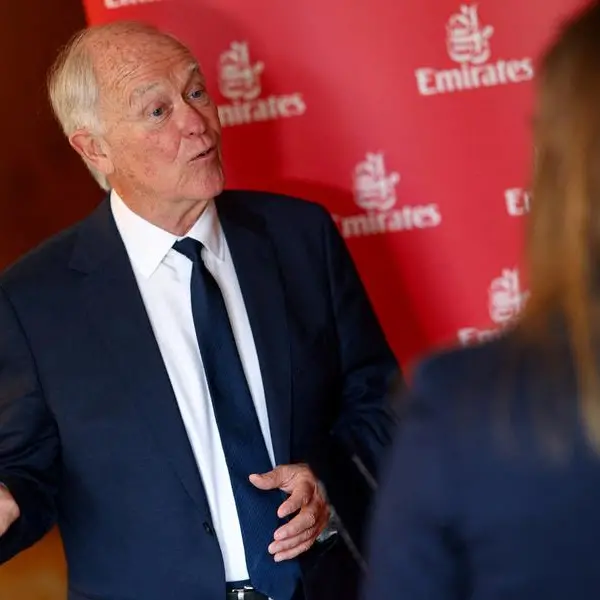
Nizam Hamid, Managing Director and Head of Sales, iShares - Europe Barclays Global Investors, has more than 21 years of experience as an analyst in the investment industry. His experience includes working for UBS in London and Tokyo, focusing on fundamental and quantitative research, and working for Deutsche Bank as Head of the Global Portfolio Trading and Index strategy team. Hamid joined iShares in 2008. He is based in BGI's London office.
Hamid shared his thoughts with CAPITAL on iShares' new ETF and the promising future of this investment tool.
What does iShares hope to offer investors with its new IGCC ETF?
The new IGCC ETF, which represents the GCC ex-Saudi region, has an important place in raising the profile of the region with international investors. It fits into existing and well-understood ETF structures and offers investors the unique ability to trade and access liquidity in the region, given the constraints of foreign ownership rules. The diversification offered by a relatively broad index product means that investors have a better opportunity to participate in the region than with single-country products.
Who are your target investors for this product?
The main target audience for this product would be chiefly institutional investors in Europe who have a good understanding of the region and want low-cost exposure without having to manage currency and custodian issues that would be difficult and costly if one were to trade the underlying securities. It is also a value-added means of gaining exposure for private banking clients that wish to have regional equity exposure.
Why offer a GCC product now?
We believe that ETF investors should consider their asset class exposure as a long-term commitment and from a timing perspective, we are not focused on short-term market moves. On the other hand, it is fair to say that the region has matured and additionally, equity investors are more comfortable with the risk profile of the underlying equities. From that perspective, the GCC equity markets have become a more interesting proposal, with investors generally having a better understanding of the markets, companies and sectors.
Rather than being oil-based, the sectors captured in this new product will be in financial, real estate, mobile telecommunications, industrial and materials. What is the aim behind that?
The ETF reflects the nature of the underlying listed equities. It is important to note that we have spent a great deal of time explaining to investors that the exposure in the equity market is, as you say, not oi lbased.
Clearly the region is based on economies that benefit from oil-based revenues, but the equity market reflects a much broader range of economic activity. These areas of economic activity are in fact the long-term growth opportunities that underlie the sustainable economic activity in the region. On this basis, the GCC equity markets are clearly not oil based but have more a fundamental relationship with future growth prospects and this is a key differentiating factor for investors.
ETFs are relatively new products on the market, but they have quickly risen in popularity. Why?
ETFs have grown significantly over the past 10 years and have been important tools for investors looking to manage their equity, fixed income and commodities portfolios. They have the great advantage of being liquid and trading on a recognised exchange. In the case of physical ETFs such as iShares, there is great transparency of the underlying holdings in the ETF. Investors also appreciate the low-cost nature of the product and the fact that it will typically perform in line with the index that the exposure is benchmarked against.
Investors also have a wide range of choice and that has helped them look to ETFs compared to other products.
Where do ETFs fit into an investor portfolio?
ETFs cover a wide range of exposure and risk classes and so can fit into a whole range of portfolios. A good example would be exposure to core equities such as the MSCI Developed World or riskier equities such as emerging markets. In order to offer products that are also relevant to the region, iShares has a range of three Shari'ah-compliant ETFs based on MSCI indices. Overall, investors can manage a range of exposures at low cost and without having to worry about active fund manager selection and performance issues.
How are ETFs differentiated from mutual funds?
The key differentiating factors between ETFs and mutual funds would be on exchange liquidity, low cost, narrow trading costs (i.e., low bid-ask spreads), full transparency of holdings and exposure and the certainty of a fund designed to efficiently track the designated benchmark.
How do ETFs fit in with Islamic finance?
ETFs and Islamic finance can work very efficiently.
This is especially true in the case of physically-based iShares ETFs where you have a combination of Shari'ah-compliant ETFs that own the underlying securities in the index. This is a significantly better structure than swap-based ETFs where there can be confusion surrounding the Shari'ah-compliant nature of the swap-based derivative structure.
What offerings are available for investors now in terms of Shari'ah-compliant ETFs?
At iShares we have three Shari'ah-compliant ETFs, one covering the MSCI Developed World index, another just covering MSCI USA and one for the MSCI Emerging Markets index. These ETFs follow the index rules as designed by MSCI, in conjunction with a Shari'ah board and which are generally gaining acceptance amongst the investor community in both the Gulf and around the world.
What do you see in terms of future developments for the ETF industry?
The future of the ETF industry in the region is likely to be bright and one focused on growth. In the medium term we expect that the development of a regional ETF trading platform combined with the listing of ETFs in the region will be an important development and continue to raise awareness of the product with local investors. Our own experience is that investors in the region are already very well educated and sophisticated users of ETFs in both the US and European markets.
© Capital ME 2009