Sudan is experiencing an economic upturn that is attracting a lot of investors. Mike Gallagher reports on an African country that has the potential to become the richest on the continent
A lot is happening in Sudan. Foreign direct investment is increasing, new businesses are opening up every day and the government is working overtime to turn the country into the success it has long promised to be. This remarkable change has been brought about by a number of factors. One is thanks to oil, peace is another and a third is due to several investor-friendly policies the government has introduced to attract foreign investors. Even the IMF has described the country as being well managed.
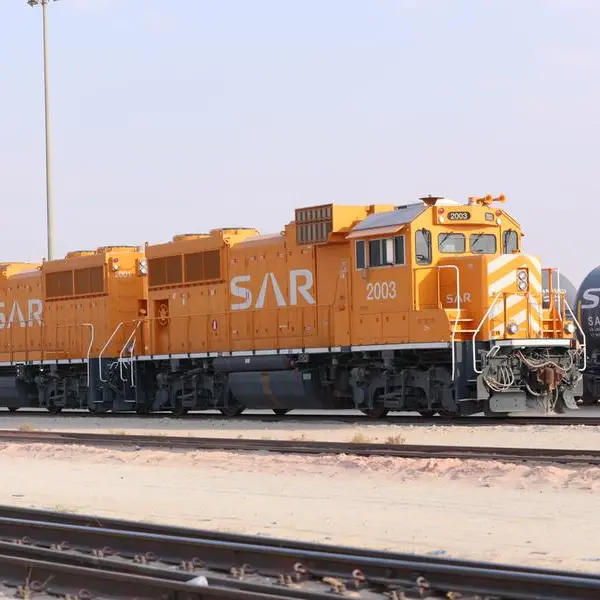
This has attracted a lot of banks from the GCC that are looking to make the most of the money that is pouring, not just out of the oil wells, but also from activities like mining, agriculture and the considerable infrastructure investment plans the government is talking about. At least a third of the economy is supported by government spending on large infrastructure initiatives like roads and inner city regeneration projects and there is even talk about overhauling the ruined rail transport system. Agriculture is growing at over 8 per cent a year and construction is booming. A $130 million Sukuk was launched earlier this year by the Berber Cement company from Khartoum and was lead arranged by Dubai-based Alpen Capital and the Liquidity Management Centre from Bahrain.
Qatar Islamic Bank (QIB) has said that it will lead a consortium that is going to open up a bank that will have an investment and commercial arm in Khartoum. QIB says it is entering the market with $1 billion in capital and it plans to open retail branches and become involved in project finance initiatives as well. The bank has already been busy financing a number of projects in the capital and is believed to have invested in several commercial real estate ventures, possibly including a hotel and retail facilities.
Another GCC group that has been actively looking for opportunities in Sudan is the International Investment Group (IIG) from Kuwait, which has said it plans to set up the biggest investment bank in the country with estimated capital of $2 billion, half of which is thought to be paid up capital. The shareholders in the venture are believed to be a mix of GCC companies from places like Qatar, Saudi Arabia and the UAE and are thought to own 30 per cent of the new venture, the Sudanese government owns around 40 per cent and the IIG owns the rest. IIG admits that the move was very definitely a strategic one, as the country has had good relations with other oil rich neighbours like Libya and Egypt, and is probably the best connected country in that part of the continent. And it will not be alone. Over 50 Kuwaiti firms are thought to be working in Sudan, as well as countless Saudi and Emirati companies that are supplying technological expertise to the booming oil industry.
Al Salam Bank Sudan has managed to intelligently tap into an emerging market country that has a lot of to offer from an Islamic banking perspective. It has been offering a range of retail services such as current and savings account as well as a car finance scheme called 'Waseela' that aims to lock into the emerging middle class in the country. It also provides Murabaha and Ijarah services and even has sophisticated ATM services at many of its branches.
Dubai Islamic Bank also has a presence in the country. It acquired a 60 per cent stake in Bank of Khartoum and is also a partner in the Emirates and Sudan Bank, which was set up with capital of $200 million in 2004. Other foreign banks with a presence in the country are: Al Baraka Bank, Habib Bank, Islamic Co-operative Development Bank, Mashreq Bank, National Bank of Abu Dhabi and Fransabank.
Emirates Bank has provided a $250 million loan to the government of the southern half of the country to help finance development projects in the region that will include new schools, hospitals and roads while a German organisation called GTZ is helping to fund the construction of 3000 kilometres of roads with $200 million to help speed up the commercial traffic across the country.
In Sudan, the system of Islamic banking and finance is in operation at national level. Like other Islamic banks around the world, the banks in Sudan have been relying in the past on Murabaha. However, the share of Musharaka and Mudaraba operations is on the increase and presently constitutes about 40 per cent of total bank financing. Although the Islamic financial system has taken a good start in Sudan, significant problems still remain to be addressed.
The government of the semi-autonomous southern half of the country has apparently decided to ban Islamic banks from doing business. Omdurman National Bank, Bank of Khartoum, Faisal Islamic Bank and Farmers Bank are alleged to have been told to close up shop or convert to conventional banks. Some of the banks are believed to have asked if they could open conventional windows or convert to conventional banks, but open Islamic windows. However, the word coming out of the southern capital of Juba is that they are supposed to become exclusively conventional.
Something political is thought to be behind this and it is believed that it may well have to do with a disputed piece of land that has an abundance of oil beneath it. The demarcation has, as is the norm with political settlements, not been clearly defined and has been left until another time to be settled, but these kinds of left-over issues have a habit of hindering the full implementation of any number of peace agreements all over the world. However, banking officials in Khartoum believe that the southern government will allow Islamic banks to remain in that part of the country. The entire banking system has been fully Islamic since 1992.
The country, north and south, is also in the process of changing its currency from dinars to pounds. This has been delayed several times due to poor organisation and a lack of funds to carry it out, although even seasoned Sudan watchers think the full conversion will begin taking place by the end of the year. The governor of the bank of Sudan, Sabir Mohammed al-Hassan, said that the new pound would be equal to about 100 Sudanese dinars, or about 50 cents.
The Sudanese dinar, which is currently at about 200 to the US dollar, has appreciated steadily from about 260 in 2004 and some analysts believe it could reach 180 by the year's end. Inflation is currently running at around 9 per cent. However, it is not just dinars that will have to be collected. Sudan has as many as six currencies that are recognised as legal tender running through its banks at any given time and these include the Kenyan and Ugandan shillings as well as the Ethiopian birr and even the US dollar.
Elections are supposed to take place by 2009 at the latest and a referendum on the secession of the south is planned for 2011, so Sudan is still going to face some tricky times, but when large financial institutions put so much faith in a country with such a difficult history as Sudan's, then the signs must be good.
There is a lot more enthusiasm for Sudan now than there has ever been and, to be fair, the country still has a long way to go, but allowing for the usual political problems, it could be an African success story par excellence. The next five years are going to be fascinating.
© Banker Middle East 2007