Tuesday, Sep 18, 2012
   (From THE WALL STREET JOURNAL)
   By Doug Cameron
The head of British Airways' parent said future members of Europe's third-largest airline group are welcome to seek deals outside the Oneworld global marketing pact it spearheads.
Two Oneworld members, American Airlines parent AMR Corp. and Australia's Qantas Airways Ltd., are pursuing deals with Dubai's fast-growing Emirates Airline, a longtime critic of the three global alliances whose members account for almost two-thirds of global passenger traffic.
The comments from Willie Walsh, chief executive of International Consolidated Airlines Group SA, highlight the increasingly fluid nature of the global alliances, as well as a split among the largest airlines over the rapid growth of Emirates and its fellow Gulf carriers, Qatar Airways and Abu Dhabi-based Etihad Airways.
American and Qantas both plan to remain in Oneworld, but they also are pursuing deals to pool passengers and frequent-flier programs with Emirates.
"I think it strengthens Oneworld," said Mr. Walsh, whose IAG group includes British Airways and Spain's Iberia.
Mr. Walsh said in a recent interview that Oneworld had more flexibility than rivals Star and SkyTeam for members to pursue other pacts.
The groupings were created to lure lucrative premium fliers by coordinating flights and loyalty programs.
IAG has identified as many as a dozen potential targets for takeover or investment. It is a leading candidate to acquire Tap Air Portugal as part of the Portuguese government's plan to privatize the carrier, and it recently acquired U.K.-based bmi from Deutsche Lufthansa AG.
Oneworld is the smallest of the three global groupings, and it was wounded by the collapse of two members -- Mexicana and Hungary's Malev -- as well as bankruptcy filings by American and Japan Airlines Co. and the financial problems of two would-be members, India's Kingfisher Airlines and Malaysia Airlines.
However, Mr. Walsh and other executives point to Oneworld's strong position in large business centers such as London, New York, Hong Kong and Tokyo, as well as its willingness for members to pursue alternative deals.
Emirates' plans to ally with Qantas and American caught many in the industry by surprise because of the Dubai carrier's long-standing animosity toward alliances, which executives regard as a straitjacket on decision making.
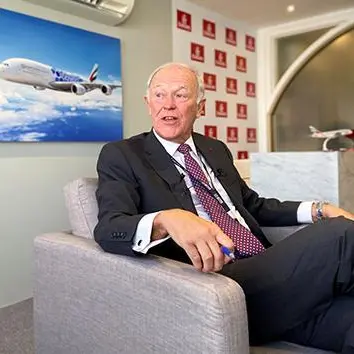
Tim Clark, president of Emirates, said last week that he was certain the airline wouldn't have launched a new flight to Washington from its Dubai base if it had been a member of Star or SkyTeam.
Mr. Clark, who shared a table with Mr. Walsh at an industry event in the U.S. capital, claimed that members of the two alliances would have effectively barred the new service in order to protect their own flights between North America, the Middle East and beyond.
SkyTeam's Delta Air Lines Inc. and Air France-KLM have been the loudest critics of Emirates' expansion, alleging it receives unfair government subsidies, a charge the carrier vehemently denies.
Lufthansa, a founding member of Star alongside United Continental Holdings Inc., has also criticized Emirates' expansion.
Mr. Walsh and Jeff Smisek, United's chief executive, have been prominent in offering support for Dubai's use of Emirates to support its broader economic policy, in part to highlight what they view as a lack of action by their own governments.
(END) Dow Jones Newswires
18-09-12 0349GMT