10 February 2013
The first quarter of 2013 witnessed a brisk start for the Middle East and North Africa (MENA) bond market as it generated USD2.75 billion worth of bonds from 22 issues, posting a 40% year-on-year growth compared with January 2012.
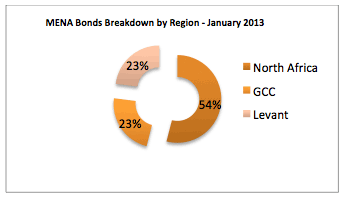
Of the MENA nations, the group comprising North Africa saw the most number of activities as investors tapped the local debt market with 12 issues, half of which came from Tunisia. Five bonds sold in the Gulf region in January were considered upper-medium grade.
Source: Zawya Bonds Monitor
Dubai Bond 2043, Qtel International Finance Limited Bond 2028 and Qtel International Finance Limited Bond 2043 were the largest issues in the first month of 2013, all sharing a common volume of USD 500 million with tenors ranging between 15 and 30 years.
The 30-year bond issue of the government of Dubai attracted huge interest from investors comprising funds (79%), banks (12%), private banks (8%) and miscellaneous investors (1%). At 12 times oversubscribed, Dubai's latest issuance reflected regional investors' renewed confidence in fixed income instruments.
At a time when most of its rivals are avoiding bond participation, Qatar Telecom (Qtel) issued USD 1 billion via a dual-tranche bond under its USD 3 billion global medium-term note program (GMTN), which was listed and registered on the Irish Stock Exchange. Both tranches were worth USD 500 million with 15-year and 30 year tenor and coupon at 3.875% and 4.50%, respectively.
The net proceeds from Qtel's bond sale will be used to refinance an existing debt. The twin tranches follows the USD 1-billion Qtel International Finance Limited Bond 2023 issuance in December. All issues were highly rated by top credit rating agencies Fitch (A+), Moody's (A2) and Standard and Poor's (A).
Qatar National Bank (QNB) tapped the MENA bond market via a CHF 300-million bond, offering a floating coupon of three months LIBOR + 40 basis points (bps). The issue was arranged and offered by UBS AG and was solely listed in the Swiss market. The investor breakdown shows 65% allocation to banks, 31% to market funds, 3% to asset managers and 1% to private banks.
The ICICI Bank Limited (Dubai Branch) (Bond 2020) also tapped the Swiss market with a debt issue worth CHF 100 million under the firm's USD 5 billion GMTN.
Moving to the Levant, the Central Bank of Jordan remained the premiere debt player after it issued five bonds were issued with a range worth between JOD 60 million and JOD 80 million. The majority of the bonds had a coupon of 7.95%, to be paid semiannually.
Leading the pack
North Africa was the most active region in January in terms of debt issuance, yet volumes were minimal.
Morocco's BMCE Bank Bond 2023 (Category D), issued by the Banque Marocaine du Commerce Extrieur, was the biggest with MAD 790 million bond, followed by Egypt's dual treasury bond worth EGP 500 million.
Tunisia captured the lion's share of the regional market with seven corporate issues ranging between TND 5.3 million and TND 40 million. Majority of the issues have an amortized embedded option.
January's issuance averaged USD 125 million per bond with an average coupon of 7.36% (excluding floating bonds) and a tenor of 9.13 years.
Meanwhile, quasi sovereign bonds also entered the regional debt scene, holding 36% of total bonds issued via Qtel's dual tranche. The government-backed telecommunication firm has been capitalizing on Doha's healthy fiscal condition.
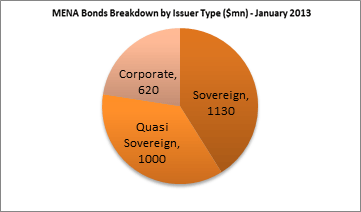
Source: Zawya Bonds Monitor
Also, potential bonds deals look promising. National Bank of Abu Dhabi (NBAD) declared that it could tap global debt markets in several currencies by capitalizing on tightening spreads, which have decreased the company's borrowing expenses. A convertible bond at around USD 500 million could be issued soon.
Abu Dhabi Commercial Bank (ADCB), on the other hand, has mandated five banks (including itself) to lead a bond issue. The lenders chosen to arrange the deal were JP Morgan Chase, ING, Royal Bank of Scotland and Standard Chartered.
Furthermore, the Central Bank of Qatar has announced that it intends to issue sovereign bonds worth QAR 3 billion this year. The deal is anticipated to further boost MENA's bond market and whet investors' appetite.
The article was written on February 4, 2013.
Joey Geadah is Zawya's senior bonds analyst. He can be reached at joeyg@zawya.com.
Zawya 2013
The first quarter of 2013 witnessed a brisk start for the Middle East and North Africa (MENA) bond market as it generated USD2.75 billion worth of bonds from 22 issues, posting a 40% year-on-year growth compared with January 2012.
Of the MENA nations, the group comprising North Africa saw the most number of activities as investors tapped the local debt market with 12 issues, half of which came from Tunisia. Five bonds sold in the Gulf region in January were considered upper-medium grade.
Source: Zawya Bonds Monitor
Dubai Bond 2043, Qtel International Finance Limited Bond 2028 and Qtel International Finance Limited Bond 2043 were the largest issues in the first month of 2013, all sharing a common volume of USD 500 million with tenors ranging between 15 and 30 years.
The 30-year bond issue of the government of Dubai attracted huge interest from investors comprising funds (79%), banks (12%), private banks (8%) and miscellaneous investors (1%). At 12 times oversubscribed, Dubai's latest issuance reflected regional investors' renewed confidence in fixed income instruments.
At a time when most of its rivals are avoiding bond participation, Qatar Telecom (Qtel) issued USD 1 billion via a dual-tranche bond under its USD 3 billion global medium-term note program (GMTN), which was listed and registered on the Irish Stock Exchange. Both tranches were worth USD 500 million with 15-year and 30 year tenor and coupon at 3.875% and 4.50%, respectively.
The net proceeds from Qtel's bond sale will be used to refinance an existing debt. The twin tranches follows the USD 1-billion Qtel International Finance Limited Bond 2023 issuance in December. All issues were highly rated by top credit rating agencies Fitch (A+), Moody's (A2) and Standard and Poor's (A).
Qatar National Bank (QNB) tapped the MENA bond market via a CHF 300-million bond, offering a floating coupon of three months LIBOR + 40 basis points (bps). The issue was arranged and offered by UBS AG and was solely listed in the Swiss market. The investor breakdown shows 65% allocation to banks, 31% to market funds, 3% to asset managers and 1% to private banks.
The ICICI Bank Limited (Dubai Branch) (Bond 2020) also tapped the Swiss market with a debt issue worth CHF 100 million under the firm's USD 5 billion GMTN.
Moving to the Levant, the Central Bank of Jordan remained the premiere debt player after it issued five bonds were issued with a range worth between JOD 60 million and JOD 80 million. The majority of the bonds had a coupon of 7.95%, to be paid semiannually.
Leading the pack
North Africa was the most active region in January in terms of debt issuance, yet volumes were minimal.
Morocco's BMCE Bank Bond 2023 (Category D), issued by the Banque Marocaine du Commerce Extrieur, was the biggest with MAD 790 million bond, followed by Egypt's dual treasury bond worth EGP 500 million.
Tunisia captured the lion's share of the regional market with seven corporate issues ranging between TND 5.3 million and TND 40 million. Majority of the issues have an amortized embedded option.
January's issuance averaged USD 125 million per bond with an average coupon of 7.36% (excluding floating bonds) and a tenor of 9.13 years.
Meanwhile, quasi sovereign bonds also entered the regional debt scene, holding 36% of total bonds issued via Qtel's dual tranche. The government-backed telecommunication firm has been capitalizing on Doha's healthy fiscal condition.
Source: Zawya Bonds Monitor
Also, potential bonds deals look promising. National Bank of Abu Dhabi (NBAD) declared that it could tap global debt markets in several currencies by capitalizing on tightening spreads, which have decreased the company's borrowing expenses. A convertible bond at around USD 500 million could be issued soon.
Abu Dhabi Commercial Bank (ADCB), on the other hand, has mandated five banks (including itself) to lead a bond issue. The lenders chosen to arrange the deal were JP Morgan Chase, ING, Royal Bank of Scotland and Standard Chartered.
Furthermore, the Central Bank of Qatar has announced that it intends to issue sovereign bonds worth QAR 3 billion this year. The deal is anticipated to further boost MENA's bond market and whet investors' appetite.
The article was written on February 4, 2013.
Joey Geadah is Zawya's senior bonds analyst. He can be reached at joeyg@zawya.com.
Zawya 2013