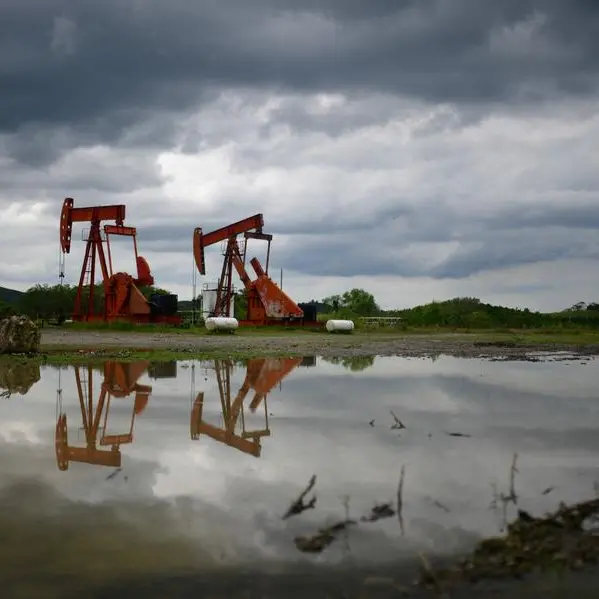
Abu Dhabi, Nov 30th, 2012 (WAM)--xxxx. OIL AND GAS. The Oil and Gas industry in the UAE continues to represent the underlying foundations of the country?s economy, being exploited in such a way as to ensure that a share of these depleting resources are preserved for successive generations.
The Abu Dhabi National Oil Company, ADNOC, has allocated about AED260 billion (US $ 70.7 billion) for investment in the oil, gas and petrochemicals sector over the next decade. It also plans increase oil production to 3.5 million barrel a day by 2017 from to the current 2.8 billion barrels per day while daily gas production is projected to rise over the same period from 6 billion cubic feet to 7.5 billion cubic feet. The UAE ranks the third in world oil reserves, about 98 billion barrels, while it ranks the fifth in terms of natural gas reserves, which amount to 6 trillion cubic feet. Oil production levels are set in accordance with the production ceiling set by the Organisation of Petroleum Exporting Countries, OPEC, in line with a government policy of seeking to ensure sufficient supply to world markets and price stability. On 15th July 2012, a new 1.8 million-barrel-per day crude oil pipeline from Habshan, at the heart of Abu Dhabi?s main onshore fields, to Fujairah was inaugurated by the UAE?s Minister of Energy, Mohammed bin Dhaen Al Hamili, with the first cargo of export crude through the pipeline, of 500,000 barrels, being loaded for shipment to a refinery in Pakistan. The pipeline terminal at Fujairah has eight storage tanks, each with a capacity of one million barrels, linked to three offshore loading facilities. With the inauguration of the pipeline, oil exports from Abu Dhabi can now by-pass the Straits of Hormuz at the mouth of the Arabian Gulf, with consequent benefits in terms of tanker sailing times and maritime security. According to the third sustainability report, ?Creating Sustainable Results with Positive Energy?, released by Dolphin Energy Limited, during 2012, the UAE passed the milestone of having produced an accumulated 3 trillion standard cubic feet. Dolphin Energy itself began operations in 2007, transporting natural gas from Qatar's offshore North Field by sub-sea pipeline to the UAE, for supply through an onshore pipeline network to the local market and Oman. The overall investment by Dolphin in wells, pipelines, processing plants and receiving facilities has made this one of the largest energy-related ventures ever undertaken in the Middle East. Another major company in the oil and gas sector is the International Petroleum Investment Company, IPIC, formed by the Abu Dhabi government in 1984, which is tasked with an ambitious mandate to invest in the energy and related sectors across the globe. It now has stakes in more than 15 leading companies across the hydrocarbon value chain, including exploration and production, shipping and pipelines, downstream retail and marketing, petrochemicals, power and utilities as well as industrial services. SPACE TECHNOLOGY The UAE boasts the largest space ventures sector in the entire Middle East and was elected in 2012 as a member of the 150-member International Telecommunications Satellite Organisation (ITSO) Advisory Committee. With 21 members, the committee works to further the ITSO commitment to During the year, the Al Yah Satellite Communications Company, Yahsat, announced the successful launch of its second satellite, Y1B from the Baikonur Cosmodrome in Kazakhstan. Weighing more than 6,000 kg, with a 15-year design lifetime, the satellite is equipped with a commercial multi-beam Ka-band payload, which will be used to provide a variety of government and commercial applications, including "YahClick", a new reliable and affordable satellite broadband service for the Middle East, Africa, and South West Asia. Yahsat now has partnerships across 28 countries within the region. These have been carefully selected to ensure that the "YahClick" service will be reliably and effectively marketed, installed and supported for customers. Yahsat is also working closely with key telecommunications providers to ensure comprehensive availability of the "YahClick" service to homes, schools and businesses throughout the region. The Emirates Institution for Advanced Science and Technology (EIAST), is a Dubai government entity that was established by law in 2006, as part of the UAE?s initiative to promote scientific innovation, with the emphasis on space technology and promoting sustainable development.EIAST was established to promote advanced research and technological innovation, more specifically satellite technology; to build a well established internationally competitive base for human skills development; to position Dubai and the United Arab Emirates as a hub for space technology development internationally; to optimise the potential of EIAST satellite programs, DubaiSat-1 and DubaiSat-2; and lastly to provide support to decision makers in all sectors through application of its specialist skills.
DubaiSat-1 was an EIAST initiative to launch the first Earth observation satellite programme in the United Arab Emirates. The satellite was designed and developed by Satrec Initiative ? a satellite manufacturing company in South Korea - along with a team of EIAST engineers. It was launched on July 29, 2009 from the Baikonur Cosmodrome in Kazakhstan. The DubaiSat-2 project is a joint development programme between EIAST and Satrec Initiative in which 20 engineers from the United Arab Emirates have been involved. Aircraft Manufacturing With Strata having been established by the Mubadala Development Company, wholly owned by the Government of Abu Dhabi, the UAE initiated its venture into the aircraft manufacturing industry.Strata, a composite aerostructures manufacturing facility has partnerships with a number of leading aerospace companies to establish its manufacturing programme at a new plant in Al Ain (about two hours from Abu Dhabi).
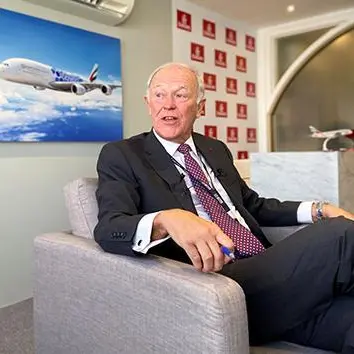
Initial contracts, worth more than AED 4.8 billion (US$ 1.3 billion) have been signed, including Strata?s first direct work package from Airbus. Another contract with Boeing, covering a ten year period, involves the production of commercial composite aerostructures for the 777 and 787 Dreamliner. Under the terms of a framework agreement signed in 2009 between Boeing and Mubadala Aerospace, the two companies are committed to develop mutually beneficial initiatives in areas where there is strategic alignment. Future partnership initiatives could include military maintenance and sustainment activities, as well as pilot training and people development. Elsewhere in the aviation industry, Emirates airlines announced last year plans to construct a US $120 million (Dh441 million) engine repair and overhaul facility in Dubai in line with its growing fleet. The carrier signed a Letter of Intent with General Electric to oversee the design and construction of an in-house engine overhaul shop in order to make it "the most technologically-advanced engine overhaul shop in Asia", Emirates said in a statement. The companies aims to service over 300 engines annually in the new centre. INFRASTRUCTUREThe UAE has been ranked first regionally and 11th globally in terms of the availability and quality of its transport infrastructure in the Global Enabling Trade Report 2012 released by the World Economic Forum (WEF). With this ranking, the UAE outperforms countries such as the US, Finland and Belgium. The UAE is among 17 countries that have 100 per cent of their road network paved. It is also globally ranked fourth in terms of the quality of air transport infrastructure, sixth in terms of the quality of seaport infrastructure and seventh in transshipment connectivity. The WEF report highlights other strong areas of performance reflecting the UAE?s on-going commitment to trade, including, Border Administration (11th globally), Transport and Communications Infrastructure (18th globally), and Business Environment (12th internationally). The UAE tops the Middle East region in all these areas. The Enabling Trade Index, published within the framework of the Global Competitiveness Network and the Supply Chain and Transportation Industry Partnership, was developed in consultation with key industry leaders, academics and international trade organisations measures the extent to which economies have developed institutions, policies and services facilitating the free flow of goods over borders and to destinations. It assesses four key areas of performance, namely market access, border administration, transport and telecommunications infrastructure and the business environment, and sub-indices within these broad areas. The index provides a yardstick of countries? performance in creating enabling trade environments and pin-pointing where improvements are most needed. A Study by Ventures Middle East published recently said that the UAE led other GCC countries in the volume of the infrastructure expenditure after opening the Dubai Metro Greenline. With Abu Dhabi?s USD 25 billion ground transportation project , the total value of projects for roads and bridges in the UAE is expected to reach USD 58 billion, representing 40 % of the total expenditure on infrastructure in the UAE. MORECopyright Emirates News Agency (WAM) 2012.