Algeria will start working with the UN in July to resolve thousands of cases of missing people dating back to the Black Decade.
Algeria will meet with United Nations officials next month in an effort to resolve missing person cases and move forward on national reconciliation.
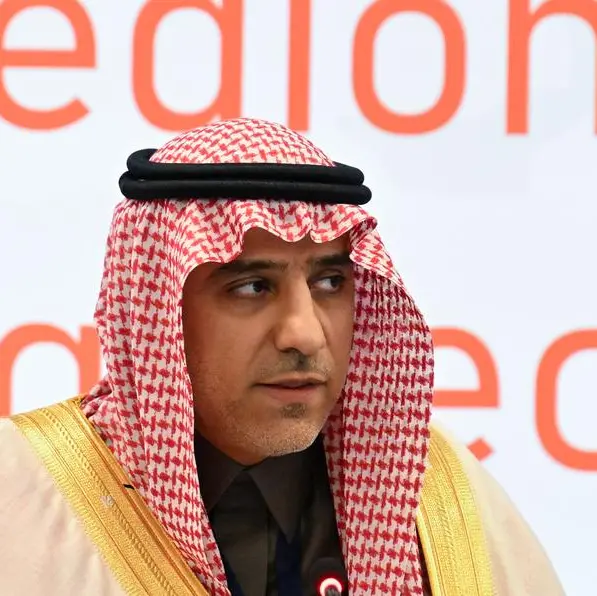
"The government will provide all information on this issue and method of dealing with it in response to demands made by the families of missing people," Algerian Foreign Minister Mourad Medelci said at the 13th Session of the UN Human Rights Council on May 29th in Geneva, Switzerland, where the periodic report on the conditions of human rights in Algeria was released.
Medelci said the July meeting with the United Nations Working Group on Enforced or Involuntary Disappearances (WGEID) would be in the framework of the Charter for Peace and National Reconciliation, adding that "authorities seek to convince families that the official discourse is serious".
"The first-of-its-type meeting will enable us to present the various measures that the government has taken to resolve this issue," Medelci added.
Algerian presidential advisor Kamel Rezzag-Bara explained that "contacts with various UN agencies have enabled us to account for 64 cases and to provide answers for about 100 other cases."
The move came after the Human Rights Watch World Report 2012 criticised Algeria for ignoring requests to visit the country from five of the United Nations Human Rights Council special groups, including WGEID.
The UN condemned Algeria for two forced disappearance cases. The first case was that of Kamel Jabrouni, 31, who was arrested in November 1994 in Algiers and who hasn't been found to this day. The second incident was when two brothers, Jamal, 19, and Mourad Shayhub, 16, were arrested at their house in May and November 1996.
The UN Human Rights Committee requested that Algeria "conduct a thorough and accurate investigation into the disappearances" and "provide details on the results of its investigations and release them right away". The committee also stressed the need for Algeria to "prosecute and punish those responsible for these abuses and to pay suitable compensations for their families."
Human rights organisations welcomed Algeria's move to work with the UN but maintained a critical stance on the issue of missing persons in the country.
Parallel to the meetings in Geneva, SOS Missing held a seminar where they released their report on current statistics and provided a forum where rights activists and NGOs listened to families' testimonies. Participants criticised Algeria's handling of the issue, method of financial compensation, judicial proceedings, and its lack of communication with families about the fate of their relatives.
Nacera Dutour, chairperson of Rally of Families of Missing People in Algeria, told Magharebia that her Association "didn't receive any invitation for participation in the next July meeting".
She said that as many families hold to their right to know the truth, her organisation went to Geneva to present its report to the UN Working Group on Enforced or Involuntary Disappearances, in which they managed to collect more than 8,000 testimonies on forced disappearances in Algeria.
National Consultative Committee for Promotion and Protection of Human Rights (CNCPPDH) head Farouk Ksentini, in a radio statement on Sunday said that it would be impossible to open investigations into all the kidnappings. Even the families that are using the slogan "truth and justice" haven't presented any suggestions on how to embody this slogan on the ground, he said.
Ksentini said that according to the statistics of the national gendarmerie there are about 7,200 forced disappearance cases and that the state has paid out compensation for 95% of them. Only a very small percentage still rejects compensation, he said.
© Magharebia.com 2012