Let's face it, President Barack Obama will find it hard to get re-elected as leader of the US in November if gas prices are still above $4 a gallon. People in the US drive everywhere, especially in the summer, so if those planning summer trips to neighbouring states need to pay more for their journey then Obama could ultimately end up footing the bill at the polls.
Hence last Thursday an announcement that President Obama and UK Prime Minister David Cameron had agreed to release some of the US's Strategic Petroleum Reserve to try and reduce upward pressure on oil prices was taken seriously by the market causing a bout of volatility in energy prices.
Although the Obama camp denied that a deal had been made, they didn't say it was false. Thus, this paves the way for Obama to use the oil price as his trump card as we move into election season. But will Obama be able to manipulate the oil price all the way back to another term in the White House?
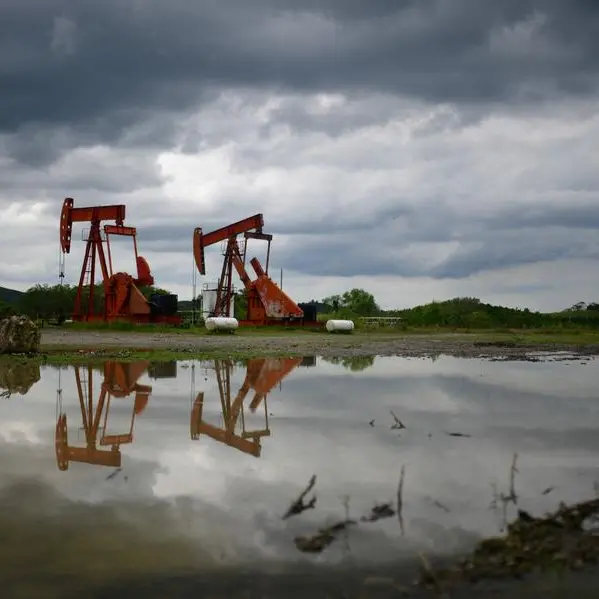
The Strategic Petroleum Reserves held by the US are the largest in the world so if you trade oil you should know about it. The reserves are held in salt domes kept deep underground across four sites along the Texas and Louisiana Gulf costs. It currently holds 695 million barrels, which is below its upper limit of 727 million after the President tapped the reserve for 30 million barrels back in July in response to supply constraints in Libya.
As we witnessed on Thursday, the mention of reserves can cause havoc in oil prices especially when the market is already spooked by the upcoming global embargo on Iranian oil that is due to start in July sparking concerns that there may not be enough oil to satisfy demand in the coming months. Hence even though the reserves story was denied, Brent crude collapsed from $125 per barrel to $121, and although it recovered it didn't go back to its highs.
But for oil producers in the Middle East the most important question to ask is does any move to release US reserves have a meaningful impact on the price of oil? To analyse this it's worth looking at the impact from Obama's last attempt at releasing reserves back in July. Back then oil was hovering around $120 per barrel. After the release it collapsed sharply to $100 before picking up again, although crucially for Obama and co. it never reached the previous $120 high and instead moved sideways in a range between $115 per barrel and $105.
However, over the last few months the confluence of influences putting upward pressure on the oil price have escalated including the better tone to the US economic data, signs of stabilisation in the Eurozone and, considered by some to be the most important factor, increased levels of tension between Iran and Israel, which have helped the oil price to rally another leg higher.
In a normal environment the release of reserves in the US has only a limited chance of success. Since global oil consumption per day is 87.3 million barrels (expected to grow to 105 million by 2015 according to the Organization of Economic Cooperation and Development) even an extra 30 million barrels in the system is unlikely to have a prolonged impact on the oil price. This time its impact could be even more muted. Thus, Obama may find that he has an uphill struggle on his hands.
This doesn't mean we should be complacent if reserves are released, but an escalation in tensions between Iran and Israel could cause a short sharp shock to the market, regardless of Obama's best efforts to try and reign in the price of gasoline and placate US voters.
Increasingly there are two important factors that seem to be the main drivers of the oil price. Firstly, the US consumer - oil consumption in the US is nearly 20 million barrels per day, and secondly rhetoric coming out of Tehran. We know that the US consumer is poised to strengthen as the US economy starts producing more jobs; however, Tehran is more difficult to predict.
If Obama wants to keep the oil price suppressed he won't be able to do it with his reserves, no matter how big they are. He would be better using his diplomatic skills to try and ensure the tensions between Iran and Israel don't boil over to something serious.
Disclaimer: The information and opinions in this report are for general information use only and are not intended as an offer or solicitation with respect to the purchase or sale of any currency or CFD contract. All opinions and information contained in this report are subject to change without notice. This report has been prepared without regard to the specific investment objectives, financial situation and needs of any particular recipient. Any references to historical price movements or levels is informational based on our analysis and we do not represent or warranty that any such movements or levels are likely to reoccur in the future. While the information contained herein was obtained from sources believed to be reliable, author does not guarantee its accuracy or completeness, nor does author assume any liability for any direct, indirect or consequential loss that may result from the reliance by any person upon any such information or opinions.
Foreign Exchange and other leveraged products involves significant risk of loss and is not suitable for all investors. Increasing leverage increases risk. Spot Gold and Silver contracts are not subject to regulation under the U.S. Commodity Exchange Act. Contracts for Difference (CFDs) are not available for US residents. Before deciding to trade forex, you should carefully consider your financial objectives, level of experience and risk appetite. Any opinions, news, research, analyses, prices or other information contained herein is intended as general information about the subject matter covered and is provided with the understanding that FOREX.com is not rendering investment, legal, or tax advice. You should consult with appropriate counsel or other advisors on all investment, legal, or tax matters. FOREX.com is regulated by the Commodity Futures Trading Commission (CFTC) in the US, by the Financial Services Authority (FSA) in the UK, the Australian Securities and Investment Commission (ASIC) in Australia, and the Financial Services Agency (FSA) in Japan.
© Forex.com 2012