TMG Vice-President and Chief Financial Officer Jihad Sawaftah sits down with bt to talk about what the future holds for the property giant
If you've had lunch at the Four Seasons Nile Plaza or been dragged to a family event at San Stefano in Alexandria, you've been on a Talaat Moustafa Group Holding (TMG) property. Founded two decades ago to capitalize on pent-up demand for residential housing, commercial real estate and hotel rooms, TMG has since developed more than 8.5 million square meters of land and created some 57,000 real estate units. That, coupled with a 50 million-square-meter land bank (14% of that in Saudi Arabia), makes it Egypt's largest property developer and number 10 on the 2009 bt100 ranking of top-listed companies on the EGX.
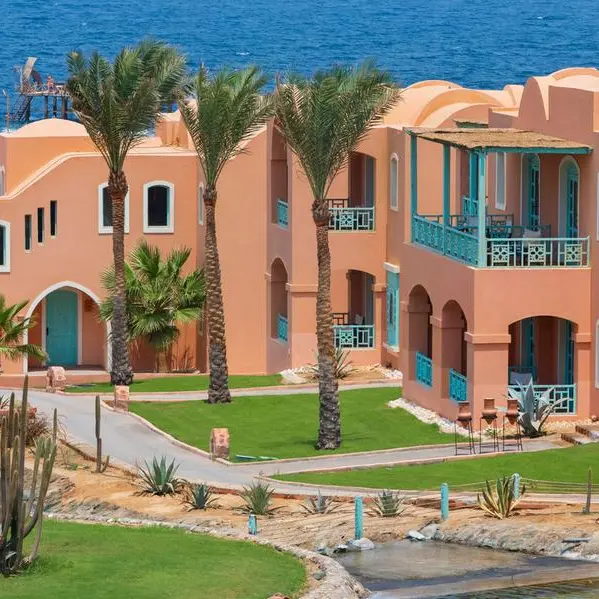
Today the company is still building Madinaty, its most ambitious 'city' project to date, and venturing into Saudi Arabia for the first time. It's also looking to expand its association with the Four Seasons, planning the expansion of its Sharm El-Sheikh property and the building of new hotels in Madinaty and Luxor.
In the time since its listing in 2007, TMG has labored to develop a corporate governance structure that would vault it from a top family-owned company into the ranks of publicly traded corporations. TMG has weathered the storm since former chairman Hisham Talaat Moustafa's arrest and conviction, and is back to focusing on business.
On the eve of his departure for back-to-back EFG Hermes investor conferences for top Arab and Egyptian companies in New York and London, TMG Vice-President and CFO Jihad Sawaftah sat down for a talk with Business Today Egypt.
Sitting on a comfortable cushion of some LE 28 billion in sales backlog, Sawaftah took us on a tour of the firm's operations in Egypt and beyond. Edited excerpts:
What projects are the group working on at the moment?
Our biggest project is Madinaty, which is spread out over 33.6 million square meters on the east side of Cairo. The number of units sold by June 30, 2009, was around 26,000 in the execution phase, and the first phase of the project will be delivered by the beginning of April 2010.
Another project that we are working on right now is El-Rehab and its new extension, which together will make around 10 million square meters. The first five phases of El-Rehab are already delivered and we are working right now on delivering phase six. As for the extension, we will start delivery by 1Q2010. The number of units sold and those that are under construction is around 10,000. We also have El-Rabwa project on the west side of Cairo, which consists of houses and villas.
Right now, we are delivering residential apartments in San Stefano in Alexandria that are attached to Four Seasons San Stefano. That's it regarding our residential projects.
We also have hotels and tourist projects. We are working to expand Four Seasons Sharm El-Sheikh and making its extension. We also have Porto Venice in Marsa Alam spread out on around 3.2 million square meters. We have started designing the project and acquiring the necessary licenses for the first phase; it will be executed in four phases. We started working on the first phase, which will be in the form of an integrated tourist village with a hotel and tourist units included.
We have just finished designing Four Seasons Luxor. We are working on the final phase of studying the project and will start developing the land. We are also working on the final phases of designing the Four Seasons that we will build in Madinaty.
Other than Four Seasons, we are finished designing a hotel that we will build in Tahrir, just opposite the Sheraton Al-Qahera. We have another project that will be managed by [European-based luxury hotel group] Kempinski, the Nile Hotel, and we expect it to be opened by the end of this year.
Since El-Rehab is also on Cairo's east side, why did you choose to build Madinaty in the same area?
The rate of growth in east Cairo is very high and it is an extension of Heliopolis and Nasr City. Also, east Cairo is very convenient because it is close to the airport, all the new universities and shopping malls, as well as fitting in with the governments' expansion plans for Cairo. The population of New Cairo is expected to reach between 7 to 10 million in a short period. That's why most of the demand, especially from our target group, is in east Cairo.
How is Madinaty different from El-Rehab in terms of the target group?
Actually, it is targeting the same segments, but El-Rehab has now reached the number of people that it was designed to accommodate. Secondly, there will be much more investment and services provided in Madinaty than in El-Rehab. It will actually serve more people and its population will reach up to 600,000.
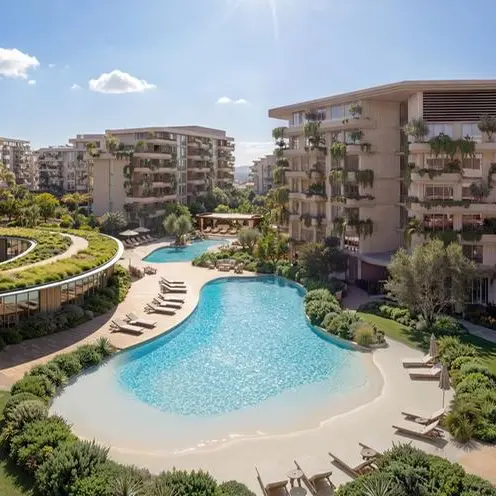
There will also be large projects serving Madinaty's community. Serving as a hub for Cairo it will include large shopping malls, hospitals, a Four Seasons hotel and other hotels that will be developed according to the workflow of the project. So, from one side it will be targeting the same segments, but its projects will be serving Madinaty's population, as well as New Cairo and Cairo in general. It will be a destination for people, and it will be serving all the surrounding districts.
Were the demands on El-Rehab higher than those on El-Rabwa?
Actually El- Rehab and El-Rabwa are completely different. Rabwa is like a compound that provides privacy to its residents. It targets a certain segment of the society. Rehab is like a city that has apartment building, villas, different segments of society, more services, and streets. We could say that Rehab is like a district while Rabwa is a gated compound, so we cannot compare the demands of each one. In Rabwa, we are very selective with the residents, and the first phase is already finished and all sold. We have also sold a large number of the second phase's units and they have already been executed.
With the different hotels that the group will be building in Egypt, are you trying to focus more on hotels and high-end tourism?
The idea behind building and renovating the hotels and malls is to provide a fixed income for the group, where we apply the group's strategy of decreasing the risks of business.
Let's assume that we are now looking at our real-estate projects. If for some reason something happened to our real-estate projects we have to have a backup that would provide our group with fixed income, beside the income coming from the other projects. In addition, the future of high-end tourism is very promising in Egypt and the demand on hotels is very high, especially over the coming 10 years.
Our idea behind hotel developments proved to be successful, as in Four Seasons Sharm El-Sheikh, Nile Plaza and San Stefano. The profits from an investment point of view are very high. The added value provided by our experience in real-estate developments adds a lot to the group's profitability ratios in these types of investments. Also, most of our hotels are accompanied by real-estate units, which completes the added value. We see that there is high demand in the future for attaching shopping malls and administrative offices to our hotels.
What is the plan regarding Four Seasons Sharm El-Sheikh?
We are going to expand it by adding 90 to 100 rooms, as well as villas, chalets and golf courses. The idea behind the extension came naturally as a result of the success of the hotel and Sharm El-Sheikh itself as an internationally renowned tourist destination, so we are now capitalizing on the success we achieved.
What about the resorts?
Right now we are focusing more on the projects that we have already started, and our expansion is in the form of hotels and not resorts. We started with resorts in the North Coast before, and we are pioneers in this industry. The demands right now are different as a result of the global financial crisis. So taking into account the economic conditions we consider that the real demand is for residential compounds.
There is no demand right now on high-end products; the market is saturated with these projects. Second homes are also facing economic problems, so we have directed our energy toward tourism.
We directed our energy toward hotels, trying to decrease the investment risk by attaching real estate units catering to different segments of society, as well as attracting more foreigners and Arabs.
This is a way to decrease risks and is also the optimal direction and exploitation of the group's resources. At the same time, market research proved that there is need for a certain type of units, which our group produces.
Were your projects affected by the global financial crisis?
Of course the financial crisis affected the Egyptian market in general, although it was less than we expected, and even less than in other countries. Its effect on our real estate projects was very small as a result of our 2008 sales. We announced in August 2008, that for now we would focus more on execution as a result of our turnover, which reached a point where it scared us that it might exceed the operational capacity of our contractors.
We have reached around LE 30 billion for projects that we have to finish, and residential units that we have to deliver within four years. The crisis might have affected sales in most other companies, or purchasing ability, but for us it was the opposite as a result of focusing on execution. Also, the crisis helped by creating stability in price rates and construction costs, and this was a positive point in favor of the group.
The group has been through the economic crisis and will remain strong after getting out of it as a result of the stock of sales and land.
How is work going on Nassamat Al-Riyadh?
e are actually targeting two projects in Saudi Arabia, but this is our first project, and it will be in Riyadh. There will be another one in Jeddah. Regarding Nassamat, we are ready to launch our sales campaign anytime, but we are waiting approval from the Saudi government to be able to sell on the project's mock-up.
The delay is a result of the Saudi's decision in March 2009 that any project should receive approval to sell on mock-ups before actually selling. This is because there were real estate companies that used people's down payments for investments or in the stock market. They lost a lot and were not able to continue working on the projects.
To avoid such problems the Saudi government put strict measures on real estate companies. A committee was formed for this purpose, but the law is still in the execution phase. It is only a matter of time. We have already requested approval. We have fulfilled all the requirements and hopefully everything will be done quickly. I expect that by the end of this year we will start selling.
What about the other project in Jeddah?
Regarding the Jeddah project, we decided on the land that we want and we are trying to make deals, but there are some problems regarding the ownership of this land. We decided to focus on the Riyadh project first, then work on Jeddah.
What was the deal with Bank of Riyadh?
We made a deal with this bank, as well as other banks and real estate finance companies to finance buyers of the units in Nassamat Al-Riyadh for a period of 25 years. In other words, providing a real estate loan for the person buying a unit in our project.
We made a deal with the bank to fully finance the project, from the buyers side only, without financing the group, as there is not a real need for finance at the moment. The process of buying the land was fully financed by the group and its partners, as were the preparations of plans, studies and sales campaigns.
The real need right now, especially in the presence of the economic crisis, is to finance buyers, and that is what our deal with the bank is all about. It will be executed in phases and we have agreed on around one billion Saudi Riyals.
And what about the deal with Hill International? What is their job?
They supervise our projects by overseeing the implementation, costs, quality and delivering projects on the agreed dates. It is an experienced American company. We have established a partnership with them and they are responsible for project management, whether in Egypt or Saudi Arabia -- especially the projects that require certain skills, like hotels.
What was the reason behind choosing Saudi Arabia for your projects?
The decision to choose Saudi Arabia came as a result of studying different markets in the Middle East. We studied the market in Syria, Algeria, Jordan and Dubai, finally deciding on the Saudi market for several reasons:
One: We have been present in Saudi Arabia through our sales' offices for the past 17 to 18 years, as well as designing and selling units from our projects to Saudis and Egyptians working in Saudi Arabia.
Two: Studies showed that there is real demand for real-estate units in Saudi Arabia, as only 20 to 25% of the residents in Saudi Arabia own their houses; the rest rent.
The concept of development in society, or the new urban societies, is still missing from the Saudi community. This is why many real estate developers have focused their attention on Saudi Arabia.
The geographical structure of Saudi society is similar to that of Egypt. More than 65% of Saudis are under 35-years-old, and this puts a high demand on housing in the coming years. Demand is growing by around 200,000 units per year.
Another important thing is that the average income rate in Saudi Arabia has increased, which provides purchasing ability. All of these factors contributed to directing us towards Saudi Arabia.
What was the purpose of the group's restructuring in 2007?
We restructured the company in 2007, with an Initial Public Offering [IPO]. It was actually executed in 2007, but was a result of studies that we started working on back in 2002 and 2003. The main goal behind the restructuring was to establish an economic entity on its own, decrease the family business and move towards the concept of a corporation.
We wanted to have a board of trustees and to have more human resources that could lead the group -- not only in the local market, but also in the regional and international markets. The restructure would also provide capital for the group that would help in achieving our future goals.
The IPO was one of the successes of the restructuring. It took place in October and November 2007. The group was able to boost its capital, and demand drove the value up to LE 95 billion, which is extremely high.
1Q2009 indicates an increase in profits by 200% over 4Q2008, how do you explain this?
The group's profits reflect our sales from four years ago. We indicate our profits and management at the time of delivering the units. We sell units today and deliver them after fours years, this is how we book our profits. So, 2009's profits are actually the result of 2005's sales, that's why the sales or revenues were not affected by the financial crisis.
The success of the group in terms of profits is a result of controlling execution costs throughout the past four years. This is what is going to happen over the next four years, so if I do not sell any units in these years, we will still book the success that we achieved before.
By Lamia Hassan
© Business Today Egypt 2009