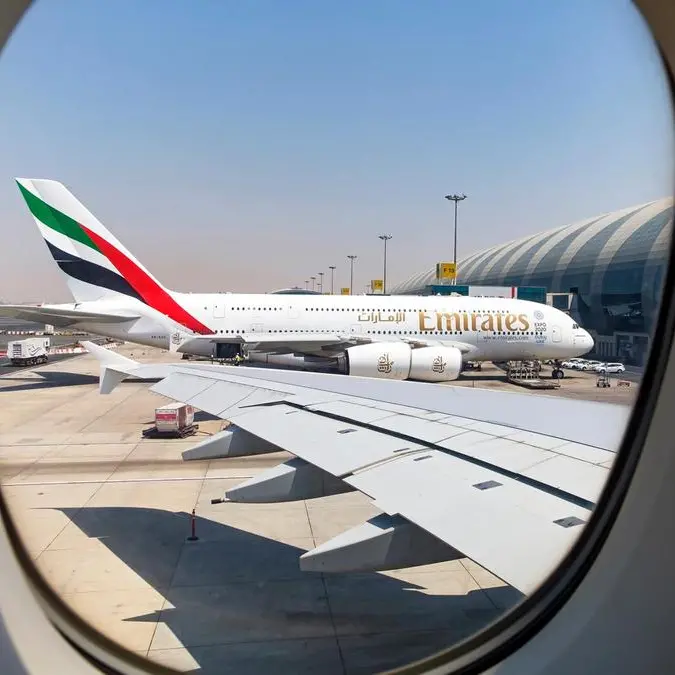
KUWAIT: Middle East air travel, one of the highest growth areas in global aviation, is eyeing to further conquer the skies in 2013 - a glowing endorsement attributed to the world's largest aviation watchdog.
"The Middle East is well placed to benefit from continued growth in the coming years. Both in terms of fleet expansion and investment in airport infrastructure, the key Gulf States are prepared for significant growth," said Chris Goater, communications manager of the International Air Transport Association (IATA) in written responses to questions from the Kuwait Times.
Such projected growth in the region is sustainable, according to aviation consultant Phillip Butterworth-Hayes who runs PMI Media, an aviation consultancy. "By developing the region's airports as hubs, they pull in traffic from around the world which needs to connect to destinations in other parts of the world; so the catchment area effectively becomes the entire world. If traffic is down in one sector, such as Europe, this can be compensated for by growth in other areas," Butterworth-Hayes observed.
Location, location, location
Dubai has become one of the most vital crossroads of the world and it has proven to be more than just a stopover air hub in a strategic location. It is a destination by itself offering business and leisure travellers alternatives that few other places in the region feature. Air connectivity is a major component in maintaining Dubai as the region's business, trade and tourism hub. Predictably, developing the aviation sector is crucial to the government's goal to turn Dubai into a destination for business activity, leisure travel and retail.
Dubai, the world's third busiest airport, is home to the state-owned global legacy carrier, Emirates, and the Dubai government's low-cost airline venture flydubai with a capacity to serve 70 million people today. Flydubai, the world's fastest growing start-up airline and the second-largest tenant at one of the world's largest airports, is cited as one of leading players at the helm of the aviation growth projection for the region. The boons for flydubai's success factor are: the fact that 60 percent of the world's population lives within a 5.5-hour radius from Dubai, the booming regional market, swelling population, great synergies with the giant airline Emirates and a forward-thinking government.
In the words of flydubai's Chief Executive Officer Ghaith Al-Ghaith, Dubai is what makes flydubai the fastest growing airline in the world. Talking to the Kuwait Times during the launch of flydubai's inaugural flight to the Maldives earlier this month, Al-Ghaith said: "We are extremely fortunate that we are operating out of Dubai. We are extremely fortunate to be operating out of the United Arab Emirates. There is a huge focus on growth in our country." The perfect location and a clear government vision for growth are the corollary for success of a regional airline. "The government builds the infrastructure and we populate it. The government is always steps ahead of us. We are very blessed," explained Al-Ghaith. He added that people love to come to Dubai because of all the exciting things it offers. "Dubai is no longer just a one-type of tourism destination. It is also a destination for different kinds of visitors - for leisure and business. This (success) happened with the hard work of the government of Dubai. For over a decade they have been developing the country to have the best infrastructure and the best services," said Al-Ghaith.
What makes flydubai a standout: Affordable travel options, a flexible network expansion to underserved markets, beyond-strategic location and plans to serve some 2.5 billion people living within a 5.5 hour radius of Dubai. Addressing a press conference in Dubai before flydubai's inaugural flight to the Maldives last week, Al-Ghaith stressed, "Our vision has always been to open up new markets and give more people the opportunity to travel affordably, granting them direct access to Dubai's commercial and tourism opportunities, as well as the chance to explore beyond Dubai an array of exciting destinations on our network."
Growing sustainably
Sustainable aviation growth relies on good infrastructure, resources and government support. According to Oussama Salah, a UAE-based aviation expert, "the Gulf has the infrastructure." Another aviation expert based in Europe provided an additional layer of understanding into the regional growth pillars. "From where I am, governments look a whole lot more committed to aviation than they are here," says David Bentley, an airline industry analyst and joint managing director of Big Pond Aviation, a consulting and analysis company. More growth also means larger fleets. According to Bentley, "Boeing predicts that 46 percent of aircraft deliveries over the next 20 years in the Middle East will be big wide-body types to the region's airlines as they seek to connect their hubs with every sizeable city in the world."
The larger the fleet, the greater the capacity. The exponential capacity expansion of the Middle East's three big legacy carriers Emirates, Etihad and Qatar Airways and the two-fold increase in the Middle East budget travel segment in the past three years has not disturbed flydubai's initial strategy for growth. Even before the airline's first flight took off three years ago, flydubai had placed an order to bring its fleet to a total of 50 aircraft. In the words of Al-Ghaith, flydubai's fleet of 28 aircraft will grow to 34 by the end of next year. "By 2016, we will have received all of the 50 aircraft. We have not slowed down. We are on the path that we charted in 2008 when we started the airline. Now we are in discussions with both Boeing and Airbus to see the new model of aircraft. We will probably make some announcement for a new aircraft order," Al-Ghaith said.
The region's fleet expansions mean a glut of seats that, in turn, in the crowded Gulf skies might lead to capacity adjustments. Airspace capacity is a possible concern for the projected growth in the Middle East. Asked if airlines need to consider capacity adjustments, Bentley explained that in all parts of the world, carriers are too easily lulled into a false sense of security and put on too much capacity. "They started cutting back in the US two years ago and are still at it. We started last year in Europe. It will happen in the Middle East, too. It is a natural progression like night follows day," Bentley added. However, the DNA of flydubai and its distinct growth pattern serve as boost to the airline's immunity which has been resilient to recessionary impacts and economic slowdowns since its start in the throes of the global meltdown.
Aggressive expansion
While the West-based carriers are handling capacity-crunches, slashing routes, undergoing heavy restructuring and mergers, flydubai has no plans to shift from its strategy based on adding frequencies at an aggressive rate and extending its geographical footprint. The secret to the airline's resilience, it seems, is the carrier's two-pronged approach - a firm commitment to the region and a recession-proof low-cost business model. Flydubai currently reaches the Middle East, Central and Eastern Europe (CEE) and the Commonwealth of Independent State (CIS) - markets where there is further expansion potential. Currently, its GCC network, the largest of all Middle Eastern carriers, features 265 flights a week to Bahrain, Kuwait, Oman, Qatar and Saudi Arabia. More than 40 percent of flydubai's network expansion in 2012 focused on CEE and the CIS. Currently, the no-frills carrier operates to 16 destinations in the region. Al-Ghaith told the Kuwait Times, "The results that we have achieved so far and the growth in these new markets only shows that there is a lot of business that we have not touched yet. There is huge potential for growth."
The numbers validate his upbeat standpoint. Compared to the previous year, in 2012, flydubai's passenger growth from the GCC was 65 percent with a 36 percent growth in the number of flights. Comparatively, there was 285 percent growth in passenger numbers from the CIS and CEE markets in addition to a 114 percent increase in the number of flights over the same period. The Dubai-Kuwait route has grown from two flights initially to eight daily flights now.
Are capacity explosions expected to lead to price pressures in the no-frills sector as their Gulf full-service counterparts race to pour seats into the market? To this, Al-Ghaith says: "There are ups and downs in the market. The airline people are very smart in deploying capacity. There is a lot of capacity now. I do not foresee a major price war. I believe that the airlines are more mature. Cutting the prices is good for the consumer and sometimes you need it... but it is not good for the business in the long-term."
In times when global industry players seek alliances to battle the aviation turbulence caused by volatile fuel prices that make up over 40 percent of an airline's operating cost and by thinning demand in some segments, a Gulf-based all-economy state-owned carrier boosts an explosive growth of traffic. Perhaps the real question is this: How does flydubai minimize costs while increasing efficiency and still manage to keep the prices low? In response, Al-Ghaith explains: The airline's fleet of brand new aircraft has lower engineering cost; the price for the order of 50 aircraft was lower compared to an order for fewer planes; thirdly, due to the one-type-of-aircraft fleet, flydubai supports one type of engineers for maintenance. "This is what keeps our costs down," he said. Taking the point further, he stressed, "We provide services but we try to cover the cost of these services by allowing customers to pay for it, such as movies... We have a very good focus in making sure that there is enough income from the things we do and bring the cost down."
Challenges
The skies over the Gulf could be gloomier if liberalization, one of the main challenges to aviation growth, is not addressed in the long term. In the words of Goater from IATA, "A potential concern (in the Middle east) is airspace capacity, which is a problem due to some important areas of airspace which is restricted for military purposes." According to Butterwoth-Hayes, the physical lack of airspace around busy hub airports and the lack of liberalization in states neighbouring the Gulf which will restrict growth there, are the two bottlenecks to aviation growth. "Neither of these are huge obstacles for the next year or two," he said. For Butterwoth-Hayes, "The big problem with regional regulatory consolidation is that someone is going to have to give something up for the greater good if the cost benefit analysis shows a neighbor can perform a particular service better. But consolidating regulations can generate huge cost savings - as the single European Sky program suggests - sometimes by as much as 50 percent on air navigation charges."
In the view of Salah, the growth of the LCCs is organic and is point-to-point. He said, "The UAE population is rapidly expanding and can sustain additional services into the CIS, the Balkans and Africa. Of course, a liberalized Arab Aviation Regime will open several opportunities."
Asked to comment on a Single Gulf Sky, Al-Ghaith points out: "We came a long way in the Gulf. I can honestly say that the Gulf is almost open. There are different levels of liberalization. You can go almost anywhere in the region now without any restriction." The state of booming aviation has also changed the travel habits in the Gulf. According to Al-Ghaith, the interregional relationships are more in the region. "People in the Gulf travel more often than before. Previously, they used to travel once a year. Now they travel once a month." His words are supported by statistics which show that the Gulf has the highest ratio of travel per capita. Al-Ghaith speaks of another challenge that flydubai faces - the diversity of its passengers.
Flydubai's success story
The Beirut-bound take off of flydubai on June 1, 2009 was the airline's maiden commercial flight. Since then, the budget airline has been on an upward spiral spreading its wings over an extended network of 52 routes. During its three years of operations, the airline has deepened its network's breadth over a wide range of destinations within a five-and-a-half hour radius from Dubai across Africa, Asia, GCC, the Indian Subcontinent, Central and Eastern Europe and the Commonwealth of Independent States (CIS) and the Middle East. In the near future, the plan is to reach more places in CEE, CIS, and the Middle East.
Here are the highlights of flydubai's growing portfolio: Dubai's first low-cost carrier had flown 1 million passengers during its first 13 months of operation. In addition, flydubai has its own terminal.
The all-economy airline became the first low-cost carrier to be on the Global Distribution System providing access to travel agents from around the world to their airfare. Flydubai is the first carrier to offer daily updated digital newspapers through its premium in-flight entertainment system. The e-Reader platform provides access to 45 newspapers in seven languages across the globe in .pdf format. In a nutshell, flying at an altitude of 10,000 meters no longer means that a passenger is not on top of the news world on any given day. The airline is a pioneer in presenting on-board safety demonstrations in an innovative and informative way, having partnered with FREEJ, the Middle East's first animated series, to create a 3D animated safety film in both Arabic and English. In addition, flydubai is the launch customer for the Boeing Sky Interior, which has increased space through redesigned overhead lockers.
Flydubai's growing network and customer base is testament to its continued vision of accessibility and affordability. The airline's target is to offer a wealth of destinations to more people, provide a low-cost option on already popular routes from Dubai, while opening up destinations underserved by direct air links to the UAE - boosting trade and tourism.
The budget carrier has one of the best on-time performances in the industry (85 percent). Today, flydubai operates 985 flights a week and plans to further extend its network adding new destinations this year. The low-cost airline features one of the youngest fleets of brand new aircraft Boeing 737-800.
The fledgling carrier has already reached a breakeven point, making a profit in 2012. Al-Ghaith concludes, "We consider ourselves (as having) matured this year in terms of services and operations."
Flydubai's management that bets on winning strategies for the business, it seems, helps bring the growth forward into the future.
© Kuwait Times 2013