01 July 2010
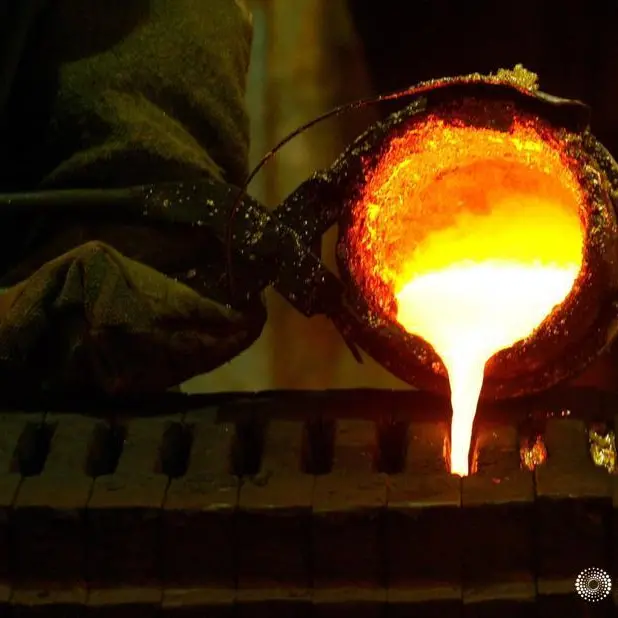
National Iranian Steel Company (NISCO) will implement eight steel projects in three years increasing the industry's capacity by eight million tons.
NISCO Managing Director Mohammad Reza Najmossadat said this will mark a turning point in the national steel industry.
"These projects will gradually become operational from 2011 to 2014. By exploiting these undertakings a total of eight million tons will be added to the steel production capacity of the country. Given the volume of operations, geographical conditions and targets and features of the said projects, this trend of development is unprecedented at the national and regional levels," he added, IRNA reported.
He recalled that in the past five years Iran experienced the most stable production growth of steel in the Middle East.
"By utilizing the domestic engineering capabilities in building production lines and executing the timetable for development based on the long-term strategy of steel industry and by maintaining the top position in steel production in the region, we will continue the development trend of this strategic metal," he noted.
The official said the drive forward in national steel production commenced in 2005 in a systematic and rational manner.
"In the course of the global economic recession in 2009 when many countries were forced to decrease their steel production, Iran had over nine percent growth rate in steel production thus accounting for the highest growth rate in steel production at the regional and even international levels."
"This trend also continued in the first four months of 2010. Some regional countries like Saudi Arabia, Egypt, Turkey and Qatar, affected by the 2009 crisis, reduced their steel production and hence the facts and figures pertaining to their production in the first four months of 2010 shows a suitable growth rate compared to the corresponding period in 2009," he noted.
This is while this rise was not due to boosting output or production, but rather due to serious decline in production in the respective time span of the previous year. It must be borne in mind that national steel production before and during the ongoing global financial downturn experienced a harmonious and constant growth rate and the increasing trend is still in effect, he added.
He expressed hope that by implementing the said eight projects within the next four years steel production in the country would reach 20 million tons per year.
Meanwhile, deputy minister of industries said Saturday by the end of the fifth development plan (2010-2015), Iran will become one of the great exporters of steel worldwide.
Speaking to Fars News Agency on the sidelines of tour of Baft Steel Factory in Kerman, Ahmad Ali Harati-Nik added by 2015 Iran will produce about 35 million tons of steel per annum, some 20 million tons of which will be consumed domestically and the remaining portion exported.
He recalled that the timetable for exploiting Baft Steel Complex has been declared by the government and the factory must become operational in three years.
"The government has procured the necessary financial resources for this undertaking. The government has thought of special supportive measures for those contractors which are ahead of schedule in terms of the project's progress and will allocate more resources to them," he noted.
Baft Steel Complex has a production capacity of 800, 000 tons. It is being constructed in a lot of land extending over an area of 600 hectares some 10 kilometers west of Baft. Some four trillion rials of credit has been designated for this project. Upon completion of the project, 1000 direct and 8,000 indirect job opportunities will be generated.
National Iranian Steel Company (NISCO) will implement eight steel projects in three years increasing the industry's capacity by eight million tons.
NISCO Managing Director Mohammad Reza Najmossadat said this will mark a turning point in the national steel industry.
"These projects will gradually become operational from 2011 to 2014. By exploiting these undertakings a total of eight million tons will be added to the steel production capacity of the country. Given the volume of operations, geographical conditions and targets and features of the said projects, this trend of development is unprecedented at the national and regional levels," he added, IRNA reported.
He recalled that in the past five years Iran experienced the most stable production growth of steel in the Middle East.
"By utilizing the domestic engineering capabilities in building production lines and executing the timetable for development based on the long-term strategy of steel industry and by maintaining the top position in steel production in the region, we will continue the development trend of this strategic metal," he noted.
The official said the drive forward in national steel production commenced in 2005 in a systematic and rational manner.
"In the course of the global economic recession in 2009 when many countries were forced to decrease their steel production, Iran had over nine percent growth rate in steel production thus accounting for the highest growth rate in steel production at the regional and even international levels."
"This trend also continued in the first four months of 2010. Some regional countries like Saudi Arabia, Egypt, Turkey and Qatar, affected by the 2009 crisis, reduced their steel production and hence the facts and figures pertaining to their production in the first four months of 2010 shows a suitable growth rate compared to the corresponding period in 2009," he noted.
This is while this rise was not due to boosting output or production, but rather due to serious decline in production in the respective time span of the previous year. It must be borne in mind that national steel production before and during the ongoing global financial downturn experienced a harmonious and constant growth rate and the increasing trend is still in effect, he added.
He expressed hope that by implementing the said eight projects within the next four years steel production in the country would reach 20 million tons per year.
Meanwhile, deputy minister of industries said Saturday by the end of the fifth development plan (2010-2015), Iran will become one of the great exporters of steel worldwide.
Speaking to Fars News Agency on the sidelines of tour of Baft Steel Factory in Kerman, Ahmad Ali Harati-Nik added by 2015 Iran will produce about 35 million tons of steel per annum, some 20 million tons of which will be consumed domestically and the remaining portion exported.
He recalled that the timetable for exploiting Baft Steel Complex has been declared by the government and the factory must become operational in three years.
"The government has procured the necessary financial resources for this undertaking. The government has thought of special supportive measures for those contractors which are ahead of schedule in terms of the project's progress and will allocate more resources to them," he noted.
Baft Steel Complex has a production capacity of 800, 000 tons. It is being constructed in a lot of land extending over an area of 600 hectares some 10 kilometers west of Baft. Some four trillion rials of credit has been designated for this project. Upon completion of the project, 1000 direct and 8,000 indirect job opportunities will be generated.
© Iran Daily 2010