We work with the SME to go through their financial difficulties as a sponsor, but one thing we don't do is when problems occur we don't burden or liquidate or take back the money invested.
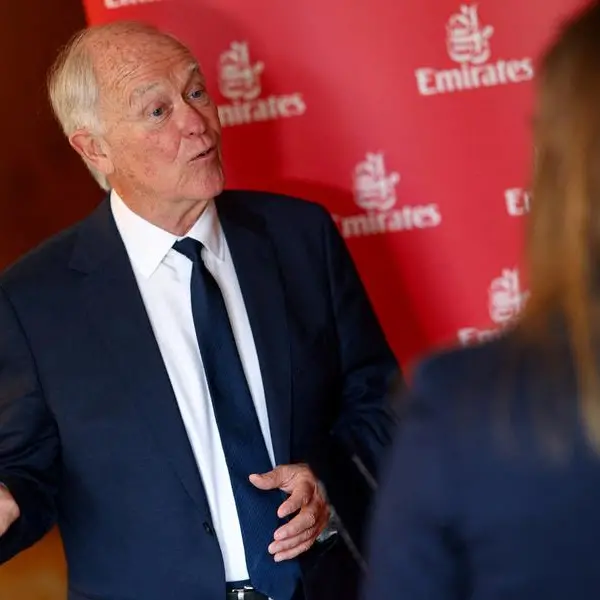
On the sidelines of the December WIBC 2012 in Bahrain, Business Islamica met with Khaled Mohammad Al Aboodi, CEO of The Islamic Corporation for the Development of the private sector (ICD), who shed his insights into the operations of the organization. ICD is a multilateral organization affiliated with the Islamic Development Bank (IDB) Group. Its authorized capital stands at $2.0 billion, of which $1.0 billion is available for subscription. Headquartered in Jeddah, ICD was established by the IDB Board of Governors during its 24th annual meeting held in Jeddah in November 1999.
The mandate of ICD is to support economic development of its member countries through provision of finance to private sector projects in accordance with the principles of the Islamic law. ICD finances projects that are specifically geared to creating employment opportunities and boosting export. ICD operates to complement the activities of IDB in member countries and also that of national financial institutions.
ICD provides investment opportunities through the organization of and participation in business conferences, seminars and investment forums in member countries as well as Muslim communities in non-member countries.
Once a deal is made, ICD plays the role of guaranteeing the factors needed for successful investment via effective use of existing and innovative, technical knowledge, funding instruments, direct investment and various financial products and advisory services.
"Our mission within the IDB group is to support the private sector, by extending finance, investing in the private sector, providing assistance for 56 countries of the OIC (Association of 56 Islamic states promoting Muslim solidarity in economic, social, and political affairs) to flourish," Al Aboodi told Business Islamica. "The engine of growth nowadays, is the private sector. It could be in Latin America or East Asia, yet Islamic countries are falling short of catching up with the trends to support the private sector needs," Al Aboodi Added.
If you are a promising private company and you want ICD's support to fi nance the venture or grow it then you will likely get that organization's backing, but in terms of financing, it has to be Shari'ah compliant.
"If you want us to put equity into this project, it has to be 100% Islamic. If you are a conventional and want me to participate, I cannot enter if your non-Shari'ah side of the project is more than 33%," Al Aboodi explained.
"Some of the growth we have seen is with companies trying to convert from conventional to Shari'ah-compliant, a trend we have seen mostly in the gulf, especially with medium size enterprises," Al Aboodi elaborated.
ICD does occasionally take equity in these projects but with an explicit exit policy, trying to walk out within 5-7 years.
"We are a for profit organization. We employ the capital of our shareholders, which is $1 Billion and $2 billion authorized. The total amount approved for projects has so far been $2.5 billion dollars over a 4 years period."
However, normally, ICD does not wish to be the majority equity holders in these projects, although they sometimes go up 53% of the capital of the company and rarely does it put up the entire seed capital. "If we locate an Ijara company, and we couldn't find investors, we establish 100% of the capital and then raise it after we secure interest from other companies to get in, and we have had a case like that in Azerbaijan," Al Aboodi said.
ICD promotes its activities by doing marketing visits and what they call Private Sector Day. Thought SMEs and entrepreneurs do visit ICD's Headquarters, ICD also visits countries, like the Cameroon for example, and explains the mission of the company, its products and interests and follows this up with B2B sessions with potential project initiators. "Usually, we don't have representatives in these countries, but we work with their Chambers of Commerce, because Our main mandate is to go and hunt for projects and transfer our findings to the investment department in ICD.
When it comes to finance, this goes directly to companies and in these instances, the project has to be a sizable one, at least worth $5 million, and the finance will come from Jeddah.
What ICD does is process the financing through local banks, to the SME sector with the bank acting as only an agent for the organization, allowing ICD to work with conventional banks. "The bank has to work with SMEs that have a MENA operation. We take bank representatives to Jeddah and train them on how to use the finance in a Shari'ah-compliant way," Al Aboodi clarifi ed. ICD can engage into debt financing anywhere between $300,000- $500,000 to assist in the economic development in these countries. ICD has established about 20 Ijara companies in 20 countries within a 5 years period. These companies are specialized in leasing equipment, cars, and machines for businesses. "All the sectors are open for us as long as they are Shari'ah-compliant. We are not just focusing on one sector. Car leasing is easy but we have other sectors," Al Aboodi said.
However, and no matter how lucrative a business might be, if it doesn't adhere to the principles of Shari'ah, then ICD passes on the opportunity. "One of the conventional banks wanted us to finance ATM machines, and it was very profi table, but we cannot support this interest based transaction for that conventional bank. The project looks sound but the nature of it is not," Al Aboodi justifi ed.
Now if a conventional group wants to establish a Shari'ah compliant project, then ICD has no issues with that. "A group that has 10 factories and wants to set up an 11th one, we will finance it in a Shari'ah-compliant manner. But if we go financing 30% and equity 30% with a conventional financial institution providing the remaining 40%, then it's fi ne with us, because it's through financing and not equity," Al Aboodi elaborated. In other words, the total company entity may not end up being Shari'ah-compliant but the expansion part that ICD financed is. "The same reasoning goes with an SME initiative.
We are using the conventional bank as an agent. If an SME wants a machine, worth $100,000 and they have other machines fi nanced through conventional banks, I can still fi nance it. The bank is an agent and custodian of securities," Al Aboodi said. Now what often happens is that a country or bank sees the advantages of Islamic financing, like in the case of Azerbaijan which has decided to open a Shari'ah-compliant side of business after ICD trained and worked with them. "We don't stop offering loans if the country doesn't have an Islamic bank," Al Aboodi added. Can some of these projects fail? Like any business venture, there is the chance that some projects did not follow the plan in place. "We can establish a project from scratch and most banks cannot do this.
Failure is a slim possibility but we work with the SME to go through their financial diffi culties as a sponsor, but one thing we don't do is when problems occur we don't burden or liquidate or take back the money invested. Whereas banks are quick to liquidate and have standards to follow and stakeholders to answer to, we are patient; we change schedules, and bring additional fi nancing to make it work."
With $2.5 billion from ICD invested since it started, and financing up to 33% of the capital, gives an idea about the number of projects ICD has been involved in.
What is ICD's 2013 plan and vision? ICD has a number of initiatives it's working on. It plans on establishing investment funds with the concept behind it being in the form of a diminishing musharaka, providing an easier way to exit. "We had the idea of doing a global fund, but because countries have different regulatory environments, we couldn't do that. We started in Tunisia with the Thimar project working with the Sunduk Al Idara wal Amanat. It's a sovereign wealth fund, through the Ministry of Finance and we recently closed it and now it's operational," Al Aboodi said.
"We have investors coming in to the fund and it's Shari'ah-compliant. The second SME fund we have is in Saudi Arabia, a 1 billion Saudi Riyal. The fi rst closing was worth 400 million and this will start in 2013. It's joined created by IDB and ICD and Saudi Saving and Credit Bank, a government- owned institution."
© Business Islamica 2013