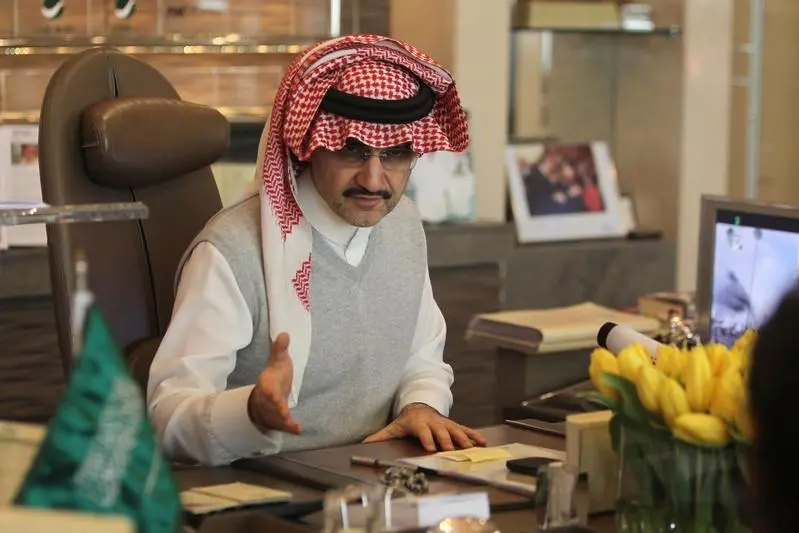
At the 2nd World Islamic Banking Conference: Asia Summit, Shayne Nelson, Chairman of Standard Chartered Saadiq, spoke to Islamic Business and Finance about how Islamic banking should be done
As a major international bank with a heritage of more than 150 years and a global network that covers 50 per cent of the Muslim world, Standard Chartered Saadiq has made plenty of waves in Islamic banking, and it has no intention of stopping. It has been providing Islamic banking products and services in Malaysia since 1993 and in the United Arab Emirates (UAE), Pakistan and Bangladesh
since 2003.
Shayne Nelson is the Chairman of Standard Chartered Saadiq. He also continues to be Chief Executive Officer of Standard Chartered Private Bank, Chairman of the Islamic Banking Board, and a Director of Scope International, a wholly-owned subsidiary of Standard Chartered providing global-shared services in Malaysia and India.
On top of this, Nelson is the Global Head of high value client coverage for Standard Chartered Bank. In this role, he is responsible for the Private Banking, Priority Banking, SME Banking, International Banking and Islamic Banking of the Consumer Banking business.
He also found time to break a deep sea fishing world record. He is based in Singapore, where Islamic Business & Finance caught up with him to learn how Standard Chartered Saadiq is setting the standard for Islamic banking.
Since its launch, what gap has Standard Chartered Saadiq filled in the market?
The key proposition that Standard Chartered Saadiq offers its customers is a similar range of products, similar quality of service, and access to the same, extensive distribution channels that our conventional customers are accustomed to. We strongly believe that our Islamic customers should not have to sacrifice any of the commercial aspects of their needs or any of the conveniences that a conventional customer would be able to access. Consequently, in each of the geographies that Standard Chartered Saadiq operates in, our endeavours have been to eliminate the commercial or service gaps that generally exist between the Islamic and conventional sector. The rapid growth that we have seen in our Islamic business, be it in the Middle East, South Asia or South East Asia, and the positive feedback we receive from our customers is clear evidence of our contribution to the Islamic banking market.
What are your main objectives for this year?
While enhancing the product and service proposition in our existing markets remains our primary focus for 2011, we are also evaluating the opportunities for introducing Islamic banking in new geographies, especially in Africa where we believe the potential is substantial.
Do you think we will see an increased focus on Islamic wealth management in the near future?
We believe that wealth management is an area which will see substantial development and growth in the next few years. Islamic banking has made substantial progress in the last decade or so, in the area of mass market retail products, and today the market has a fairly strong Shari'ah-compliant product suite for most financing and deposit products. However, the same is not true for the affluent sector. The potential in this segment is enormous, provided the customers do not have to make major commercial sacrifices, especially in terms of risk and returns.
Why do you think Islamic wealth management has been neglected by the industry?
The dilemma of the Islamic wealth management industry has been the classic chicken and egg story. To attract the wealth of the affluent Islamic sector, you need a competitive product range, but to produce a wide product range, you need scale. The affluent Islamic customer would be a lot more demanding than the mass market retail customer, and would be less willing to make a commercial sacrifice.
Furthermore, the affluent Islamic customer would be very conscious of arising risk from any investment and would be concerned with the reputation and performance record of the product provider. So far, the Islamic wealth management industry has seen limited presence from the major fund managers. However, with a strong growth in Islamic assets globally, and increasing pressure from Islamic retail banks like us, more and more fund managers are looking at this segment, be it for equities, fixed income or alternate asset classes.
What is the current appetite in Asia for Islamic products?
We believe that Asia is a major market for Islamic products. Malaysia, Indonesia and Brunei are the key retail markets in South East Asia, while Thailand, the Philippines and Singapore will have potential for a part of their population. In South Asia, Pakistan and Bangladesh are major markets though we believe that once the Islamic banking sector is opened up in India, it will have significant demand in view of the large Muslim population in the country.
Within Asia, the penetration for Islamic banking has been the highest in Malaysia and Bangladesh, both of which has seen Islamic share of between 20-25 per cent. However, the potential for growth is best in Indonesia and Pakistan, where the current penetration is only three per cent and seven per cent despite both countries having very large Muslim populations.
How have Standard Chartered Saadiq's clients' demands changed over the last year?
In the initial days of Islamic banking, the customer needs and demands tended to be basic. People came to the Islamic banks primarily because they needed Shari'ah-compliant products, and therefore the commercial aspects of the product or service offering was not a key criteria in the decision making process. However, as the sector grew, and more and more people became aware of Islamic banking, the needs of the customer also changed.
No longer were people looking only at the Shari'ah-compliant aspect of the proposition, but also wanted to know how it compared to conventional products in terms of cost, returns, service and convenience. From the provider perspective, as the sophistication grew, so did the available market. No longer was the market restricted only to those who had an Islamic banking need; now they were looking at customers who had a banking need, but would prefer to have this met through Shari'ah-compliant means.
In Standard Chartered Saadiq, we saw a similar evolution. As our product suite expanded, and as the market became aware of our Islamic capabilities, our reach also expanded. With our extended product range, covering retail assets and deposits, Islamic funds and Takaful and the commercial range of products covering the SME and corporate sector, we now cater to a growing number of Islamic customers and institutions across several geographies in Asia and the Middle East.
Is most of the demand currently on the retail or wholesale side?
We have an Islamic proposition which covers both the wholesale and the retail side, and we are seeing rapid growth in both the segments. Obviously the needs in the two areas are very different, and both are in different stages of development.
Does Standard Chartered Saadiq have any plans to originate Sukuk?
Standard Chartered Saadiq is a very successful name in Islamic investment banking, and we have won numerous awards and accolades in the last few years, especially for our contribution in the Islamic fixed income space.
We have a healthy Sukuk pipeline for this year. In the first five months for the year, we completed three international Sukuk deals - the $500 million Sukuk for Emaar Properties, the $750 million Sukuk for Islamic Development Bank and the $400 million Sukuk for Sharjah Islamic Bank. Our pipeline is not only from Islamic financial institutions but also from corporates and quasi-sovereigns, across MENA and Asia.
What are the main challenges for Islamic finance in Asia?
The opportunity for growth in Islamic finance is tremendous. Malaysia has clearly been the most successful market within Asia, and if we were to learn lessons from how this market has developed, I would say that the challenges for the rest of Asia are
as follows:
Focus and support from the regulators/government: The industry being in the early stages, support from the authorities does help accelerate the momentum. Incentivising institutions to get into Islamic will also help bridge the product gap, which exists in areas such as wealth management.
Opening the sector to international and regional providers: Different geographies are in different stages of development in Islamic finance, and migrating the knowledge and sophistication from one market to the other does help accelerate the development, and international and regional players can provide migration of best practices.
Continuing the focus on market education and knowledge: The success and growth of the industry depends on how clearly and successfully the Islamic banks are able to spread their message. Only when potential customers realise what Islamic banking is all about, and how rapidly the sector has developed in terms of meeting the market needs, will they consider migrating from conventional to Islamic.
© Islamic Business and Finance 2011