RIYADH: Today marks the 10th anniversary of 9/11, a day that changed America and on a different level, Saudi Arabia.
Many believed that Saudi Arabia was the place where some of the 9/11 masterminds' plans were prepared, yet many others denied that Saudis could have planned and executed such terrorist attacks against the United States.
The truth is that while Saudis clearly remember where they heard about Al Qaeda's 9/11 attacks, they also remember their dismay.
Abeer, a 40-year mother of two, remembers how appalled she was. "Seeing those buildings collapse and the fear and panic that struck people in the street and thinking of all those lives that were lost brought me to tears for hours as I was watching," said Abeer.
What made the memory vivid in Abeer's mind and emphasized her feeling of fear was that a few months later, on May 12, 2003, massive explosions ripped through three residential compounds in the Saudi capital, Riyadh, one of which she was living in. Twelve suicide bombers carried out the attacks that resulted in the deaths of more than 30 people, including nine Americans.
Ten years have passed easing the pain but not washing away the memory and a question remains. How much did the incidents impact on Saudi-American relations and does a shadow remain cast on them? Were there significant changes as a result of those attacks and the consequences the Kingdom faced?
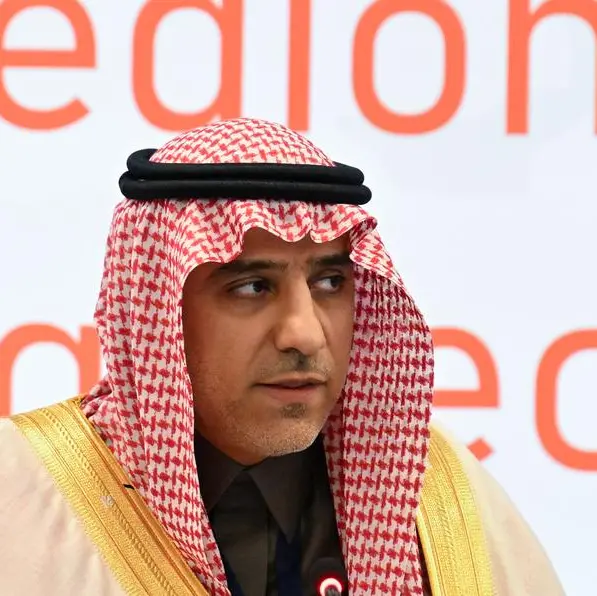
"The US-Saudi relationship remains strong, and the terrorist attacks on Sept. 11, 2001, were attacks against all of us," says US Ambassador to the Kingdom James B. Smith.
A lot of people, Smith points out, forget that the attacks were not only on the US but on the world, as there were hundreds of people from over 90 countries that were killed on the day.
Al-Qaeda since 9/11 had attacked dozens of countries and killed tens of thousands of people, which to Smith is an indication that the real story of 9/11 should not just focus on that day, but on what happened to those affected by the fallout in the 10 years since.
"If there is a good thing that came from that, it is that we collectively pulled together to fight extremism," said Smith, pointing out that the exciting thing he had seen over the last few years in the region is that people are showing that the shortest path to justice and dignity is the moral force of nonviolence. The future, he believes, belongs to those who want to build, not to destroy.
While Smith expresses his strong belief that the greatest tragedy of the attacks was the attempt by Al-Qaeda to drive a wedge between the US and Saudi Arabia in particular and between Muslims and non-Muslims in general, he stresses that the US has never been at war with Islam, but with the terrorist organization.
Although Smith give tremendous credit to the Kingdom and its government on undermining support for extremism and rebuilding the image of Islam as a peaceful religion, he acknowledges that this all resulted in the focus on nonviolent and positive change through the call for dialogue from Custodian of the Two Holy Mosques King Abdullah.
"I don't know if the change was inevitable, but my hope is, now a decade later, we are seeing much of the success of counter-extremist efforts," said Smith, stressing that nonviolent and peaceful methods are successful in creating positive change.
Saudi-American relations expert Ahmad Albrahim said that while some still believe that 9/11 was a result of a conspiracy, because people of both nations suffered almost the same consequences, the dilemma unified them.
"A few months after 9/11 Saudi Arabia suffered major terrorist attacks which led to the same loss of precious lives. This made the treatment from which the Saudis had suffered while visiting the US more understandable," said Albrahim, pointing out that the few years following the attacks caused some friction between the two countries.
Although Albrahim admits that the relationship between the two countries, who are strong allies, was shaken for a short while, the Kingdom extended a friendly hand to restore the trust and rebuild ties.
"Since the visit of the king (to the US), who was crown prince at the time, in 1993, the Saudi-American relationship has had no downs," said Albrahim, adding that those strong ties led to a quick recovery in the relationship.
"Both the Kingdom and the US managed during the last decade to work together to build a shield against terrorism," said Albrahim, pointing out that there are many shared interest between the two countries besides oil.
The number of Saudi students to the US following the attack dropped dramatically from a peak of 25,000 to around 3,000, said Albrahim, adding that Saudis love to visit America, get their education and even receive medical treatment there.
"There is a strong educational lobby in Washington, and after the attacks and the drop in the numbers of students, some universities faced bankruptcy, which led the lobby to advocate for them and even design packages to attract Saudi students," said Albrahim.
He blames the media in the Kingdom for not doing more to promote Islam and the Kingdom's image. "Terrorism was for so long associated with Islam, Muslims and Arabs. We don't see those accusing fingers when there is an incident when one individual of a certain nationality kills his fellowmen?" said Albrahim.
In its war on terrorism, Albrahim indicated, the Kingdom extended its expertise to cover other countries that suffer from for terrorist activities.
"Although the Kingdom is not the largest Muslim country it provides experts and extend a helping hand to other Muslim countries to restore the image of Islam with the help of its ally, the US."
© Arab News 2011