The prospect of alliances between the Gulf's major airlines and their fierce European rivals would be a significant about-turn for the often diametrically-opposed carriers
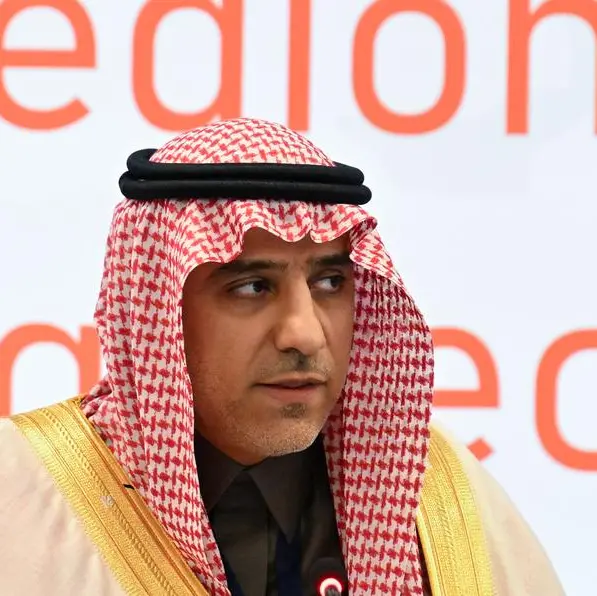
For a man more accustomed to castigating his European rivals, Akbar al Baker, the chief executive of Qatar Airways, caught many observers off guard at this year's Arabian Travel Market in Dubai. Far from berating Willie Walsh, British Airways' chief executive, Al Baker heaped praise on his competitor, describing him as a "good friend" and hailing his uncompromising management style.
"I respect what he did for British Airways," the Qatari fawned, in reference to the 2010 cabin crew strikes. "He stood up to the unions and won at a very difficult time. And he doesn't badmouth the competition. I always say that if you cannot defeat someone, you should make an ally of them."
Al Baker's conspicuously chummy tone did not come entirely out of the blue. Walsh, in contrast to many European counterparts, has long given credit to the Gulf carriers. Two years ago, for example, he accused neighbouring legacy airlines of preferring to "bitch and moan" about Gulf competitors, rather than getting their own houses in order. But even so, camaraderie between the Gulf and Europe has until recently been a rare sight in aviation circles.
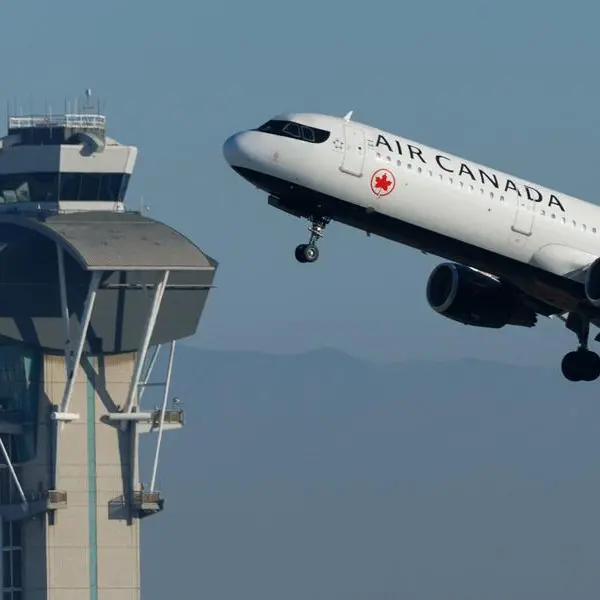
Germany's Lufthansa and Dubai's Emirates epitomise this strained relationship. Lufthansa, alongside Star Alliance partner Air Canada, has worked tirelessly to protect its hub at Frankfurt Airport. Fearful that emerging Gulf hubs will usurp its status, the airline has lobbied the federal government into restricting landing rights for Gulf carriers.
Lufthansa argues that Middle Eastern airlines benefit from state subsidies which allow them to undercut market prices, dumping capacity onto European soil and driving domestic carriers out of business. Two studies highlighting the economic benefits that Emirates brings to Berlin as well as Dubai - conducted by the German Aerospace Centre and Oxford Economics - have failed to convince it otherwise.
But as Ernest Arvai, co-founder of aviation consultancy Air Insight, explains to The Gulf, there are signs that the two diametrically opposed regions are slowly converging - putting the antagonism of recent years behind them and focusing on new partnerships.
"There are negotiations now going on between Gulf carriers and European carriers on co-operation rather than competition," he says. "European airlines are recognising that ... competition is here to stay. They're thinking, 'how do we get pragmatic and make the best of a situation that we may not like'."
Recent moves by Abu Dhabi's Etihad Airways to acquire equity stakes in Germany's Air Berlin and Ireland's Aer Lingus were the "shots across the bow" that forced Europe's legacy airlines to re-evaluate their position, Arvai argues. These deals "hit home" the message that Gulf carriers will gain ground in Europe with or without extra landing slots, scooping up German passengers, for example, irrespective of whether it is Etihad's or Air Berlin's livery painted on the plane.
Mindful of this backdoor threat, Europe's airlines are now seeking to coax the Gulf carriers into joining one of their three main airline alliances - oneworld, SkyTeam and Star Alliance. Walsh has speculated that 2012 could see the first major Gulf player enter oneworld, while Saudia is already set to enter SkyTeam this summer.
"It's only a matter of time before the Gulf carriers join these global entities," Arvai predicts, emphasising their symbiotic benefits. "Once an alliance captures a frequent traveller, they tend to fly on that alliance's [fellow] carriers ... to maximise their benefits and their status. In the end, the alliances grow stronger. They've shown some real benefits for the airlines that participate, and most airlines have now ended up joining one of the major three."
However, while passengers would gain from stronger connectivity, and existing alliance members would benefit from the influx of new customers, some analysts question whether the financially-secure Gulf carriers would receive as much in return.
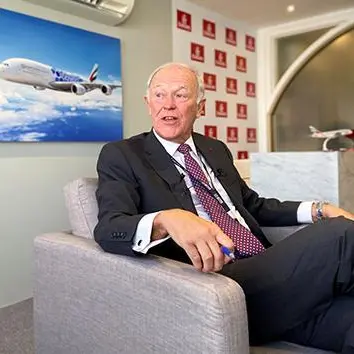
In a recent interview with Arabian Business, Sir Maurice Flanagan, executive vice chairman of Emirates, unequivocally opposed external support. "We would never dream of it," he said when asked about possible alliance membership. The veteran airline executive went on to dismiss the strategy of acquiring stakes in foreign carriers, saying it "eats up an enormous amount of senior management time".
And yet in the same breath, Emirates says it is open to more codeshare agreements with airlines in North America - bilateral deals which form the backbone of alliance collaboration. One such deal was signed in April with JetBlue Airways. According to Arvai, this ambivalence sheds light on the current evolutionary stage of Emirates' business model.
"Right now Emirates is clearly still in the 'we can go it alone' position," he explains. "They've got critical mass. Their growth has continued, and even with the economic downturn in Dubai they've continued to be profitable. But eventually when you run out of new markets, then it becomes tougher to grow without other means to entice travellers. And when organic growth becomes more difficult, that's the point when you consider alliances."
Arvai says Emirates' organic growth could decelerate within three years, begging the question: "How much more could you multiply the value of that hub in Dubai with additional flights and frequencies from partner carriers?" Once one of the big three Gulf airlines joins an alliance, he conjectures, the other two are likely to quickly follow suit.
Seen from this perspective, the pleasantries exchanged between Al Baker and Walsh take on heavy significance. "Given that access to [London] Heathrow Airport is so important, the question is which one will codeshare with BA and become a member of oneworld," Arvai notes. "It's difficult to predict who's going to go in which direction, but the growing personal relationship between Qatar and BA bodes well for them."
Etihad, too, will have little difficulty courting an alliance. The carrier has inked 35 codeshare deals to date, and has even begun negotiating with SkyTeam bigwig Air France-KLM. Crucially, in lieu of alliance membership, its equity stakes allow it to exert pressure on legacy rivals by strengthening secondary European hubs in Dublin and Berlin.
Absorbing the Gulf carriers into global alliances will never be an easy task. Unlike regional airlines, whose niche networks fit snugly into alliance gaps, the Gulf carriers compete head-to-head with legacy airlines on connecting long-haul routes. But in an industry defined by consolidation, a new era of Gulf-European partnership can no longer be ruled out.
© The Gulf 2012