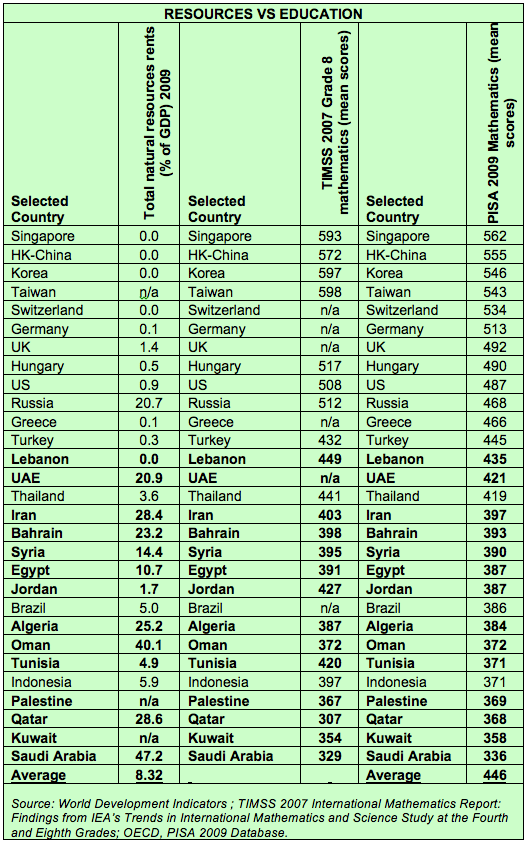
An OECD study shows countries with greater income from natural resources tend to be socially less developed. Which perhaps explains why Saudi, Qatari and Kuwaiti students fare far worse then Lebanese and Taiwanese students.
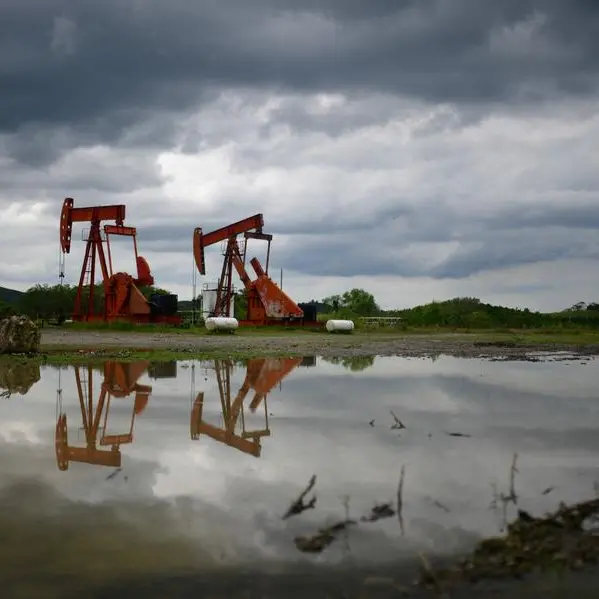
Resource-rich countries such as Saudi Arabia, UAE and Qatar fare poorly in education skills, compared to their resource-poor peers.
A study from the Organization of Economic Co-operation & Development (OECD) shows countries with greater total rents from natural resources tend to be economically and socially less developed.
"As exports of national resources tend to appreciate the currency, making imports cheap and the development of an industrial base more difficult. And as governments in resource-rich countries are under less pressure to tax their citizens they are more prone to autocratic leadership," says Andreas Schleicher, Deputy Director and Special Advisor on Education Policy to the OECD's Secretary-General.
In fact, the study also shows that there is also a significant negative relationship between the money countries extract from national resources and the knowledge and skills of their school population.
Compared to students in Taiwan, which have an average math score of 543, Saudi students scored 336, Kuwaitis 358, Qataris 368 and UAE 421. In contrast resource-poor country like Lebanon fared better with an average score of 435.
The argument is that resource poor countries put more emphasis on knowledge and education, than countries with a wealth of resources.
"So the value that a country places on education seems to depend at least in part on a country's view of how knowledge and skills fit into the way it makes its living," says Schleicher.
Placing a high value on education may be an underlying condition for building a world-class education system and a world class economy, and it may be that most countries that have not had to live by their wits in the past will not succeed economically and socially unles their political leaders explain why, though they might not have had to live by their wits in the past, they must do so now.
EDUCATION CHALLENGES
The Gulf's private education market is valued at USD5.2 billion, with around 1.4 million students in 4,400 private schools.
Booz & Company estimates the GCC K-12 private-school market will grow to between USD11-billion and USD17-billion and enrolment will reach roughly 2.6 million by 2020.
But the sector faces a number of crucial challenges that's hampering growth and perhaps leaving Gulf students behind their international counterparts despite their wealth advantages.
The shortage of qualified teachers is an obstacle in the way of growth. Leila Hoteit, a principal with Booz & Company, says that this is the first challenge for the private-school universe in the GCC.
"The global education sector is currently facing a worldwide shortage of talent, resulting in significant competition for well-qualified educators, particularly in international and Western curricula schools.
"This competition is likely to intensify in the coming years, due to the expansion of 'international' school offerings globally. GCC operators may not be able to match the lifestyle-related prerequisites available to expatriate teachers in competing markets, forcing them to either increase salaries or hire less-qualified individuals."
Another key issue holding back the education sector is land ownership.
A Booz & Co study notes that most GCC jurisdictions restrict foreign land ownership, requiring prospective private-school operators to go through the relevant private-sector regulator.
"This complex and time-consuming process is off-putting to many. Conversely, in jurisdictions that do allow foreign land ownership, investors have indicated that the inflation has made land prohibitively expensive, undermining the feasibility of new ventures," said Hoteit in the study.
Opaque regulations pose another challenge facing regional private schools.
"In general, these organisations make their regulations, policies and procedures available to the education community," said Moujaes. "But there is a notable perception among operators and investors that regulations are not applied or enforced consistently. Sophisticated investors outside of the GCC express a very low tolerance for regulatory risk."
GULF EFFORTS
Gulf governments have made an effort to attract high profile education institutes into the region.
Qatar Foundation has attracted the likes Texas A&M University, Weill Cornell Medical College, Carnegie Mellon University, HEC Paris and University College London in Qatar.
In Abu Dhabi, the Paris-Sorbonne University offers world-class education especially in humanities and social sciences.
But these efforts are few and far between and much of the effort must be focused at the grassroots level.
"Knowledge and skills have become the global currency of 21st century economies," says OECD's Schleicher. "But there is no central bank that prints this currency, you cannot inherit this currency and you cannot produce it through speculation, you can only develop it through sustained effort and investment by people and for people."
On that front, the resource-rich Gulf states look very poor indeed. However, there is hope: countries like Canada, Australia and Norway have managed to keep their education levels up despite their resource riches.
"Exceptions such as Canada, Australia and Norway, that are rich of natural resources but still score well on PISA, have all established deliberate policies of saving these resource rents, and not just consuming them," says Schleicher.
"Today's learning outcomes at school, in turn, are a powerful predictor for the wealth and social outcomes that countries will reap in the long run."
© alifarabia.com 2012