The local retail sector may have to wait until well into the latter half of the year before it starts to regain some of the momentum Lebanon lost in 2011. Political uncertainty at home and instability across the region, combined with a marked slowdown in the economy, has lead to consumers adopting a more cautious approach to spending.
With GDP expanding by just 1.5% last year, and inflation again trending upwards, many consumers looked to economise, resulting in sluggish sales in most segments of the retail sector. Though forecasts for growth in 2012 are somewhat more upbeat, with some projections suggesting GDP will rise by up to 3.5%, many of the factors that crimped expansion last year, such as ongoing unrest in Syria, weak tourism arrivals and high energy prices, continue to apply.
One factor that could stimulate retail growth is a potential easing of lending constraints, as Lebanon's banks mull increasing their consumer loan portfolios to broaden the base of their revenue-generating activities. While asset-rich and holding more than $115bn in deposits, local lenders are finding some of their traditional avenues of earning becoming potholed, as they become wary of being over exposed to state debt at a time when other returns have fallen as interest rates drop.
According to Nassib Ghobril, Byblos Bank's head of economic research and analysis, there has been an increase in competition among banks to offer retail loans, seeking to tap into pent-up demand by consumers, though concerns over political and economic instability may take some of the heat out of this demand, just as banks are prepared to ramp up funding.
"I think competition to attract quality clients will intensify because of the economic slowdown, but there is a generally more cautious approach from the consumers on the demand side, as well as banks on the supply side given the prevailing uncertainties," Ghobril told The Daily Star in a recent interview.
Those uncertainties appear to be eating into consumer confidence, with a series of studies over the past few months suggesting Lebanese shoppers are becoming more pessimistic over prospects for the economy, and thus less inclined to increase retail spending.
The most recent consumer confidence survey carried out by regional job search website Bayt.com and human resources consultancy YouGov found that optimism was in short supply among Lebanese consumers, with just over half believing the country's economic situation is worse than it was 12 months ago, with just 5% saying it had improved.
The study, produced in March, showed that 41% of respondents said their financial situation had deteriorated since the same period in 2011, compared to 16% who felt their circumstances had improved. Most importantly for retailers, only 7% of those surveyed said it was a good time to buy merchandise, with 48% saying they were neutral over spending and the remaining 45% coming down on the negative side of the equation.
The results of a similar study released at the end of 2011 and conducted by Byblos Bank and Olayan School of Business at the American University of Beirut showed consumer confidence had fallen to their lowest levels in more than four years, with sentiment being affected by concerns over regional instability and the weakness of the domestic economy.
Looking further ahead, the YouGov/Bayt.com survey did strike one positive note to encourage retailers, finding that 32% of Lebanese believe that their personal financial situation will be better in a year's time, with another 33% saying they expected it will remain the same.
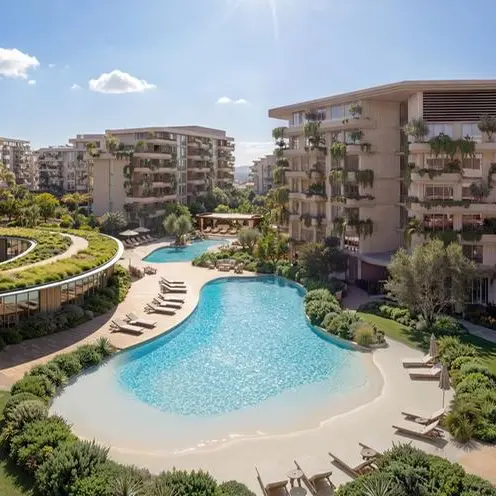
At least one retail developer is aiming to cash in on this more positive sentiment. Dubai-based Majid Al Futtaim Properties announced that the $300m mall it is building in the Hazmieh district of Beirut will be opening in early 2013. Anchored by a Carrefour hypermarket, the chain's first outlet in Lebanon, the 60,000-sq-metre Beirut City Centre complex will have some 200 stores, a multiplex and food court.
This new development, targeting the upper half of the market, should do well, as it is located in a part of the capital that is seeing property prices on the rise and demand for real estate escalating. Indeed, Philippe Dauba-Pantanacce, a senior economist with Standard Bank, believes that as long as political stability is maintained, and spill over of Syria's woes across the border can be mitigated, Lebanon's economy will rebound, a bounce that will take the retail sector with it as confidence is restored.
"The Lebanese economy is confidence-driven because it is mainly dependent on tourism, construction and real estate, as well as consumption," he told The Daily Star in an interview in late March.
As long as the key sectors of the national economy expand, so too should retail spending, particularly if Lebanon's banks come to the party as well. If there is a general pick up in economic conditions in the second half of 2012, there is likely to be more traffic over shop counters deep into the year.
© Oxford Business Group 2012