Tuesday, May 15, 2012
   (From THE WALL STREET JOURNAL)
   By Ellen Knickmeyer and Alex Delmar-Morgan
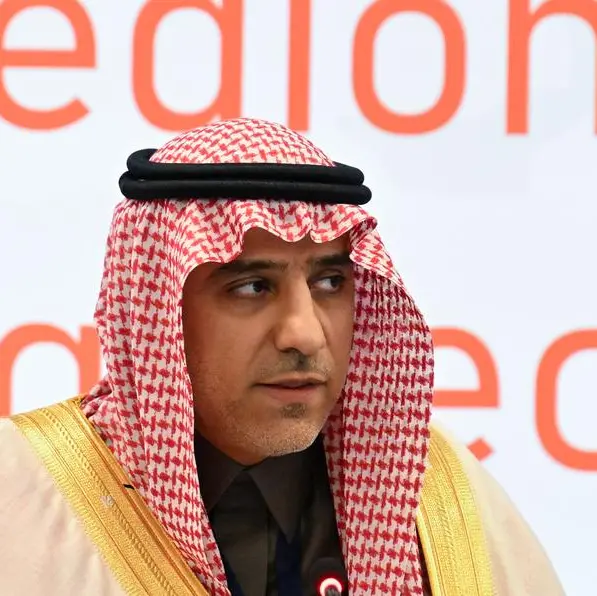
RIYADH, Saudi Arabia -- Gulf leaders balked at Saudi Arabia's call to confederate their nations in a broad security and economic union, telling the country -- the region's economic and military power -- that they needed to hear more specifics first about what such a union would entail, the Saudi foreign minister said on Monday.
Prince Saud al Faisal told reporters that his kingdom also was setting aside a proposal to join Saudi Arabia and tiny neighboring Bahrain in a two-state union, as a prelude to what Saudi Arabia still hopes will be a full-fledged federation of all six states in the Gulf Cooperation Council.
"The goal is to find that all the countries join the union, not just Saudi Arabia and Bahrain," Prince Saud said after a summit that brought royals of the five other GCC states -- Bahrain, Kuwait, Qatar, the United Arab Emirates and Oman -- to Riyadh to meet with Saudi King Abdullah, in a summit dominated by discussion of the king's proposal for a Gulf union, which he made in December.
Officials from the other Gulf states didn't speak to reporters at the summit site.
In Bahrain, where the Sunni Muslim royal family has accepted Saudi troops since early last year to help contain an uprising led by Bahrain's Shiite Muslim majority, government spokesman Abdulaziz bin Mubarak Al Khalifa expressed disappointment at the GCC's decision, saying Bahrain had thought more Gulf countries would support the proposal.
"We were expecting more than Bahrain and Saudi to join," he said.
In London, Jane Kinninmont, a senior research fellow for the Middle East and North Africa at Chatham House, said a Bahrain-Saudi merger would "have been a bad test case for wider Gulf union because the relationship would inevitably be extremely unequal, given Bahrain's small size and overwhelming economic dependence on Saudi." Bahrain receives the majority of its revenue from shared oil proceeds from Saudi Arabia.
Additionally, "other GCC states have always been wary that Saudi Arabia would seek to dominate any such union, and using Bahrain as a pilot would only have reinforced those fears," she said.
In December, King Abdullah told fellow Gulf emirs, sultans and kings that joining forces against regional threats was essential to the safety of each GCC state.
Saudi Arabia has been vocal about the perceived threat from outside powers -- a veiled reference to Shiite Muslim Iran -- and from political unrest erupting in many other Arab states since late 2010.
Prince Saud said in a speech last month that the Gulf union ultimately would mean integration of the security, economic and foreign policies of the GCC states.
Publicly, Saudi officials have given few details of their ideas for federation.
Other Gulf leaders told the Saudis on Monday they wanted the "details, and the details of the details," of any proposed union, Prince Saud told reporters. The Gulf leaders "left the matter open for more understanding" of the proposal at a latter date, he added.
Gulf authorities would work to lay out the framework of union for reconsideration at a later summit, the minister said.
Saudi officials and their GCC counterparts reportedly had negotiated intensely in the final hours before Monday's summit to try to achieve consensus, said Michael Stephens, an analyst at the Royal United Services Institute think tank in Qatar.
"But they ran out of time, and they hadn't thought it out clearly enough," Mr. Stephens said.
After Monday's summit, the union proposal is "not dead and it could be revived," Mr. Stephens said, adding, "But the likelihood of it actually working [to approval by the GCC] is very low."
(END) Dow Jones Newswires
15-05-12 0354GMT