16 June 2013
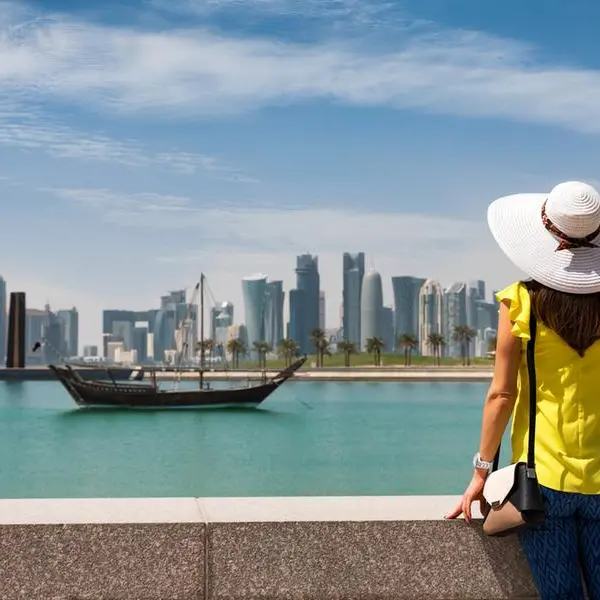
Qatar's real estate market remains over supplied and the factors behind the sector's "strong recovery" remains unclear, Samba Financial Group said in a report.
"Perhaps Qatar has, like Dubai, benefited from some safe haven demand from foreign buyers," Samba said in its latest country report.
"Inflation has started to pick up again driven by an apparent recovery in the real estate sector," Samba said.
The recently published Real Estate Price Index suggests a 20% average increase in the first quarter of this year over the same period in 2012, while the March index level of 180.1 is approaching the peak 192.2 recorded in the summer of 2008.
"What lies behind this strong recovery is unclear, given the perception that the real estate market remains over supplied," the report said.
Robust population growth since 2010, which has boosted Qatar's total to 1.94mn in March may also be helping, although the majority are likely to be low income workers that live in labour camps (54% of the population lived in labour camps in 2010 according to that year's census).
Nonetheless, implementation of the national Development Strategy will continue to bolster expatriate numbers, including professionals, offering some prospect the observed real estate recovery will endure.
The real estate recovery is already being reflected in the heavily weighted rental component of the Consumer Price Index (32.2%), which turned positive in October after three years of declines.
As of March the rental component of the CPI was up 5.5% year-on-year (y-o-y). Offsetting this somewhat has been the moderating in transport and communication price rises to under 2% (20% weight), while food price inflation is holding at 2.5% y-o-y in March.
Overall, the inflation rate stood at 3.6% y-o-y in March. Excluding rents the rate was slightly lower at 3%.
"With global food and commodity prices expected to stay weak, inflationary pressures should remain somewhat contained, although the expected surge in investment and construction activity will ensure average inflation comes in around 3.5% for the year, with acceleration to 4% possible in 2014," Samba said.
Qatar's real estate market remains over supplied and the factors behind the sector's "strong recovery" remains unclear, Samba Financial Group said in a report.
"Perhaps Qatar has, like Dubai, benefited from some safe haven demand from foreign buyers," Samba said in its latest country report.
"Inflation has started to pick up again driven by an apparent recovery in the real estate sector," Samba said.
The recently published Real Estate Price Index suggests a 20% average increase in the first quarter of this year over the same period in 2012, while the March index level of 180.1 is approaching the peak 192.2 recorded in the summer of 2008.
"What lies behind this strong recovery is unclear, given the perception that the real estate market remains over supplied," the report said.
Robust population growth since 2010, which has boosted Qatar's total to 1.94mn in March may also be helping, although the majority are likely to be low income workers that live in labour camps (54% of the population lived in labour camps in 2010 according to that year's census).
Nonetheless, implementation of the national Development Strategy will continue to bolster expatriate numbers, including professionals, offering some prospect the observed real estate recovery will endure.
The real estate recovery is already being reflected in the heavily weighted rental component of the Consumer Price Index (32.2%), which turned positive in October after three years of declines.
As of March the rental component of the CPI was up 5.5% year-on-year (y-o-y). Offsetting this somewhat has been the moderating in transport and communication price rises to under 2% (20% weight), while food price inflation is holding at 2.5% y-o-y in March.
Overall, the inflation rate stood at 3.6% y-o-y in March. Excluding rents the rate was slightly lower at 3%.
"With global food and commodity prices expected to stay weak, inflationary pressures should remain somewhat contained, although the expected surge in investment and construction activity will ensure average inflation comes in around 3.5% for the year, with acceleration to 4% possible in 2014," Samba said.
© Gulf Times 2013