The views of financial and economic analysts in the GCC region have varied in reading the future of investment in 2012 because of the different readings on the performance of the region's financial markets and the investment movement apart from global fluctuations. The analysts say that the GCC economy will be driven by reform steps undertaken by GCC governments as well as their future plans for the next phase.
Analysts believe that the year 2012 will be challenging, and thus it is hard to predict whether GCC countries will enjoy a stable or volatile economy faced with a new crisis, thus requiring further reform steps while making the best use of successful international experiences in this regard.
Commenting on this issue, Omar Al Juraifani, Economic and Financial Analyst, said: "It is hard for us to predict the points of weakness of markets and know exactly when they experience a recession or even how to avoid its consequential damages by 100 percent. However, we can identify market indexes so as to be well prepared for a possible recession--while keeping in mind that financial laws and legislation are one of the most important indicators, simply because if laws are lenient the volume of liquidity will be affected leading to an increase in expenditures that can lead to inflation and then a high risk of recession. "
He added that the year 2012 will be stable for GCC countries which are projected to see a slow growth due to lack of demand for energy in Europe and China. This will not reflect on the growth of local companies due to government spending on infrastructure projects, especially in the Kingdom of Saudi Arabia.
"I believe that Saudi Arabia needs to enhance its legislative investment infrastructure with more laws, utilize government expenditure in employing more citizens and not to export the nation's resources abroad so as to achieve the best possible outcomes," Al Juraifani said.
With the 2011 year is around the corner, analysts' reports show that the region's economy is passing through imbalanced rapid growth phases like almost what it was before 2008, when the Saudi stock market's main index, the Tadawul All Share Index (TASI) reached nearly 18 000 points, while today it touches between 6000 and 7000 points, bringing back to mind the phases that preceded the previous crisis which were marked by stability, slow growth and recession.
According to these reports, the Arab region is projected to face a new financial crisis whose signs are represented in an increase in the value of assets of lands and high unemployment rates, especially after the eruption of revolutions in some Arab countries.
Making a review of global financial crises shows that these crises are characterized by several common factors. For example the lending and borrowing laws were the key reason behind the property mortgage crisis in the United States of America, and so was the case in Sweden which faced a similar crisis in 1985 due to its improper lending policy, as well as the 2007 financial crisis in Britain where borrowers were unable to pay off their dues -causing a huge crash to Britain's financial institutions.
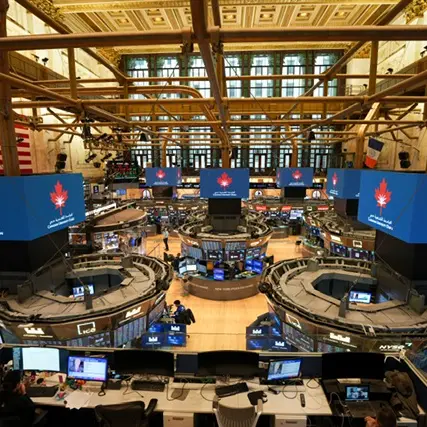
The case now is no different from the 1929 stock market crash in the Wall Street--the main cause of which was loans- when people rushed to borrow money to invest in buying stocks - which led to the stock price bubble that raised the market value of stocks. The same scenario happened in Saudi Arabia and most GCC countries in 2006-2007, as well as the crisis experienced by Japan due to the asset price bubble in the period of 1886-1990.
Analysts still examine the possibility of making use of the successful way of dealing with the economic crisis that hit the world in 2008-2009 in solving problems that may happen over the next years--whereas the solution by the GCC countries was increasing government expenditure due to huge revenues generated from high oil and gas prices and the increase in global demand for oil by China and India- the new emerging players on the global economic map-meanwhile all possibilities are still exist and open to cope with potential volatilities.
-Ends-
Omar Al Juraifani is the Co-founder and Member of the Asharqia Chamber Young Businessmen Executive Council. He was also a member in Arabian Society for Human Resource Management (ASHRM) and still a member in Trump University and Project Management Institute. He also acts as a financial advisor for leading investment projects in the GCC.
For further information, please contact Omar Al Juraifani on +966504993166 or omar@juraifani.net
© Press Release 2011