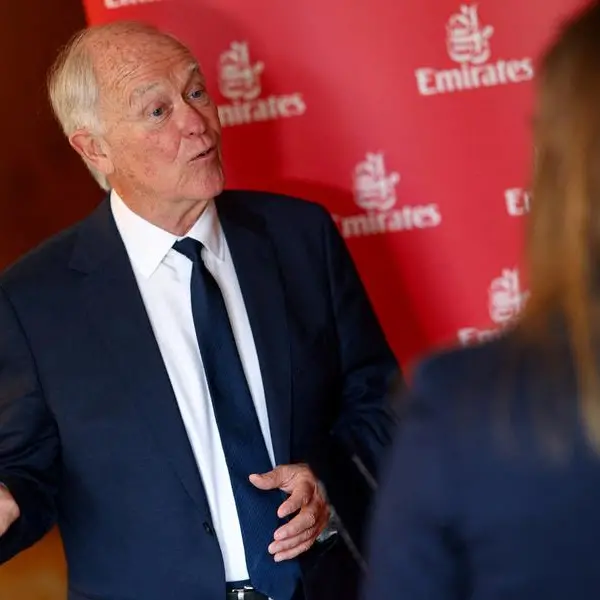
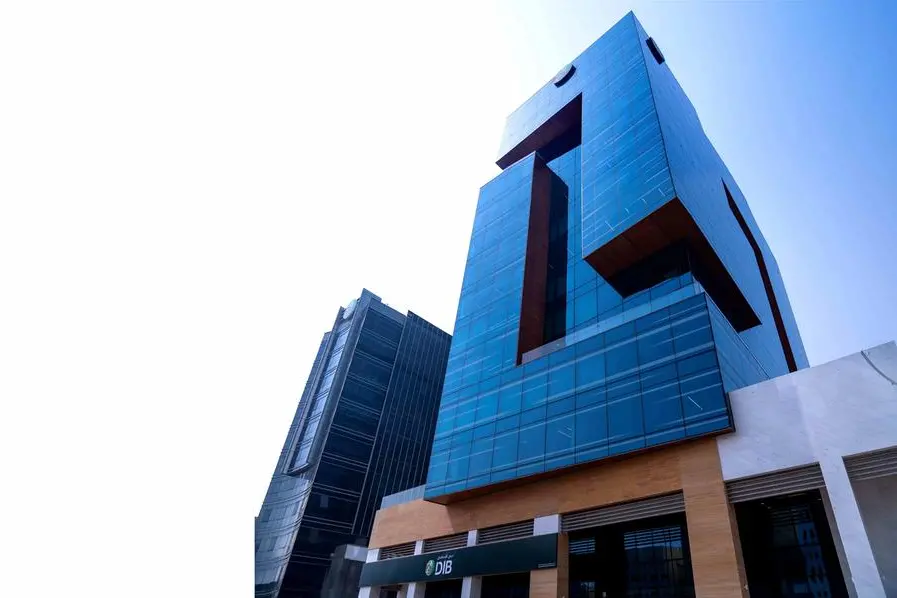
The DIFC's environment provided the ideal framework for this growing investment bank
Riad Meliti, Chief Executive Officer of Arqaam Capital, doesn't want to take over the world. He just wants Arqaam Capital to be the number one player in 25 per cent of it! Arqaam Capital is a specialist emerging markets investment bank established in 2007 headquartered in the Dubai International Financial Centre and regulated by the Dubai Financial Services Authority (DFSA). Having raised $140 million in capital, Arqaam was the first start-up firm in the DIFC to obtain a DFSA category 2 licence, which was extended later that year to include the provision of custody services.
Meliti has very clear views on how he defines investment banking; it is 'nothing more than financial intermediation... it's taking in liquidity for investment purposes and directing it towards the most efficient opportunities'.
He also has very clear views about where those opportunities lie. "Where do we see the best opportunities? In our minds, they are inversely correlated to the concentration of human capital. The larger the human capital, the more there are smart minds looking at opportunities, the more commoditised information becomes and, as a result, the potential to generate revenue from investment banking is reduced."
TARGET MARKET
Arqaam's target geography runs from Africa in the west to SE Asia in the east... and from the Cape of Good Hope in the south to Turkey and the 'stans of the CIS in the north. As Meliti puts it, "The perfect geography between east and west is the Middle East and the perfect platform that has been created to take advantage of this is the DIFC." That more or less sums up the macro vision of HH Sheikh Mohammed bin Rashid Al Maktoum: the creation of the DIFC as a 'bridge' between east and west. Meliti comments, "At our level we could see what the fundamental drivers would be that could make it a success."
Arqaam Capital put together a management team that consciously avoided close association with existing family groups and large corporates. When the firm launched it had four employees on the books. It now has staff of 110. The firm has been following a two-stage development plan. Stage one encompasses the Middle East region and stage two will see it expand its operations to cover the whole of its target geography.
However, the firm's M&A team is already doing that. Meliti said, "M&A requires least amount of infrastructure so it is the business line that has already occupied the geographic space that we aim for in stage two. We are working on mandates in Kenya, South Africa, Malaysia and Indonesia. We have about 20 mandates across the geography.
THE RISK BUSINESS
"We're effectively in the business of risk. You need to provide transparency or you are not credible. Transparency comes from providing research that is credible, of international standard, and is independent from the motivations of the business.
"The philosophy was this: ex-Turkey, MENA has about 1,000 listed companies. The two top players at the moment only cover 130 of those companies from a research perspective. How many of those companies, if you applied a p/e growth of 15-20 per cent, in five to seven years time would be billion dollar companies? We arrived at the number 400 companies. So we established our Beirut Research Centre... coverage will surpass 100 companies by the end of 2012 and we will be the number one research business in the region by next June."
NOT WITHOUT DIFC?
Asked if Arqaam would exist without the DIFC, Meliti said, "The DIFC was a catalyst. The question you ask yourself is this: in our defined area of opportunity where else could you base yourself? One potential alternative is Singapore and we did take a close look but the DIFC and Dubai provided, in our opinion, a better choice in terms of our stage one development." He pointed out that legal basis risk was also a key factor - the ability to obtain a clean legal opinion on the enforceability of financial contracts, noting that only two jurisdictions in the Middle East (Bahrain and the DIFC) offer this.
Meliti cited this as a major comparative advantage for the DIFC, "In my mind, if you don't have a clean legal jurisdiction, the cost of conducting financial transactions becomes quite expensive." He also noted the ability to indulge in 'regulatory arbitrage', describing it as 'a mechanism and a system by which you may operate in a similar way to the way you would be able to operate in other financial centres around the world... There is nowhere else in the region that has the kind of regulatory framework to allow you to do this'.
NOT WITHOUT DUBAI!
Meliti also made the point that the DIFC would not be the success it is without Dubai. Simply picking a location in the Middle East and establishing a financial centre does not guarantee success. "The DIFC would not be successful without Dubai because one of the key things we needed was an environment in which people are happy to come and live... our assets are our people, we need to be able to attract relevant skill sets. So the DIFC without Dubai would not work, the two go hand-in-hand.
"You would see guys like us in Wall Street, in Canary Wharf... we have just put ourselves on the best opportunity!"
Arqaam Capital continues to grow, Meliti project total stage two headcount for Arqaam of around 200, pointing out that the firm's investment in technology allows it to run a much tighter ship than some of his competitors. While the focus is firmly on organic growth, where the firm sees the opportunity to acquire the right target it will do so. In April, Arqaam completed the takeover of El Rashad Securities Brokerage in Egypt, followed in October by the acquisition of Libyan financial services firm RASHAD (not linked to El Rashad in Egypt).
"Dubai and the vision of HH Sheikh Mohammed gave us the platform to execute our strategy and we have the technical ability to monetise the specific opportunity... It's taken four years for the firm to go about cash flow neutral. We're feeling confident about our strategy. We're now working on a strategy to execute stage two in 24 months, half the time frame in which we executed stage one.
"If you look back in 24-30 months this firm [Arqaam] will be seen as a champion of the centre! Would we have done this without the DIFC? The truth of the matter is I don't know. The DIFC was a catalyst that facilitated our development and allowed us to fulfil our strategy on the opportunity that we saw."
© Banker Middle East 2012