19 September 2011
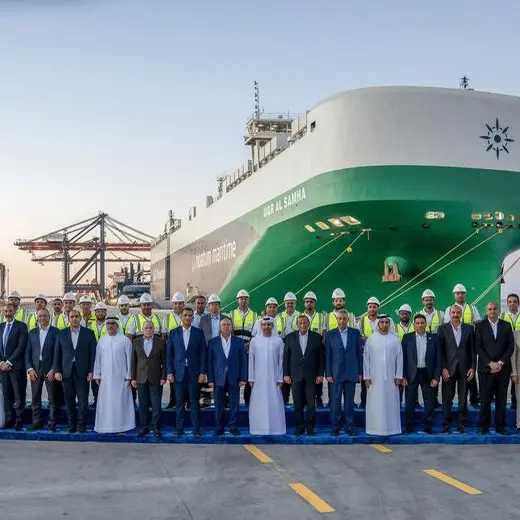
MUSCAT -- A ceremony was held at the Port of Sohar yesterday to mark the arrival of the world's largest dry bulk carrier -- a 400,000-tonne capacity behemoth -- with a consignment of iron ore for the pelletising plant of Vale Oman at Sohar.
The event was organised by Port of Sohar, which invested in a deepwater terminal to receive ultra-large ore carriers (ULOCs), and Vale Oman Pelletising Company, to which the terminal has now been leased.
Jan Meijer, CEO of Port of Sohar, described the maiden call by MV Vale Brazil as a major milestone for the industrial port which is only the third such port in the world to be able to receive such massive bulk carriers. Said bin Hamdoon al Harthy, Under-Secretary for Ports and Maritime Affairs at the Ministry of Transport and Communications, led a number of dignitaries and officials at the celebrations. Also present were ambassadors from The Netherlands and Brazil.
Deputy CEO Jamal T Aziz, who is also CEO of Freezone Sohar, hailed the event as a "proud moment" for the port and a testament to the "great teamwork" of officials from Sohar Industrial Port Company (SIPC) and Vale Oman in the timely delivery of the deepwater jetty that made possible the handling of the giant ship.
Marcos Beluco, Country Manager of Vale Oman, said the maiden call by the mammoth carrier to Sohar was the result of a "strategic partnership" between his company and Sohar Industrial Port Company (SIPC), which built the deepwater terminal.
Later, the audience was given a presentation on the scope and scale of the deepwater terminal built by Sohar Port Special Projects -- a corporate offshoot of SIPC. Edwin van Espen, head of the Special Projects unit, traced the development of the terminal and many of its world-leading features.
The 362-metre-long MV Vale Brazil, with a draft of 23 metres, arrived last week with around 400,000 tonnes of iron ore for the pelletising plant of Vale Oman. The vessel is similar in capacity to four ULOCs currently being built for Oman Shipping Company and leased to Vale for the transportation of iron ore from Brazil to Sohar.
Sohar's strategic location outside the Arabian Gulf, coupled with the deepwater terminal, enables Vale to bring ULOCs from Brazil and distribute the final product in smaller vessels. This is part of Vale's strategy of investing in an integrated worldwide production and logistics system, aiming to enhance the company's capabilities of generating customised solutions for clients, catering to growing demand from consumer markets in Asia and the Middle East.
The development of ULOCs represented a huge technological challenge in terms of innovation and the result is a success, says Vale. MV Vale Brazil allows high speed loading and loading. This vessel also reduces carbon emissions by 35 per cent per tonne of ore transported -- a 'green' project that in May this year received the 'Nor-Shipping Clean Ship Award', an international industry acknowledgement for this achievement.
A highly efficient logistics infrastructure is a key element for competitiveness in the iron ore market. In order to maximise the efficiency of its operations and meet growing global demand, Vale is developing various initiatives to obtain economies of scale.
The vessels will be part of the logistical solution between the company's maritime terminals in Brazil and European, Asian and Middle Eastern customers. The ore carriers have a high standard of safety and will contribute to reducing the cost of long haul maritime transportation of iron ore to steelmakers.
Operations at the deepwater terminal began in July. When fully operational in 2012, the 1.4-km-long terminal, more than 10 million tonnes of iron ore will arrive while more than nine million tonnes of pellets will be exported.
Around 10 million tonnes of iron ore can also be transported to the region between the Eastern Mediterranean Sea and India. The Port of Sohar expects the transhipment of approximately 40 million tonnes of iron ore and pellets taking place at the Vale terminal in 2016.
MUSCAT -- A ceremony was held at the Port of Sohar yesterday to mark the arrival of the world's largest dry bulk carrier -- a 400,000-tonne capacity behemoth -- with a consignment of iron ore for the pelletising plant of Vale Oman at Sohar.
The event was organised by Port of Sohar, which invested in a deepwater terminal to receive ultra-large ore carriers (ULOCs), and Vale Oman Pelletising Company, to which the terminal has now been leased.
Jan Meijer, CEO of Port of Sohar, described the maiden call by MV Vale Brazil as a major milestone for the industrial port which is only the third such port in the world to be able to receive such massive bulk carriers. Said bin Hamdoon al Harthy, Under-Secretary for Ports and Maritime Affairs at the Ministry of Transport and Communications, led a number of dignitaries and officials at the celebrations. Also present were ambassadors from The Netherlands and Brazil.
Deputy CEO Jamal T Aziz, who is also CEO of Freezone Sohar, hailed the event as a "proud moment" for the port and a testament to the "great teamwork" of officials from Sohar Industrial Port Company (SIPC) and Vale Oman in the timely delivery of the deepwater jetty that made possible the handling of the giant ship.
Marcos Beluco, Country Manager of Vale Oman, said the maiden call by the mammoth carrier to Sohar was the result of a "strategic partnership" between his company and Sohar Industrial Port Company (SIPC), which built the deepwater terminal.
Later, the audience was given a presentation on the scope and scale of the deepwater terminal built by Sohar Port Special Projects -- a corporate offshoot of SIPC. Edwin van Espen, head of the Special Projects unit, traced the development of the terminal and many of its world-leading features.
The 362-metre-long MV Vale Brazil, with a draft of 23 metres, arrived last week with around 400,000 tonnes of iron ore for the pelletising plant of Vale Oman. The vessel is similar in capacity to four ULOCs currently being built for Oman Shipping Company and leased to Vale for the transportation of iron ore from Brazil to Sohar.
Sohar's strategic location outside the Arabian Gulf, coupled with the deepwater terminal, enables Vale to bring ULOCs from Brazil and distribute the final product in smaller vessels. This is part of Vale's strategy of investing in an integrated worldwide production and logistics system, aiming to enhance the company's capabilities of generating customised solutions for clients, catering to growing demand from consumer markets in Asia and the Middle East.
The development of ULOCs represented a huge technological challenge in terms of innovation and the result is a success, says Vale. MV Vale Brazil allows high speed loading and loading. This vessel also reduces carbon emissions by 35 per cent per tonne of ore transported -- a 'green' project that in May this year received the 'Nor-Shipping Clean Ship Award', an international industry acknowledgement for this achievement.
A highly efficient logistics infrastructure is a key element for competitiveness in the iron ore market. In order to maximise the efficiency of its operations and meet growing global demand, Vale is developing various initiatives to obtain economies of scale.
The vessels will be part of the logistical solution between the company's maritime terminals in Brazil and European, Asian and Middle Eastern customers. The ore carriers have a high standard of safety and will contribute to reducing the cost of long haul maritime transportation of iron ore to steelmakers.
Operations at the deepwater terminal began in July. When fully operational in 2012, the 1.4-km-long terminal, more than 10 million tonnes of iron ore will arrive while more than nine million tonnes of pellets will be exported.
Around 10 million tonnes of iron ore can also be transported to the region between the Eastern Mediterranean Sea and India. The Port of Sohar expects the transhipment of approximately 40 million tonnes of iron ore and pellets taking place at the Vale terminal in 2016.
© Oman Daily Observer 2011