Q2 2011 ended with the bonds symphony seeing some players abiding by the script and others improvising, writes Joey Geadah, Bonds Analyst at Zawya.
The second-quarter curtain fell on the bond melodrama in the Middle East and North Africa with some players abiding by the script and others improvising, creating a collaboration that seemed to be out of tune.
Bond performers such as Qatar, UAE and Kuwait remain consistent, unlike Oman, Saudi Arabia and Bahrain. This reveals a vast variation between major GCC players, leaving the outlook for the second half of the year slightly vague.
Beirut remains the most active midst its neighbors regardless of its outcome, followed by Jordan who is trying to regulate its economic framework, whereas Syria and Palestine have their own peculiar conditions.
Heading towards North Africa, post-revolution Egypt is trying to bounce back, unlike its fellow Arab-African companions who are suffering or might experience political uprisings.
Qatar Exemplar
Striving for further local bond issuance in Qatari riyal will be highly anticipated by Doha, despite the lack of intentions to issue any in the near future and given the fact that the market is abundant with liquidity.
Al Khaliji, a commercial bank recently known as the entity who discarded a potential merging with International Bank of Qatar, is probing a credit rating this year and may be equipped to issue bonds in the first quarter of 2012.
Custodian Jordan
Ahli Bank of Jordan will locally handle all Jordan Mortgage Refinance Company's bond issuances, by being granted the exclusivity to act as custodian, paying agent and registrar. Concurrently, abridging the relationships between the Jordanian banking sector and the nation's capital market remains vital in a region where uncertainty of decision-making prevails.
In the meantime, the Hashemite Kingdom is planning to sell USD750 million as its first sovereign Islamic bond to finance its budget deficit and infrastructure plans.
Kuwait Temperate
National Real Estate Company is aiming to reschedule debt by selling conventional and/or Islamic bonds. The project is still in its initial phase, taking into consideration the market conditions and ongoing studies. According to NREC CFO Ahmad Harfoush, the company's main aim remains to complete its project, Abu Dhabi's Reem Island, which is facing financing problems. Nevertheless, selling the firm's owned lands in Tunisia, Lebanon and Jordan might serve as an alternative option to finance its debt.
KIPCO Asset Management Company announced its reimbursement of a KWD20 million bond. The paper was issued in April 2004 with a five-year tenor and a two-year extension option and was well regarded by local investors. The repayment process took place from the surplus that the corporation has on hand, honoring its fiscal obligations.
United Real Estate Company had its KWD40 million unsecured bond rated BBB- with a constant outlook by Capital Intelligence. Last year's successful assignment of this bond shows that the real estate powerhouse has fortified its financial reputation with an enhanced debt maturity profile.
In another rating story, Moody's downgraded KIPCO's bonds due in 2016 and 2020 from Baa2 to Baa3. This reduction reveals a decline in the firm's cash coverage.
UAE Spree
In April's analysis, "April at a glance", we mentioned that Abu Dhabi's Waha Capital would do a bond issuance by the end of July. The AED500 million issue comprises notes convertible into shares after three years.
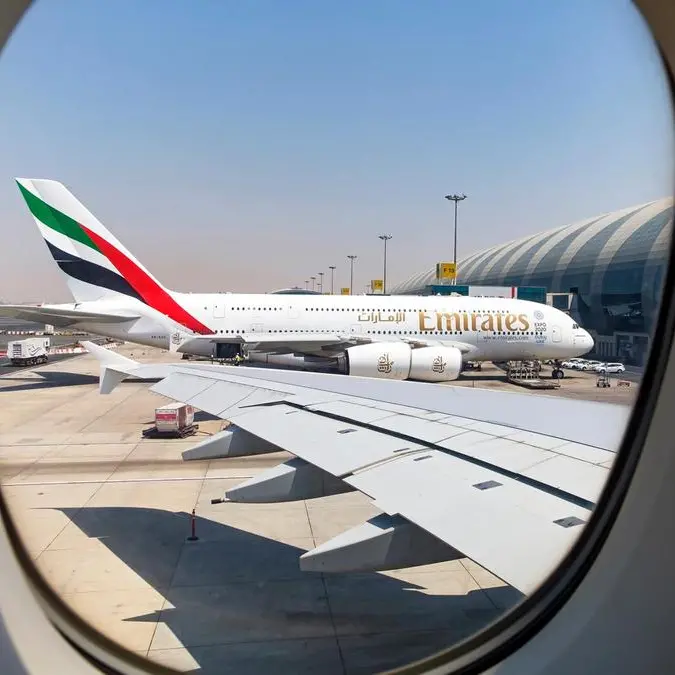
June witnessed the publication of Emirates' key terms of a five-year USD1 billion bond. The Middle East's largest airline published the coupon rate at 5.125%,listing on London Stock exchange, and required denominations.
According to a base prospectus from Majid Al Futtaim, a Dubai-based developer and operator of shopping malls in the MENA region, Barclays Capital, Emirates NBD and Standard Chartered were appointed as arrangers of the USD2 billion GMTN program. Proceeds will be utilized to facilitate potential debt raising plans as MAF seeks to expand across the region. Credit Agricole CIB, HSBC, National Bank of Abu Dhabi, Citi and JP Morgan are acting as dealers on the program.
Dolphin Energy mandated BNP Paribas, Royal Bank of Scotland, Societe Generale, The Bank of Tokyo-Mitsubishi, and Abu Dhabi Commercial Bank to administrate a planned dollar bond. The bond structure is still unknown. Recently, however, Dolphin was demotivated due to the enduring Greek/Eurozone debt crisis and the modest review of the US economy by the Federal Reserve, despite the fact that UAE's default risk perception has been considerably lowered.
Since 2008, pending documentation issues halted National Bank of Abu Dhabi's Samurai Bond aspirations. Currently, seeking a JPY10 billion bond seems more attainable. HSBC and Mitsubishi UFJ Morgan Stanley were authorized to take charge of it. NBAD is the UAE's largest lender by market value. Although formerly tapping the Malaysian ringgit market, and managing investor meetings in the Oceania continent, a Samurai Bond will give NBAD an edge in terms of diversification of financing sources and wider exposure to Asian markets.
Abu Dhabi-based Tourism Development and Investment Company has given the green light for banks to vend bonds from its existing USD3 billion program. Selling USD1 billion in bonds is the target, with road shows probably touring in early July. TDIC, which is constructing the Louvre and Guggenheim museums in Abu Dhabi, will have USD1 billion left in the program in case everything falls into place. Royal Bank of Scotland, HSBC and Standard Chartered are arranging the sale.
The Government of Dubai upgraded an EMTN program to USD5 billion from USD4 billion. According to the emirate's base prospectus, proceeds of each tranche will be employed for infrastructure and general budgetary purposes. Mitsubishi UFJ Securities International, Standard Chartered and UBS Investment Bank were hired as arrangers and dealers for the program.
On June 16, 2011, the Government of Dubai, via the Department of Finance, announced that it has successfully priced a USD500 million 10-year bond, with a put option at the end of the fifth year, and a yield of 5.59%. The offering was oversubscribed three times. Banks, fixed-income investors, fund managers and insurance companies placed orders, rendering a confidence boost to any forthcoming issuance under this EMTN program. "This time around we were focused on setting the price benchmark rather than the issuance size," the Dubai Government's media office said.
Beirut Troubleshoot
As July kicked off, worrying signals were emitted by Lebanese banks revealing their reluctance to purchase LBP treasury bills due to political anxiety. At that moment, Central Bank of Lebanon was coerced to intervene and buy up the subscriptions. Elevated dollarization rate of bank deposits could be one aspect of this problem rendering institutions with scarce LBP liquidity.
According to the caretaker finance minister at the time, the country's political class needed to realize that their inflexibility over forming a government should end, since the socio-economic framework is in jeopardy.
Egypt Disrupt
Officials at the Cairo Treasury ruled out any possibility of tapping the overseas bond market in the coming few months despite the immense budget shortfall caused by political uncertainty, which is repelling foreign investors. According to Finance Minister Samir Radwan, the Egyptian Government aims to raise EGP14.3 billion from Arab Gulf nations, the EU and the US, but no precise deadline has been disclosed.
Despite the current cabinet's wishes to seize the occasion of foreign aids from international debt market, speculations will dangle over Cairo's debt rsum, until both elections and stable government formation takes place.
As Q2 wound down, we saw that only a few MENA bond competitors could break through the political and economic conditions. Future growth will depend on an anticipated pipeline of prospective deals.
Click here for MENA Bonds: May Dismay
Zawya 2011