Lebanon's bonds market holds the key to the nation's indebtedness
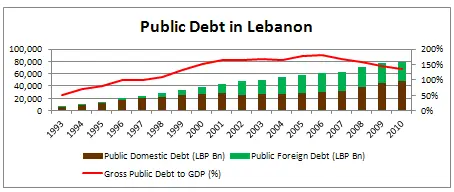
The Lebanese bonds market needs to mature as the nation grapples with debt levels that are at 137% of GDP, writes Nancy Mitri, Bonds Analyst at Zawya.
ZAWYA
November 29, 2011
29 November 2011
Lebanon's corporate bond market is relatively minuscule with an estimated size of less than USD 1 billion, according to data compiled by Zawya's Bonds Monitor. Among the main issuers are the Lebanese American University, which raised a USD75 million 10-year bond in 2008, and Byblos Bank, whose outstanding notes total USD0.5 billion. Clearly, Lebanon's corporate bond market needs to be further developed.
Sovereign Bonds
On the other hand, the Republic of Lebanon relies heavily on the issuance of treasury bills and Eurobonds to finance its needs. It was not too long ago that the Ministry of Finance undertook a commitment to strengthen the debt management strategy and reform the capital markets. Among these initiatives was the shift from frequent short-term to longer-term instruments with a low frequency of auctions.
In this framework, the ministry of finance issued in March 2006 the first five-year treasury bills amounting to LBP400 billion (USD265.7 million), followed by the seven-year LBP1500 billion (USD996.3 million) treasury bills in December 2010. With the aim of increasing transparency, the ministry started to publish quarterly debt reports disclosing financial and statistical information about public debt in Lebanon. (Please click here to view the latest debt report.)
Public debt, which currently stands at USD53 billion, has been the main concern of the Lebanese government and financial institutions. Looking at public debt as a percentage of GDP, Lebanon records the highest figure in the region, although the Lebanese government has managed to decrease the ratio from its peak of 179% in 2006 to 137% in 2010.
ZAWYA NEWSLETTERS
Get insights and exclusive content from the world of business and finance that you can trust, delivered to your inbox.